

FREE SHIPPING ON ORDERS OVER $150*

AUSSIE FAMILY OWNED BUSINESS FOR OVER 40 YEARS

100% SATISFACTION GUARANTEED
Mask Snorkel and Fin Sets
Mask Snorkel and Fin Sets
Complete sets with mask, snorkel and fins together, usually in a mesh or carry bag. This is the straightforward way to kit out a family for a holiday or get someone started without working out which pieces go together.
What to check before you buy
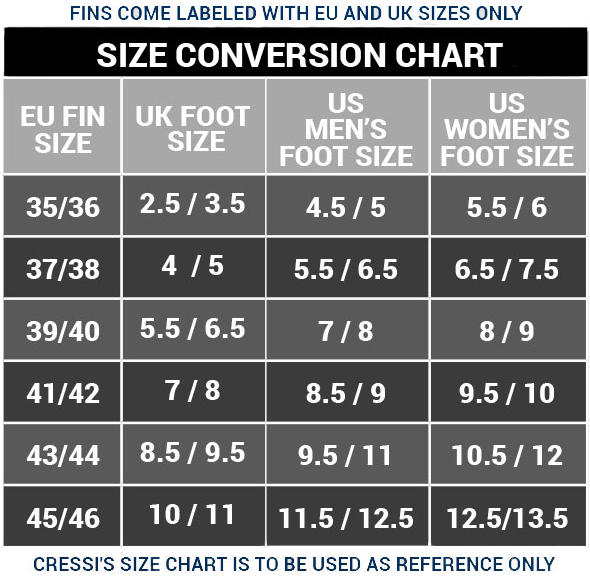
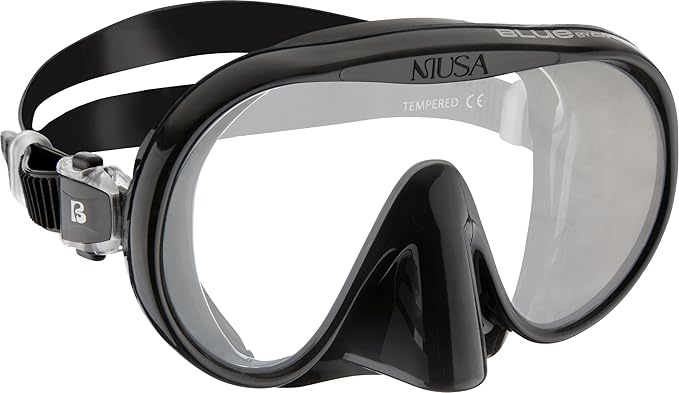
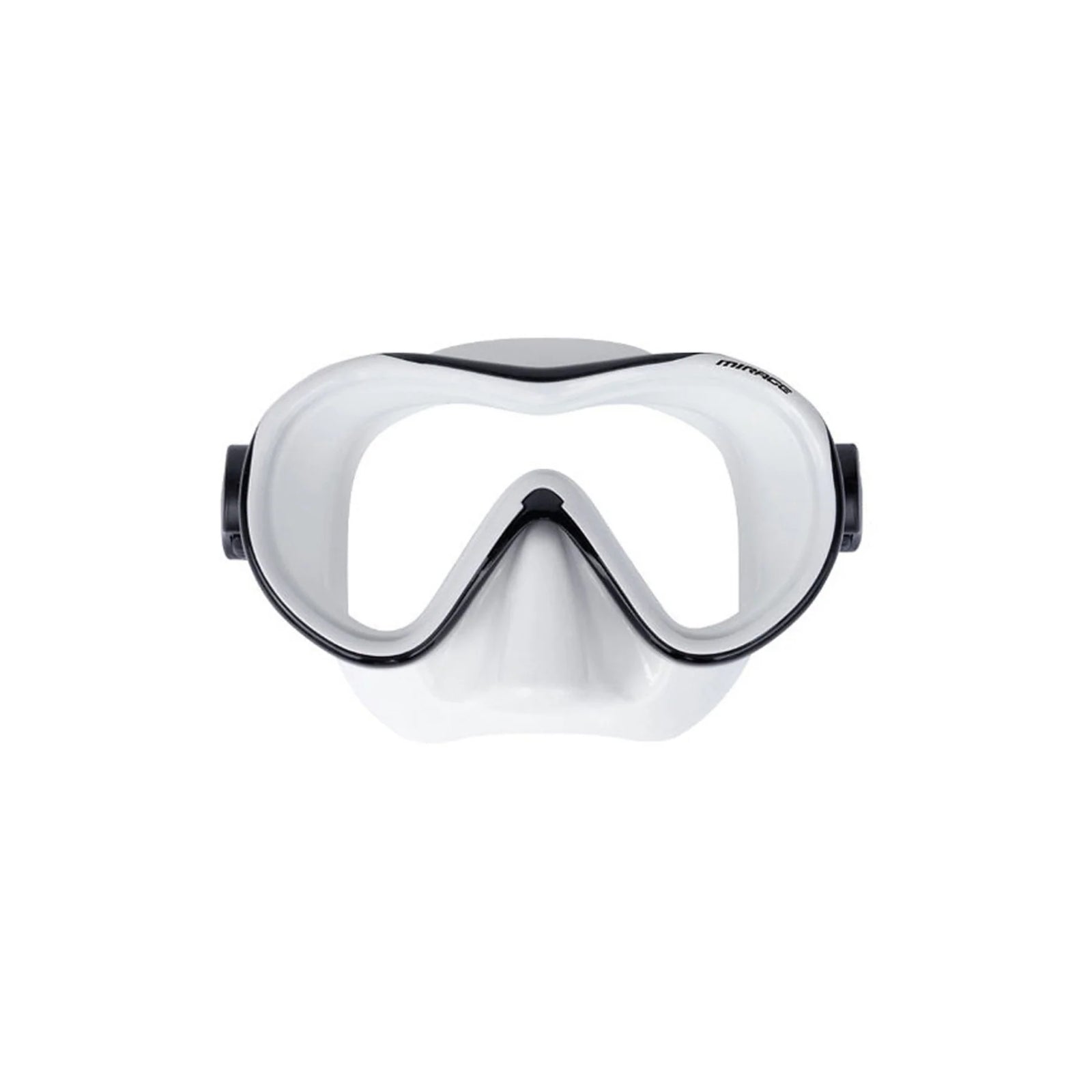
Fit is the only thing that really decides whether a set gets used. Sizes are given as ranges covering the foot pockets, and the mask is sized by face rather than by age — junior masks have a smaller skirt shaped for a child's face, which is what makes the seal work. An adult mask on a small face leaks regardless of strap tension.
Fins in a set are usually short recreational blades, which is exactly right for drifting over a reef and much easier to pack than long blades. They are easy to kick for hours and forgiving of poor technique.
Check whether the snorkel is dry or plain. Dry tops suit casual snorkelling because they stay empty when you duck under. If someone in the family is starting to dive down, a plain snorkel is the better long-term choice. Individual pieces are in dive fins and mask and snorkel sets.
Frequently asked questions
What size snorkel set should I buy for a child?
Junior sets, sized on foot length for the fins and on face size for the mask. An adult mask will not seal on a child's face however tight the strap is.
Are snorkel sets good quality?
The better ones use tempered glass lenses and silicone skirts and are perfectly good for recreational use. Cheap plastic-lens sets are the ones to avoid.
Do I need fins to snorkel?
Not in a pool or a sheltered bay, but they make a large difference anywhere with current or distance to cover, and they make swimming far less tiring.
Can I use a snorkel set for diving down?
For short duck dives, yes. If someone is getting serious about freediving they will eventually want a low-volume mask, longer fins and a plain snorkel.
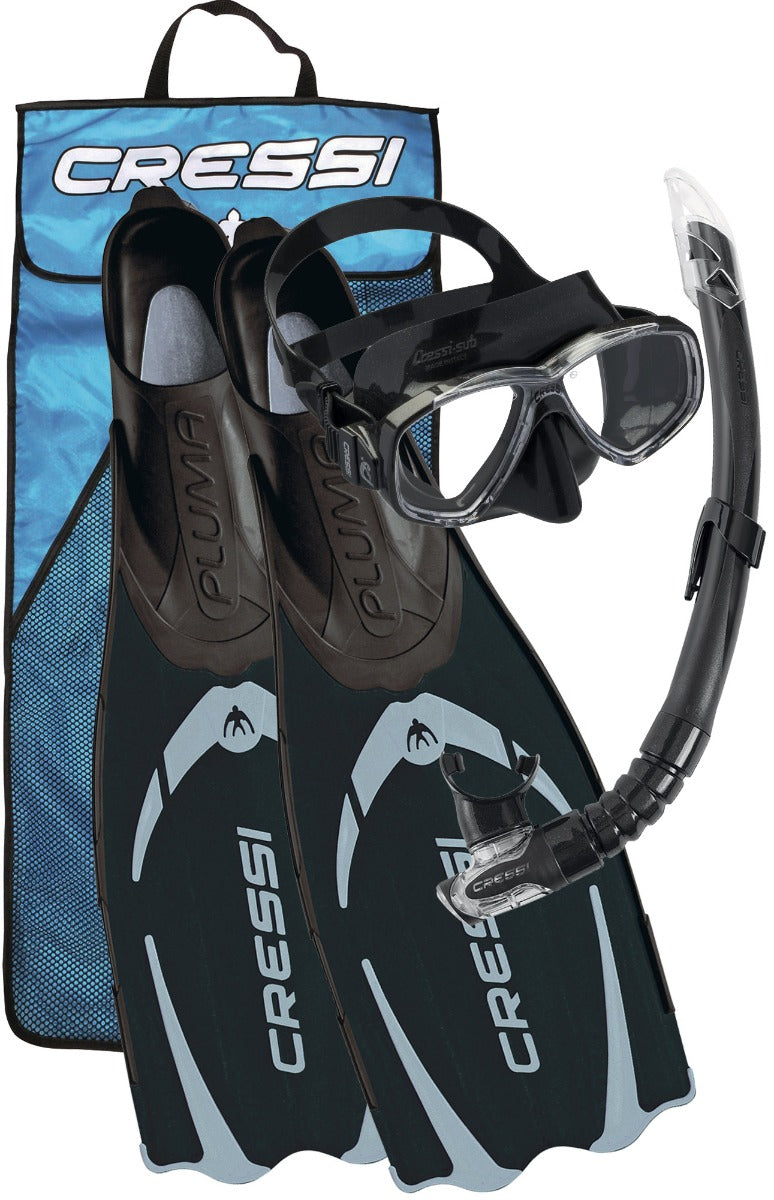
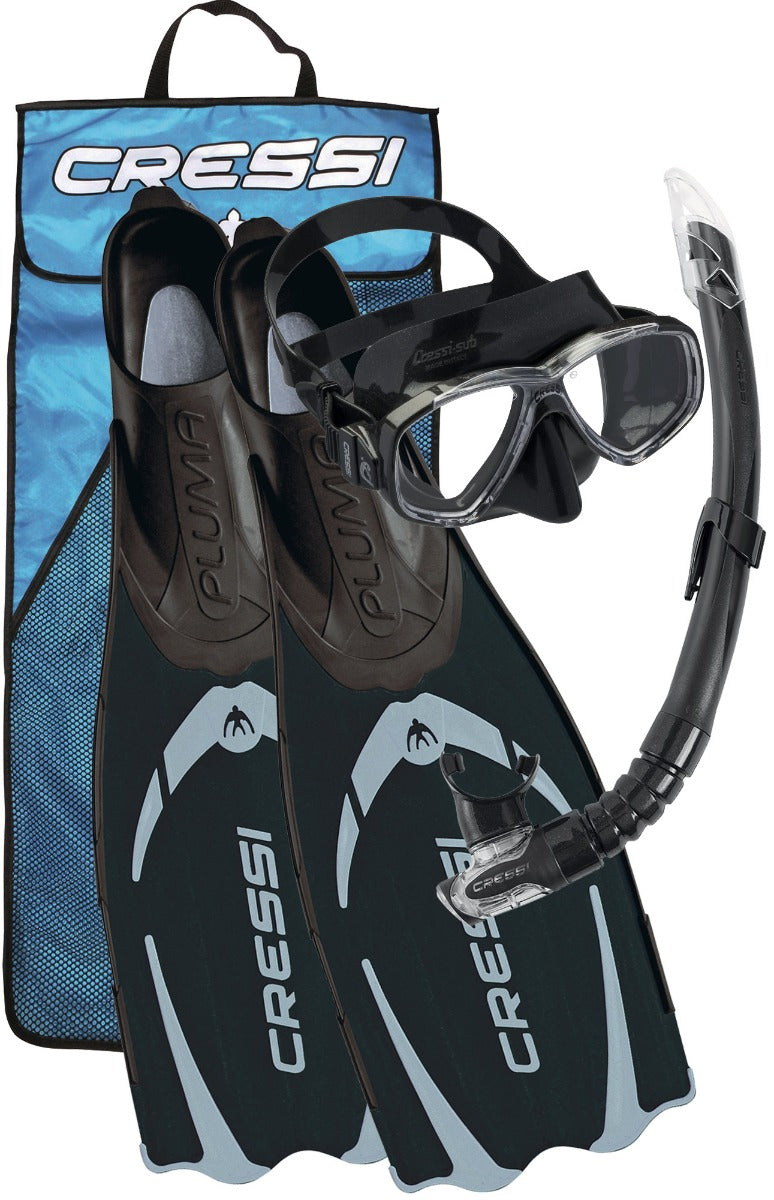

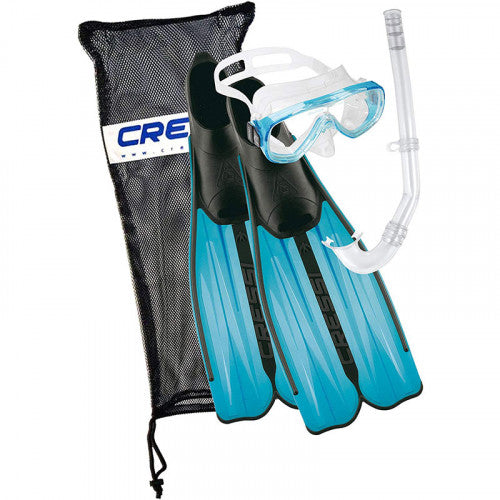
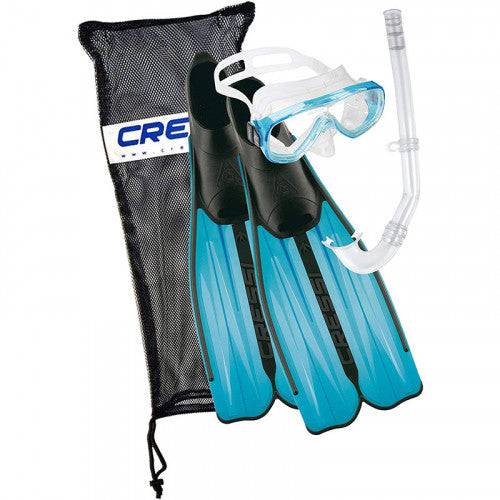
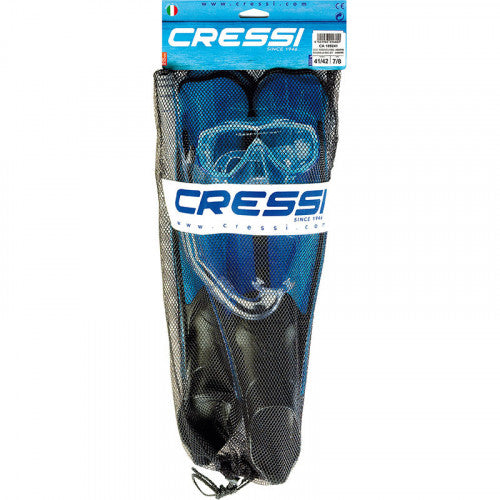


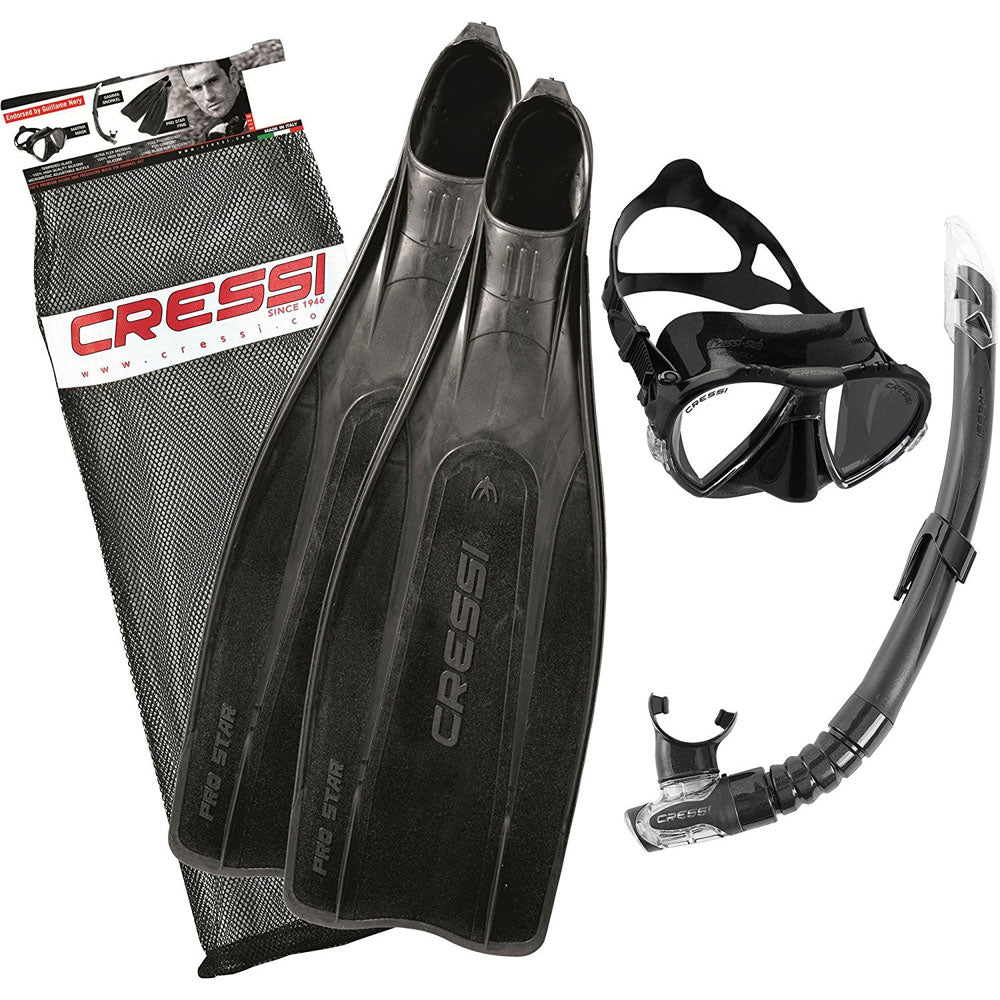
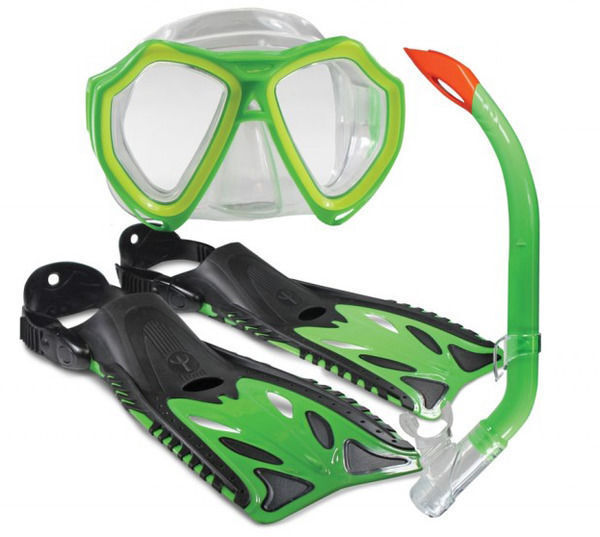
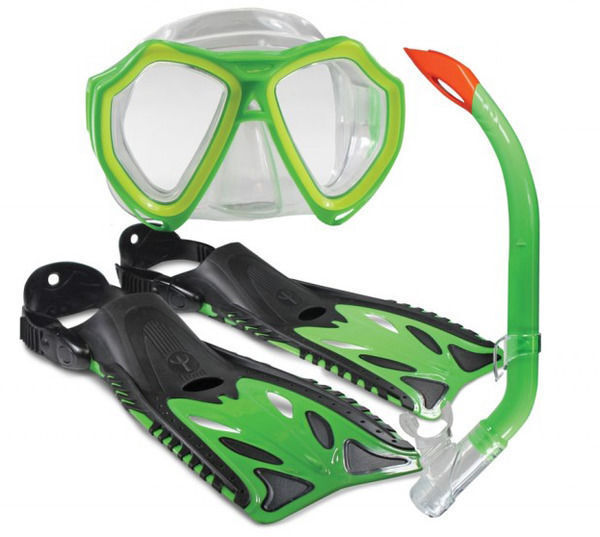

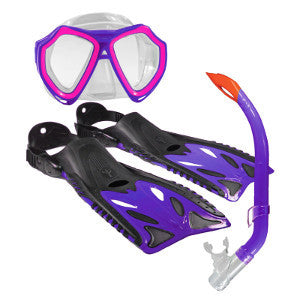
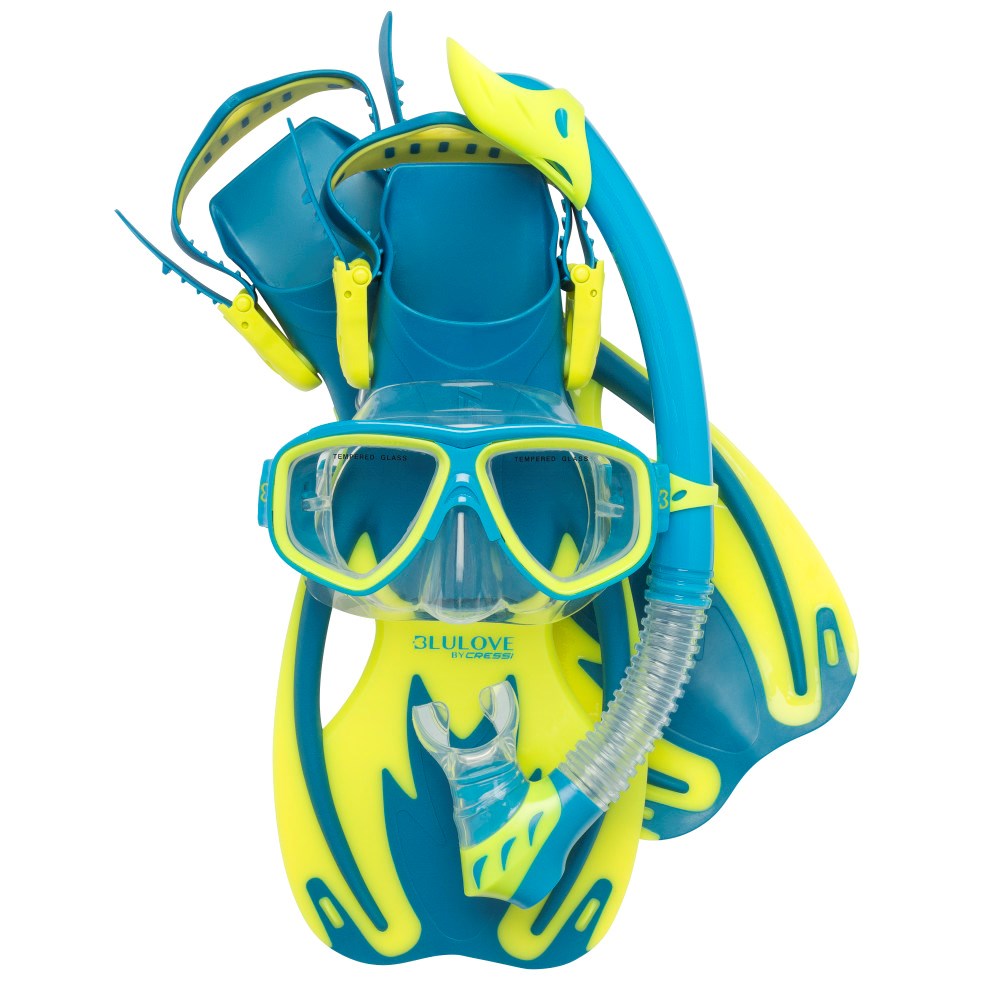
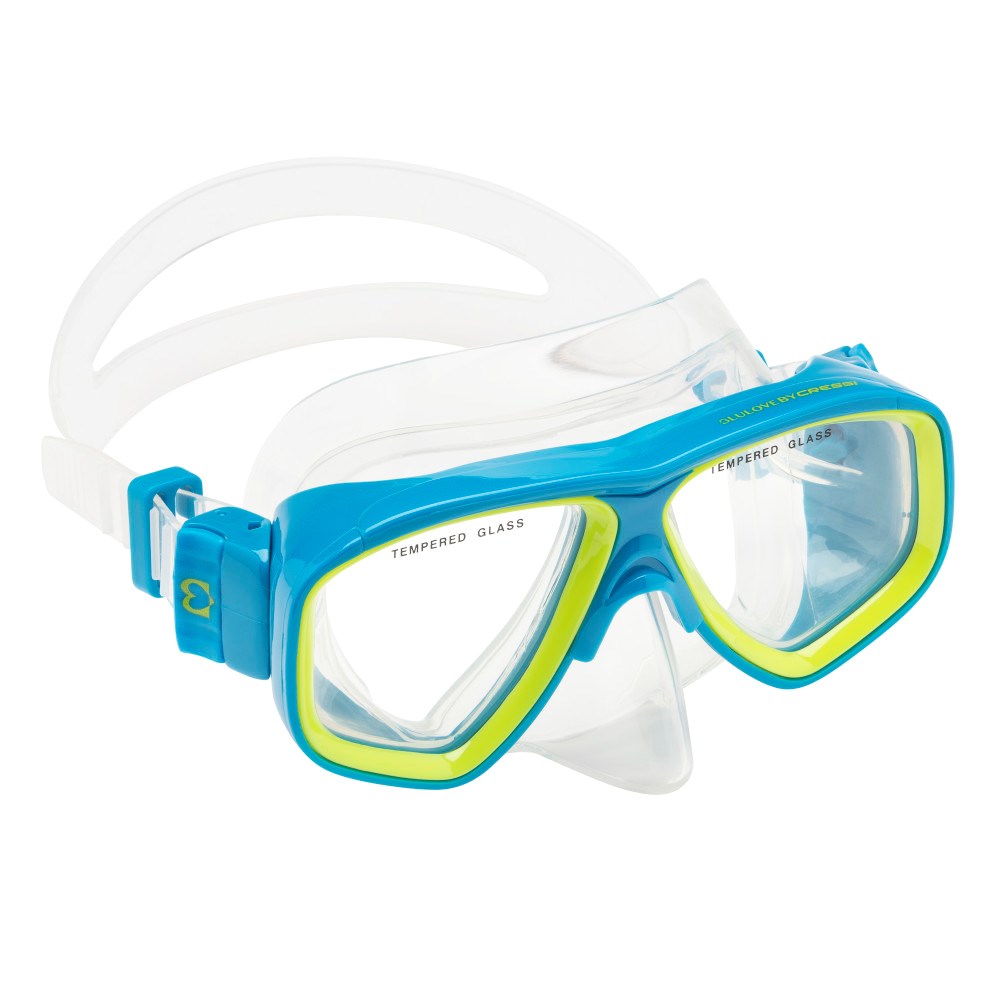
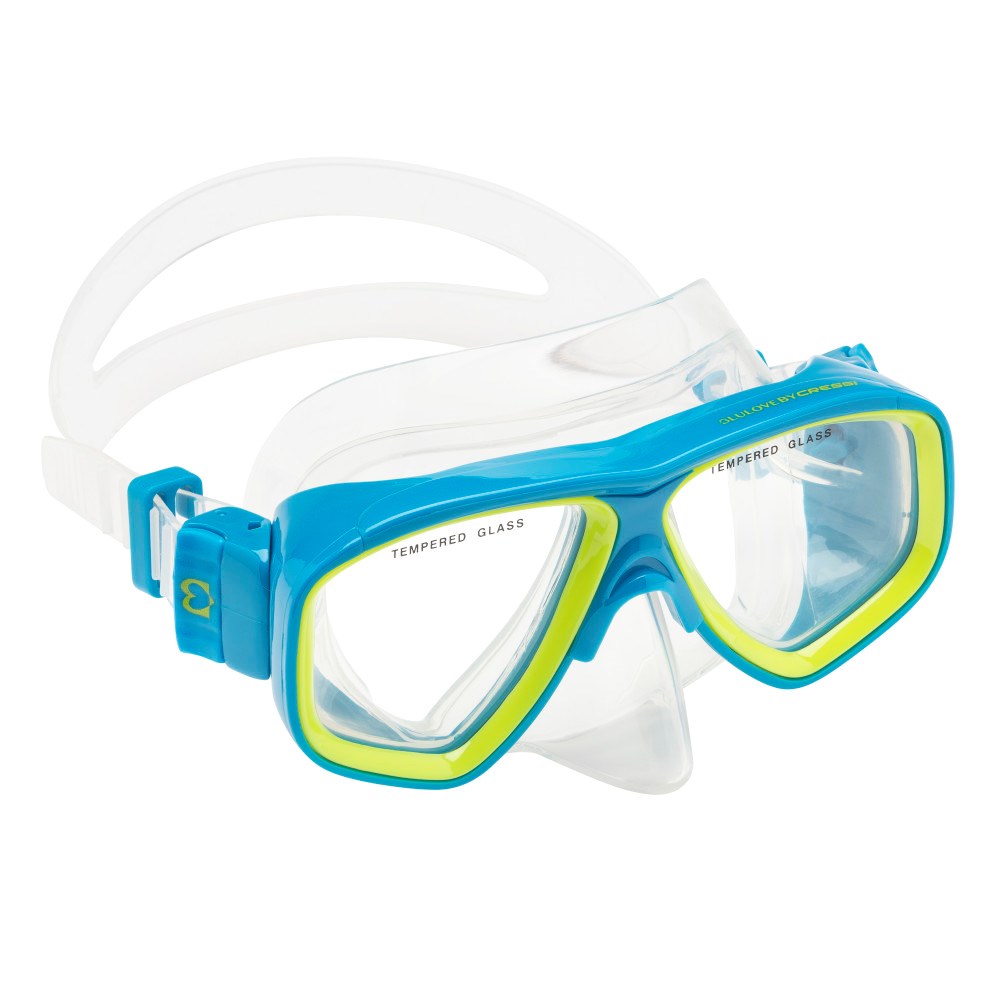
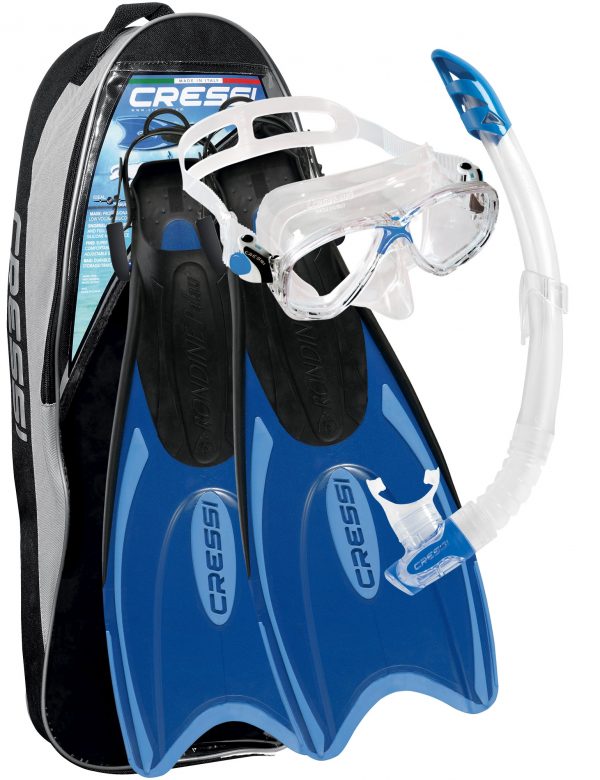
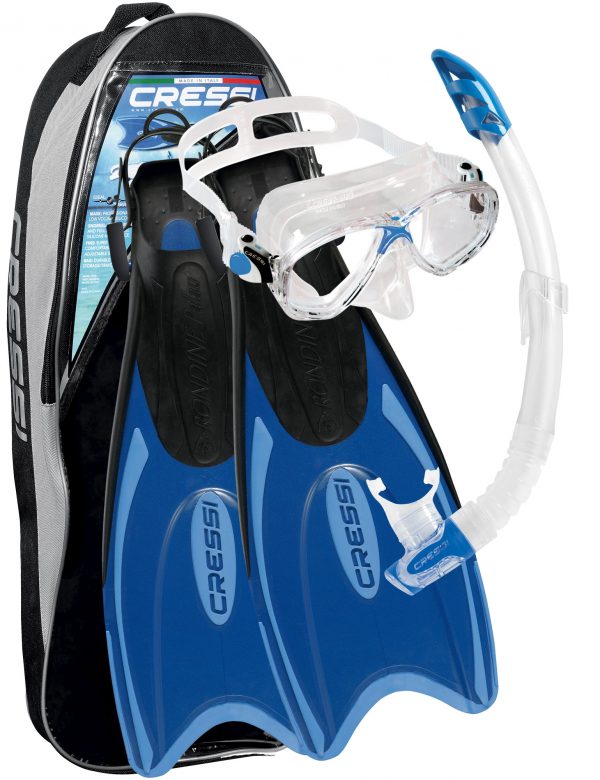
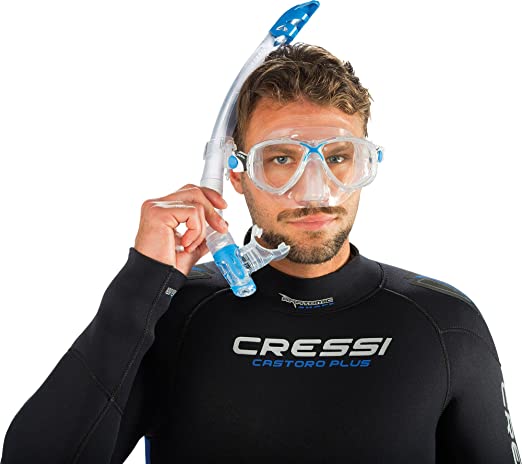

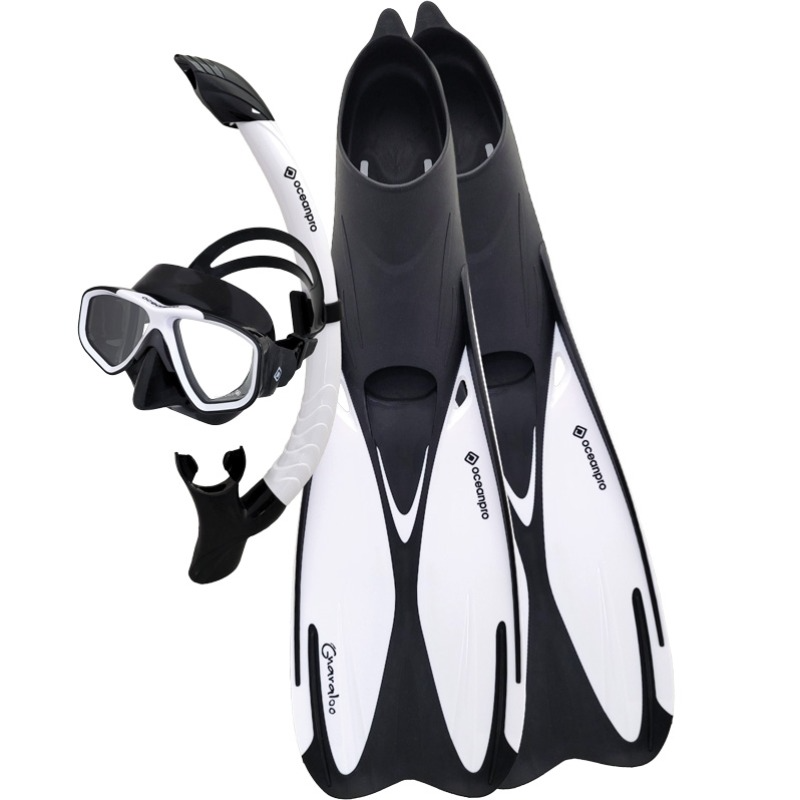

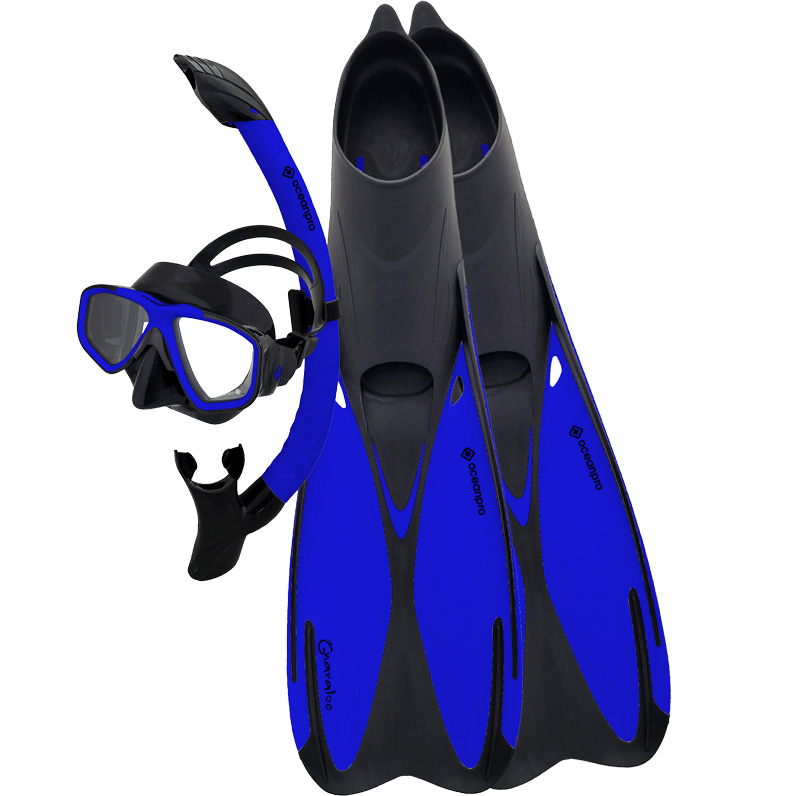

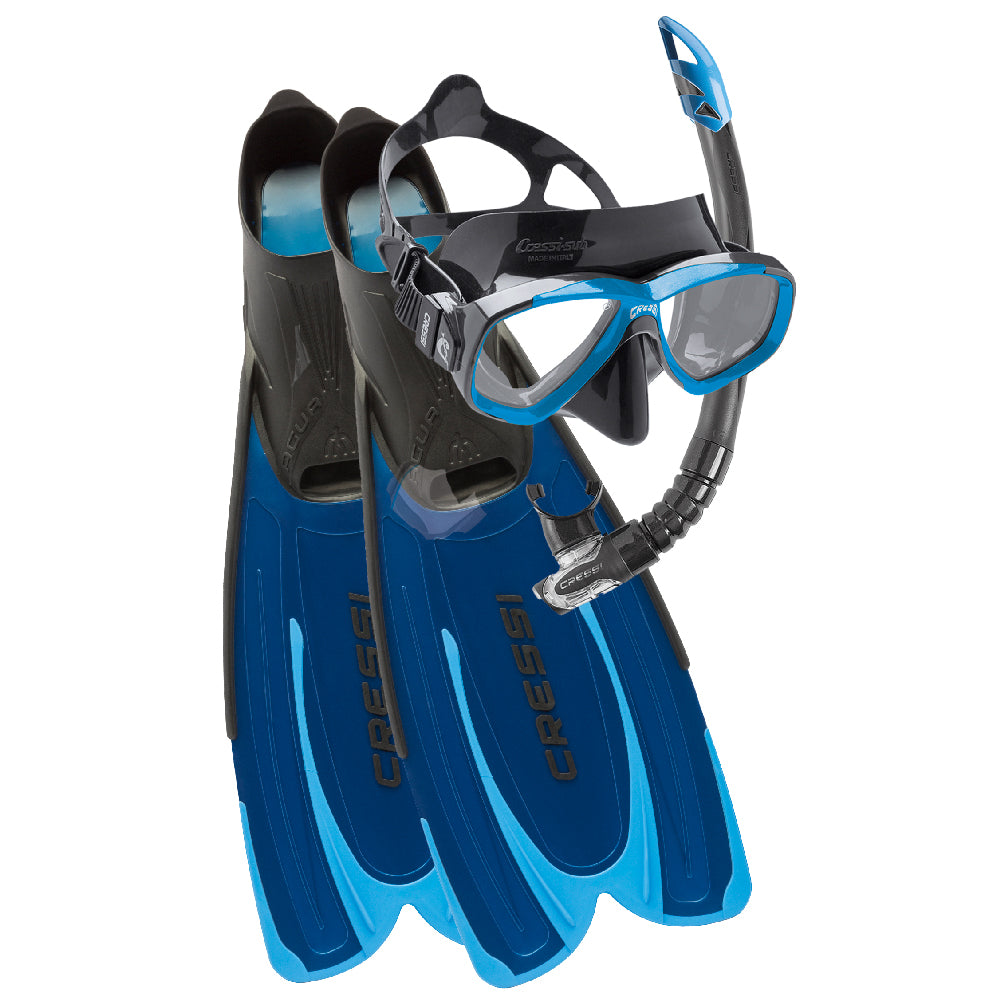

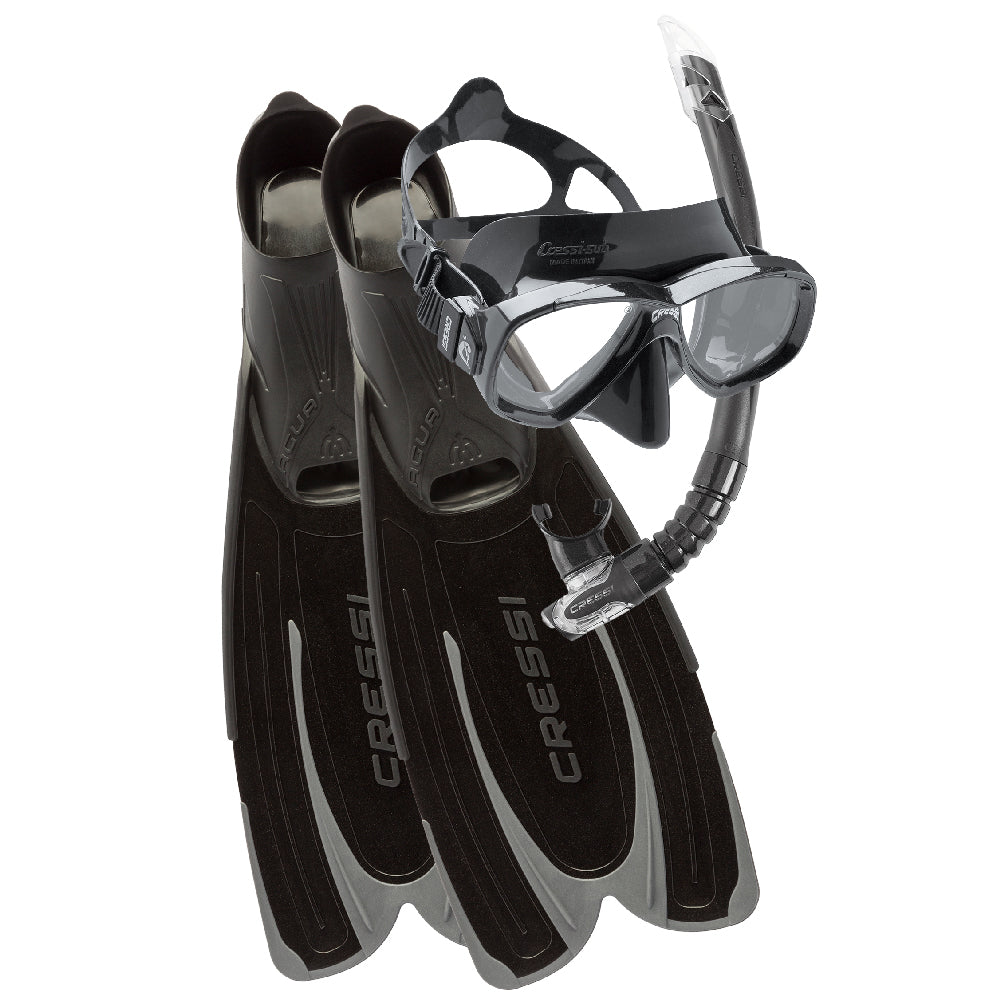

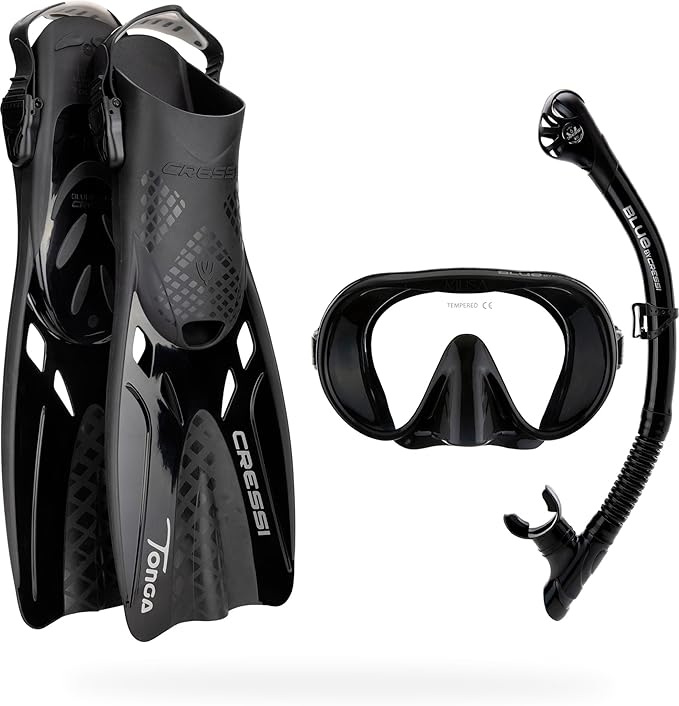


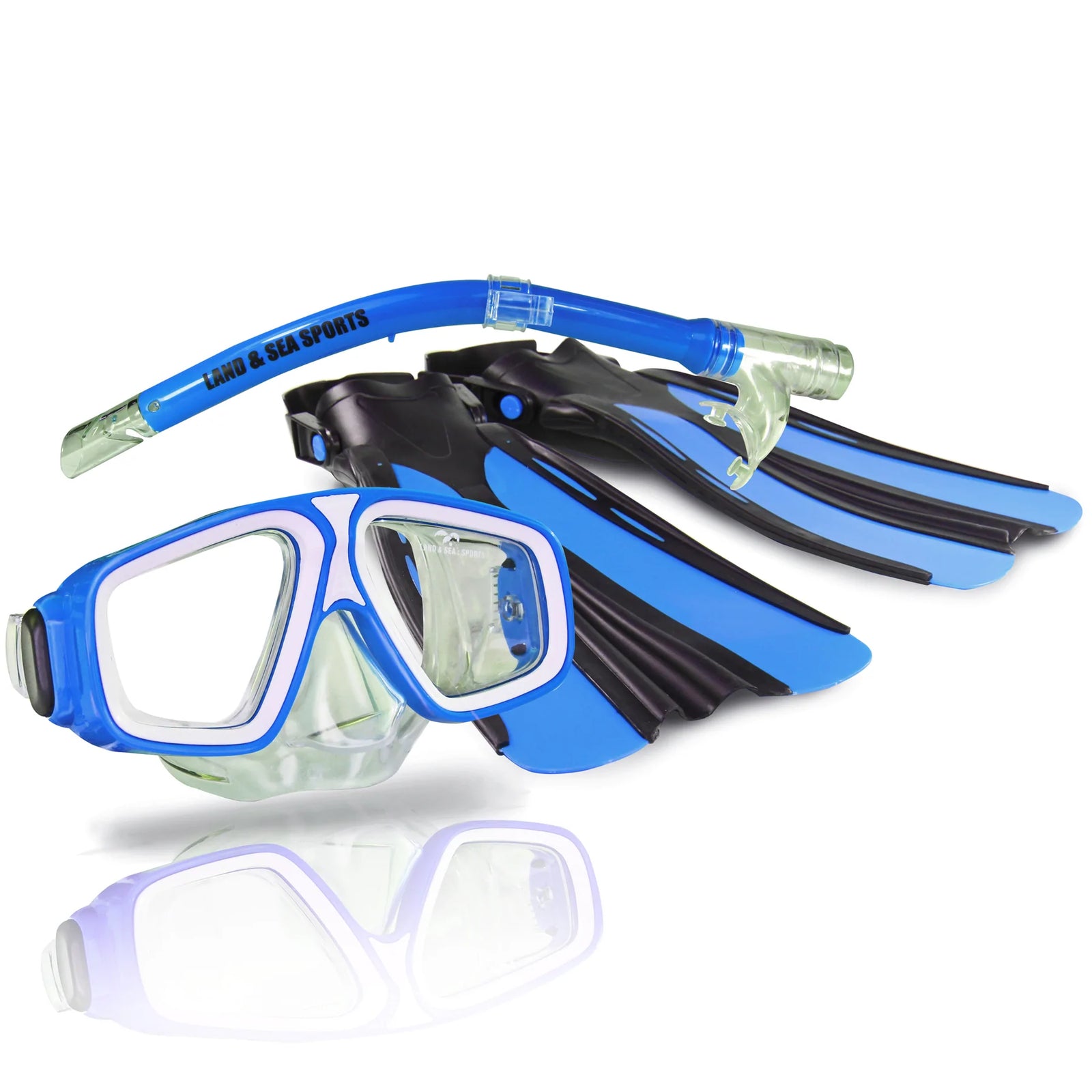
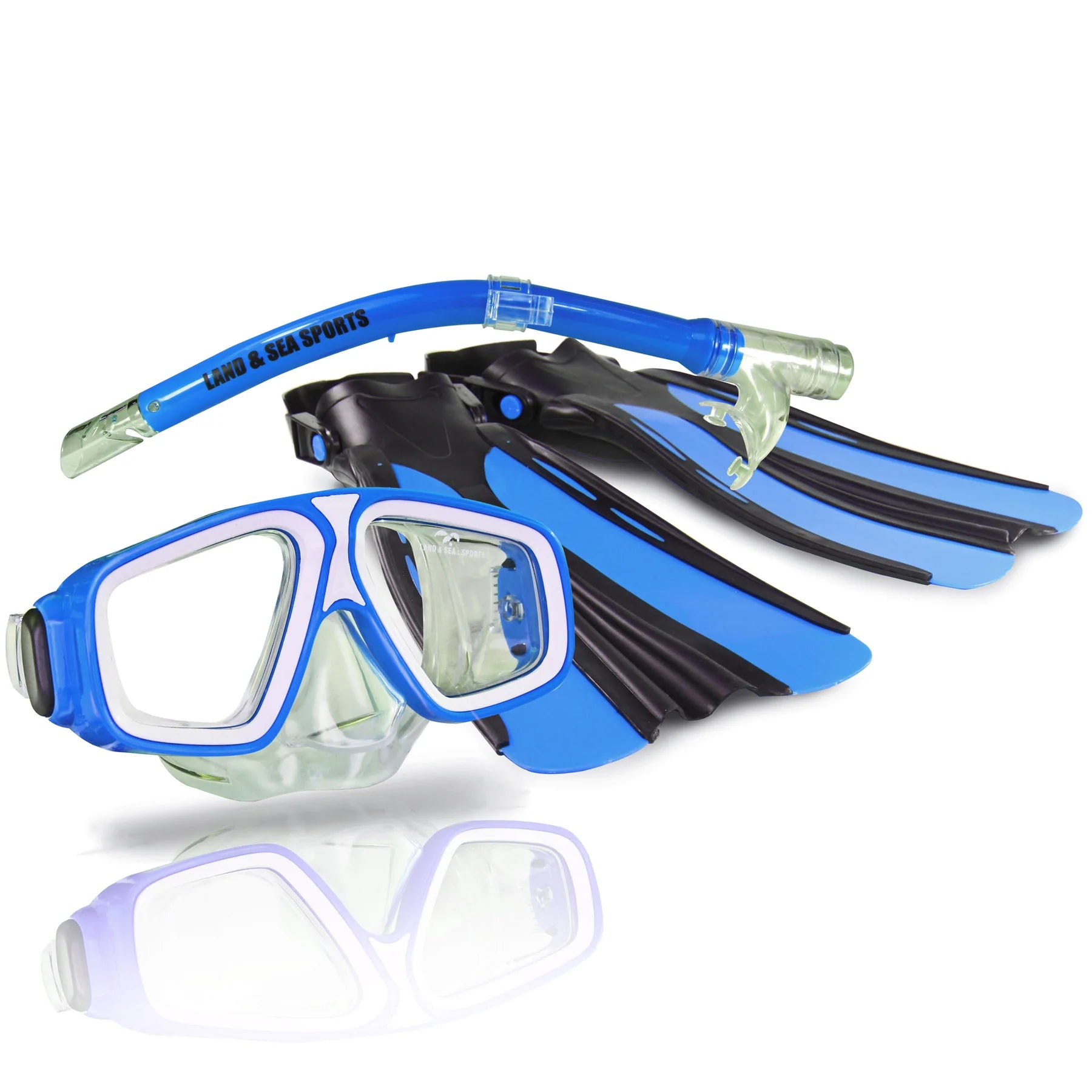
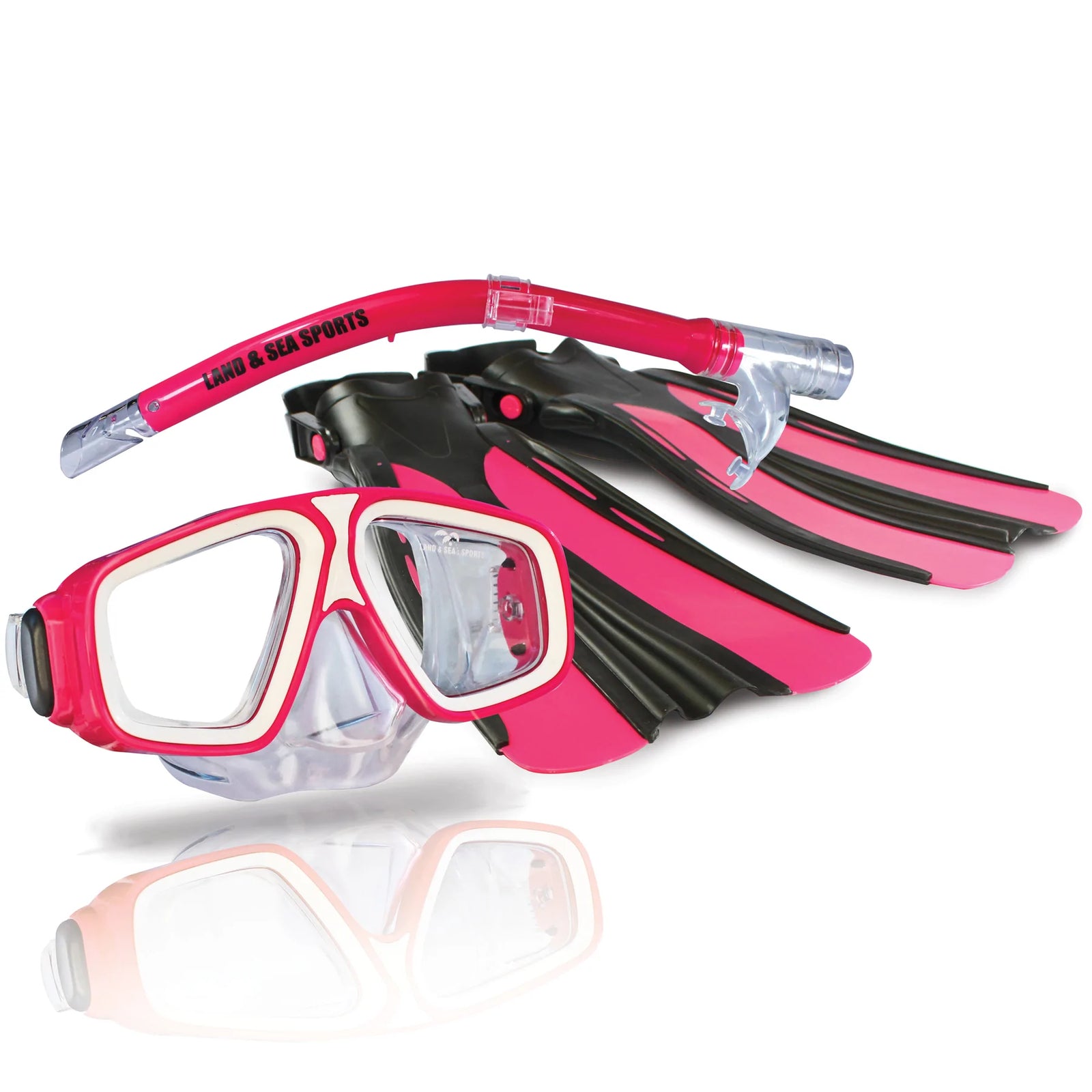

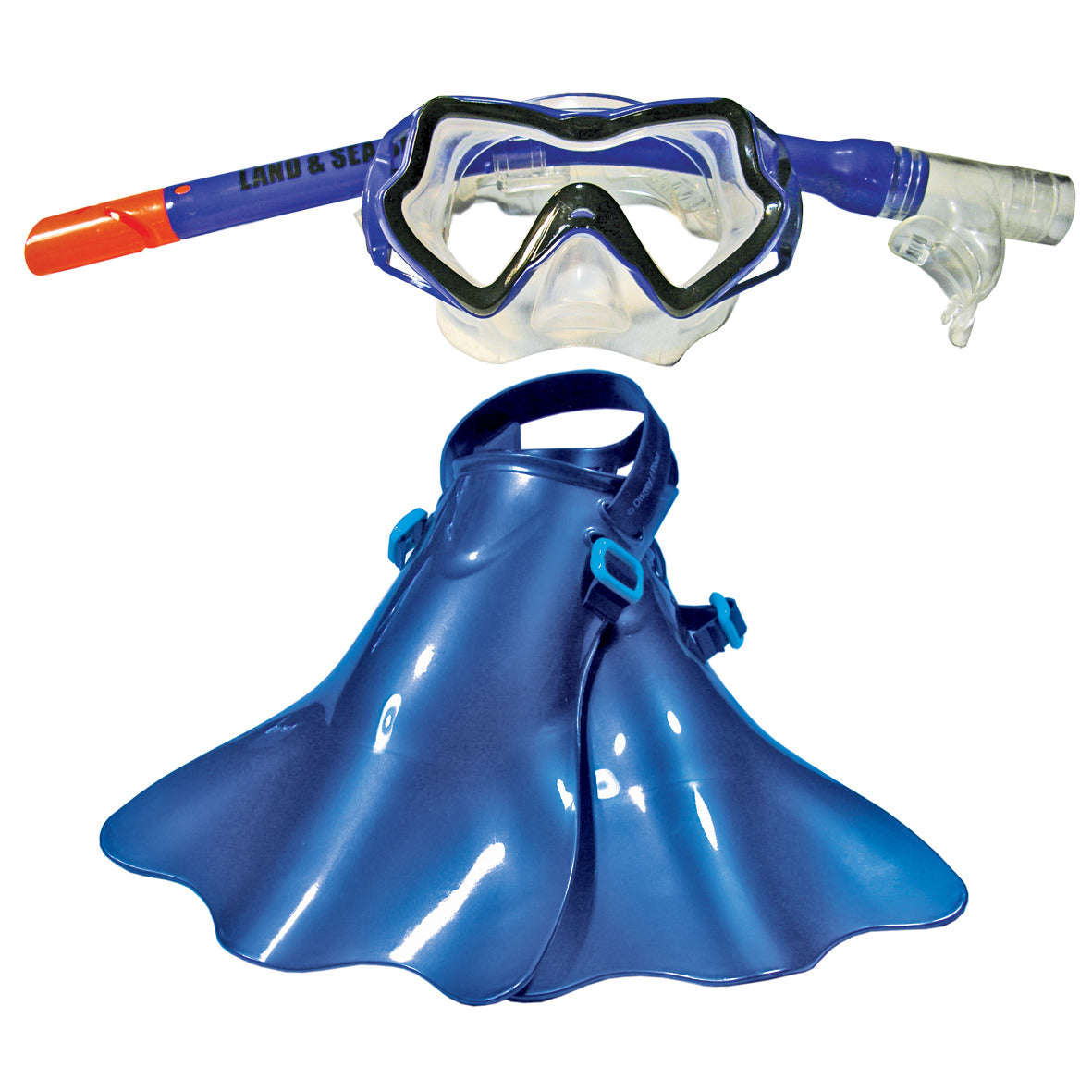
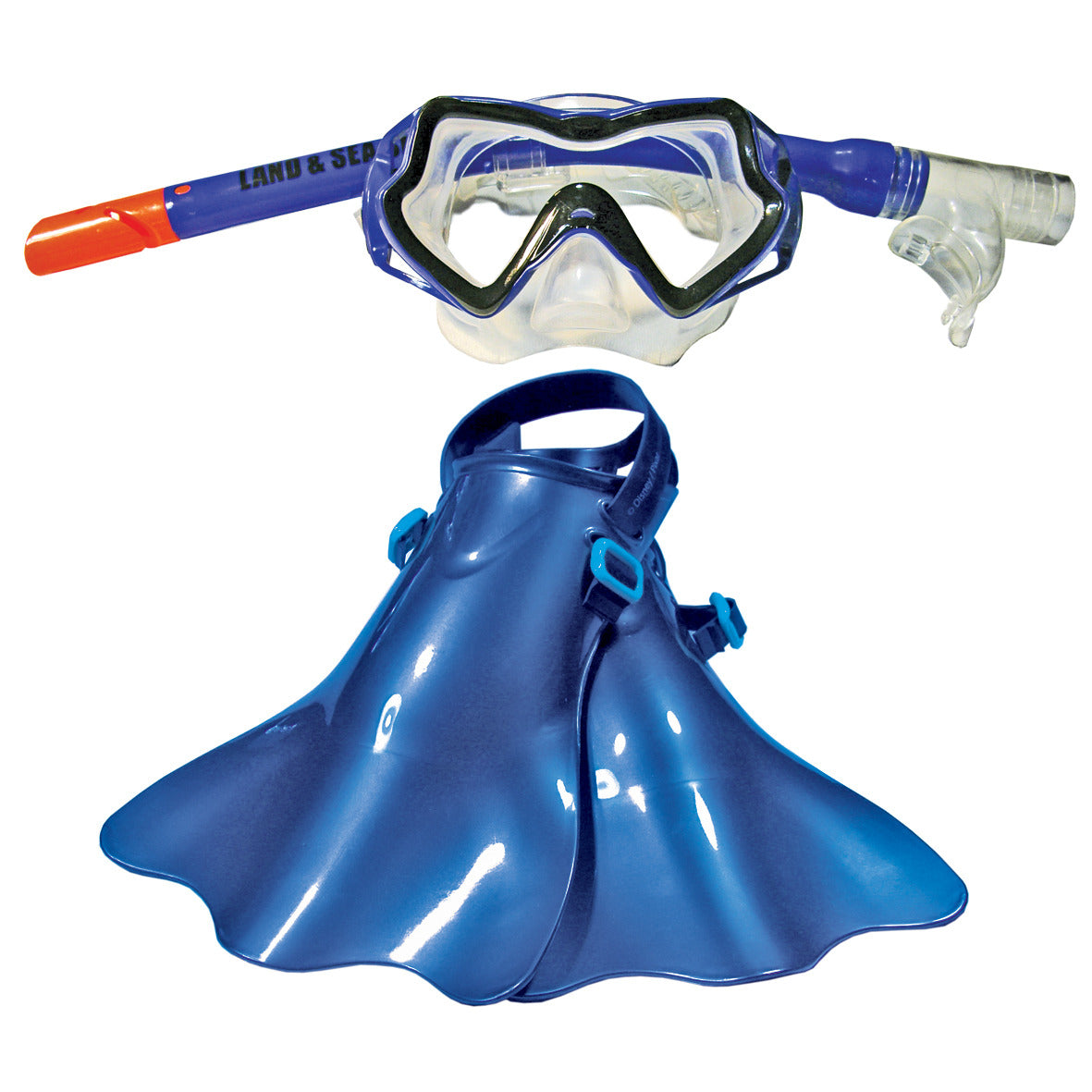
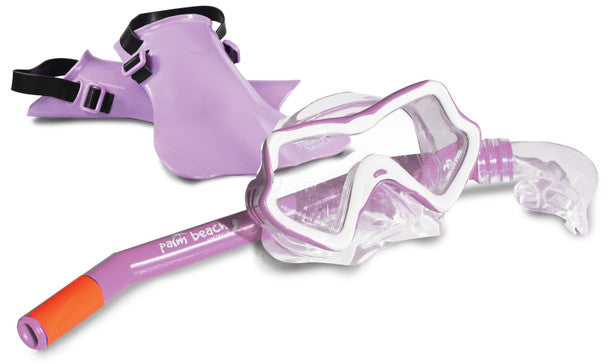

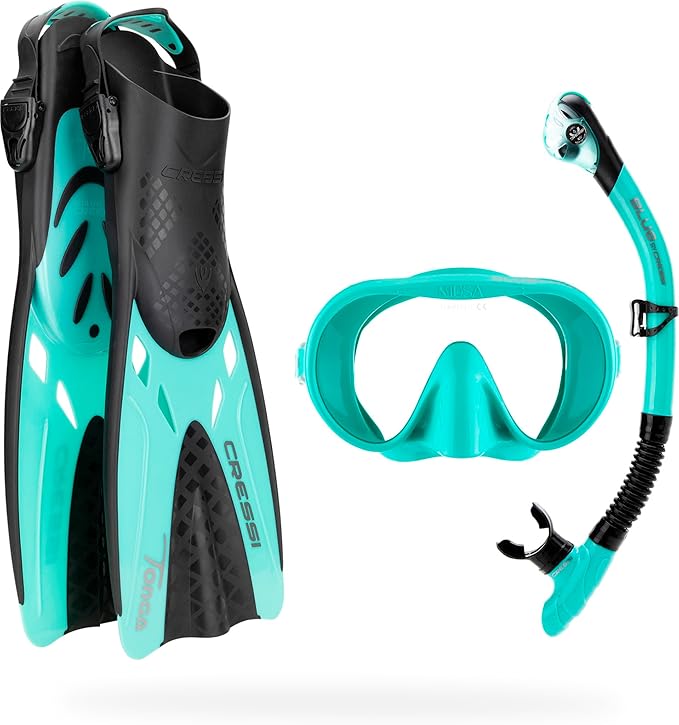

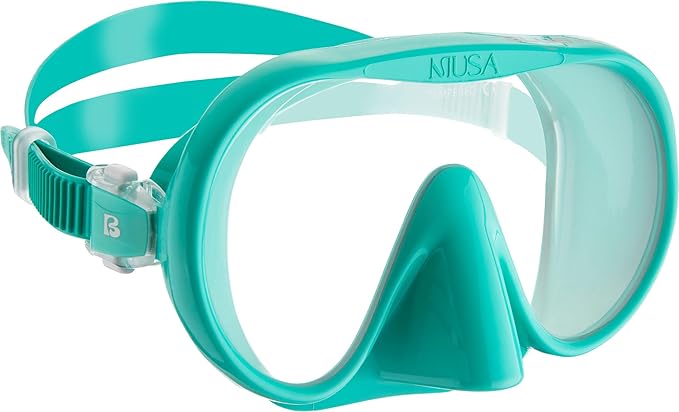

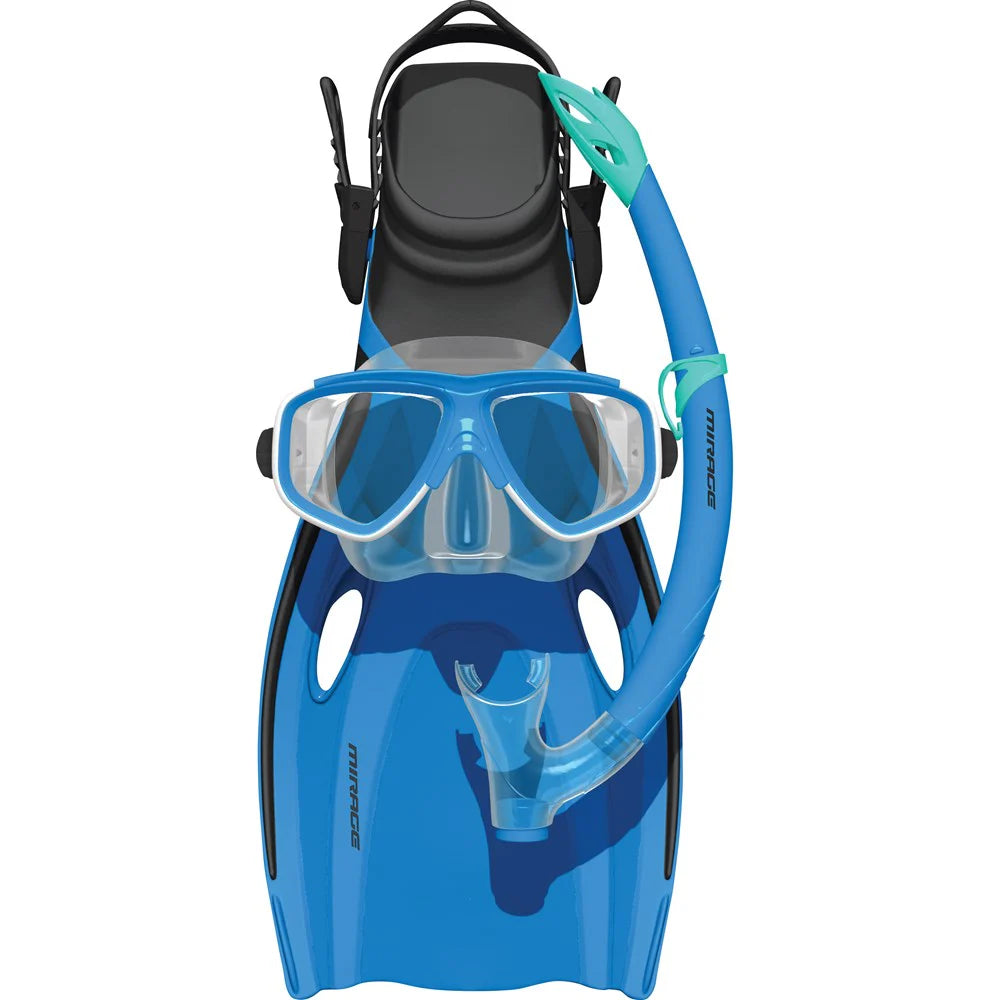

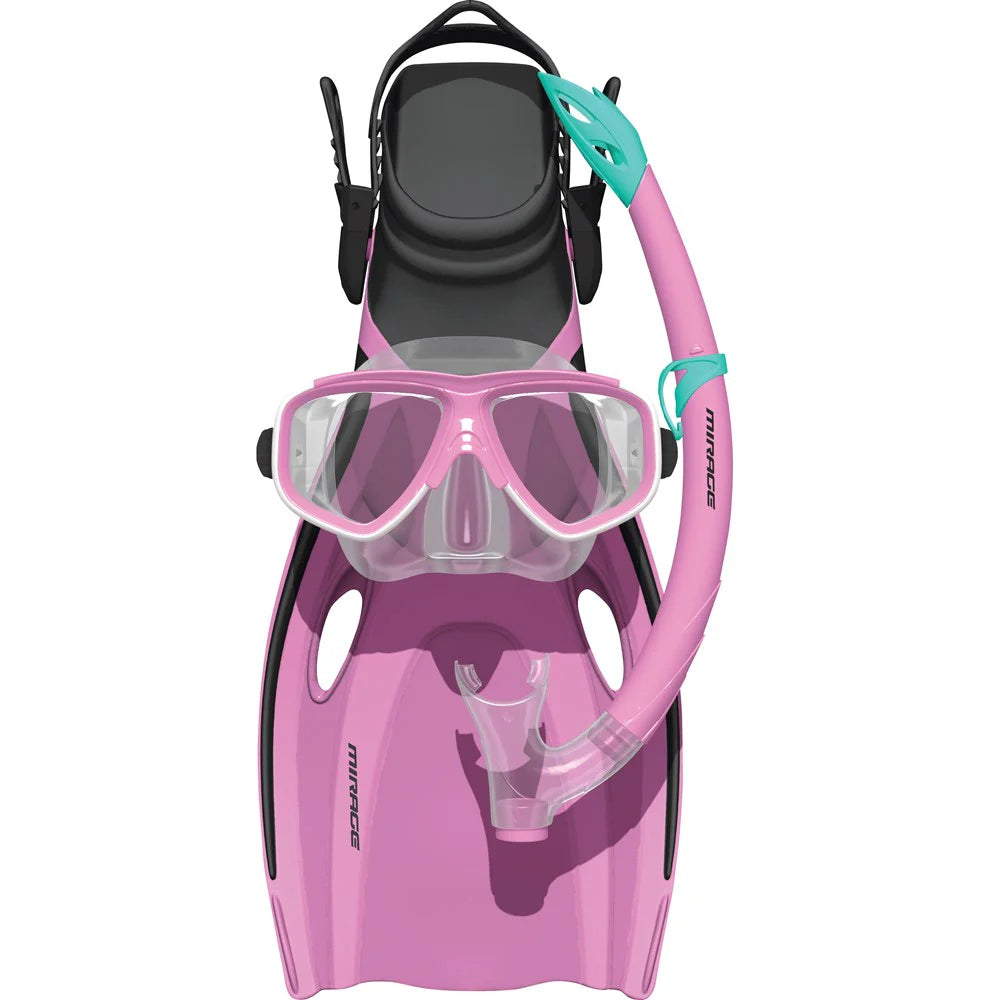

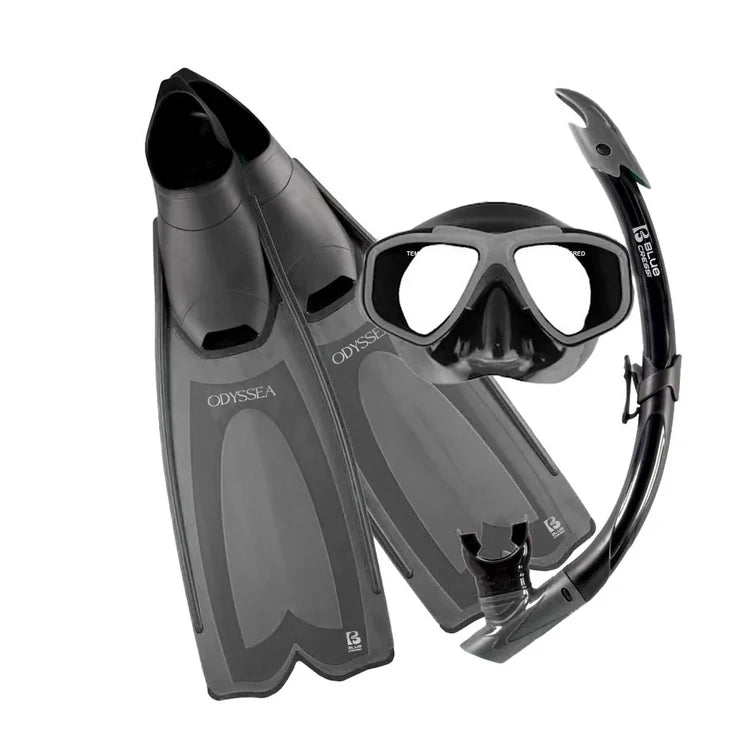

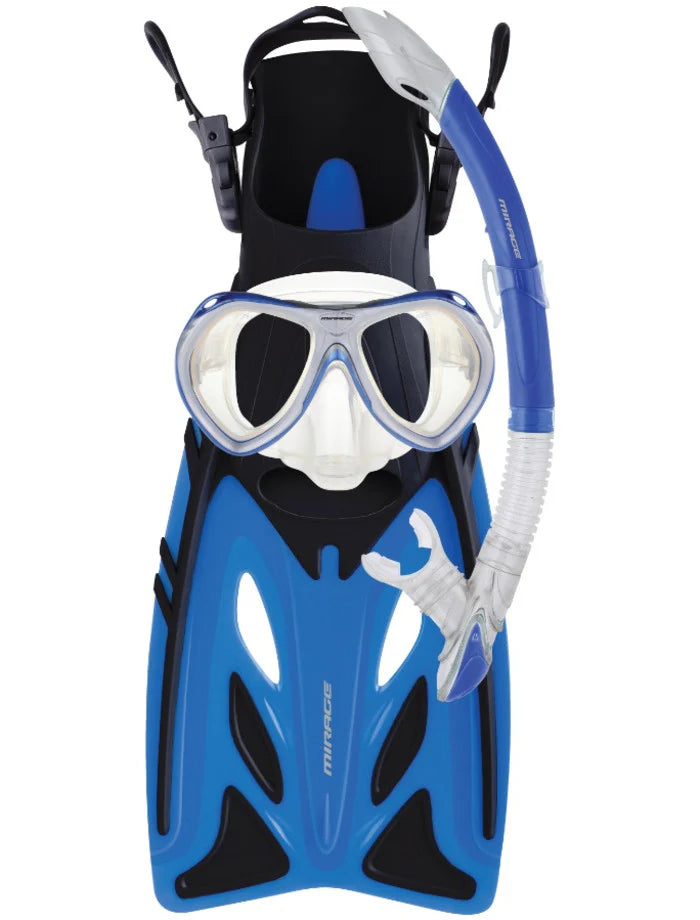

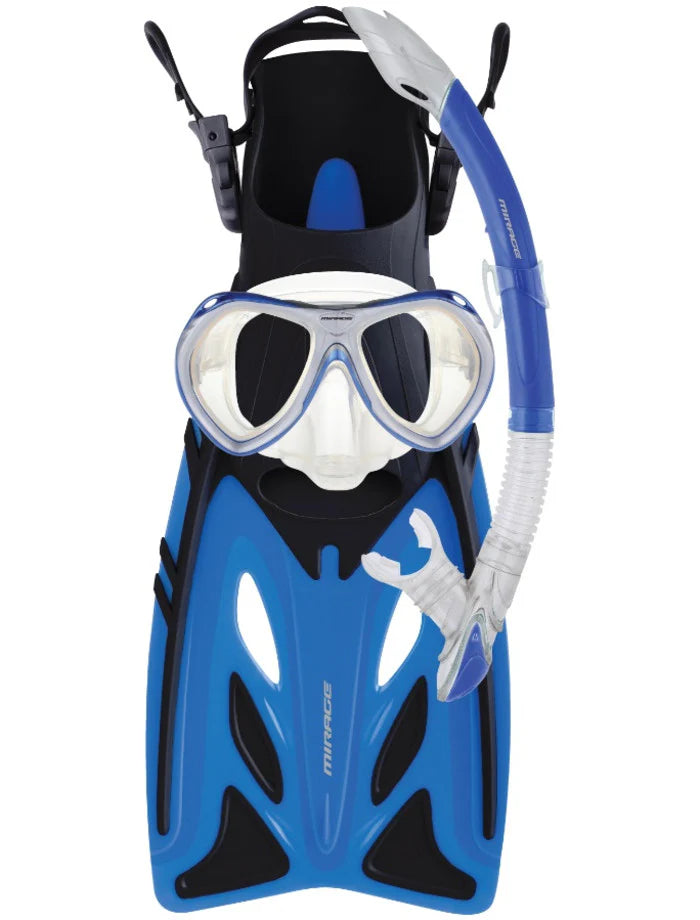

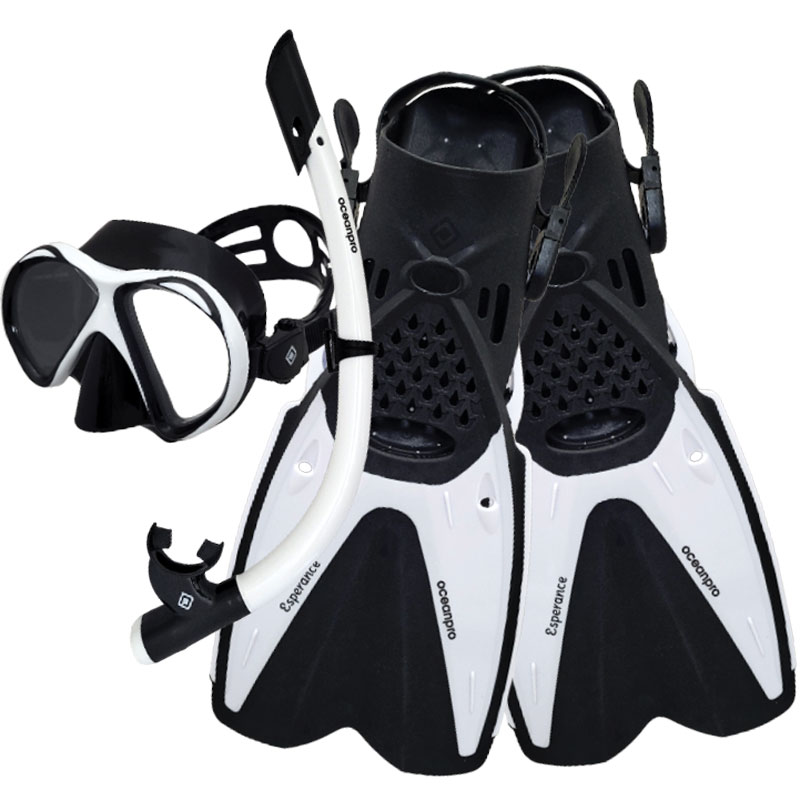

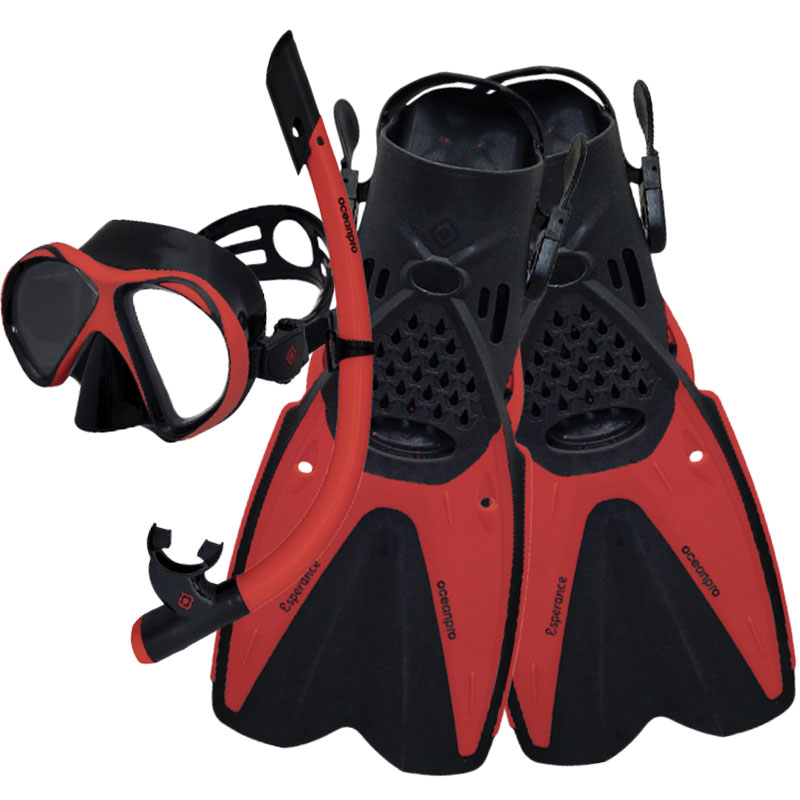

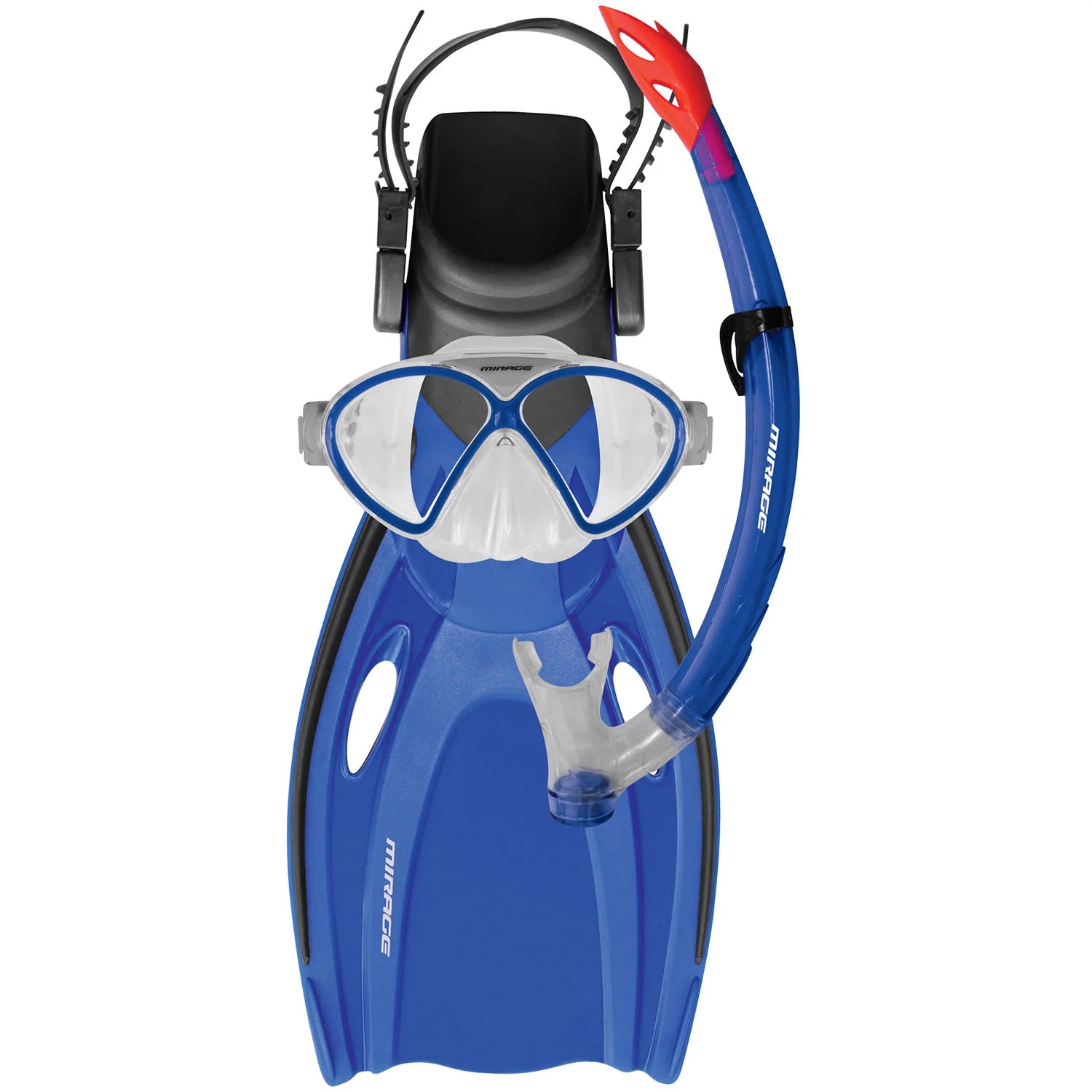

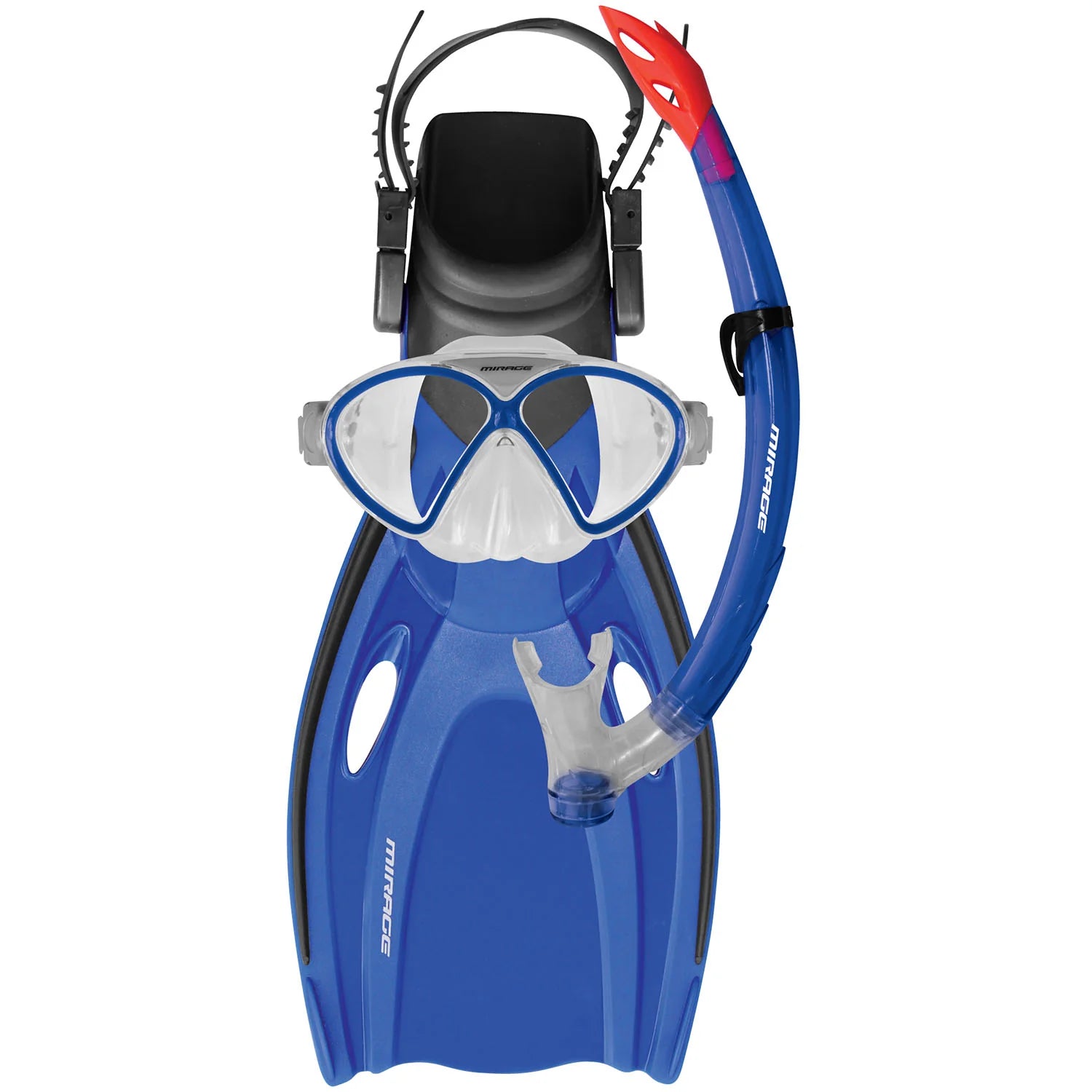

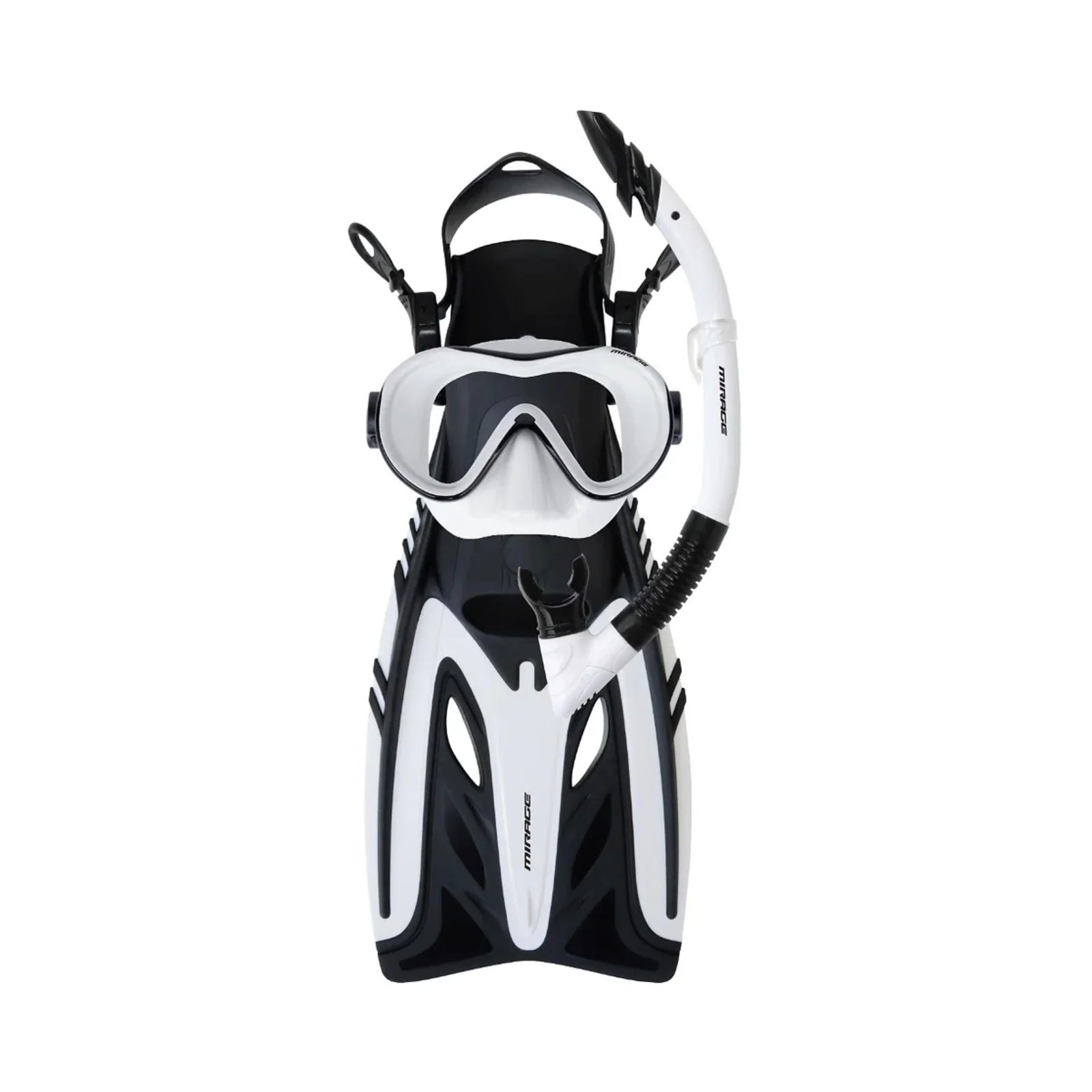



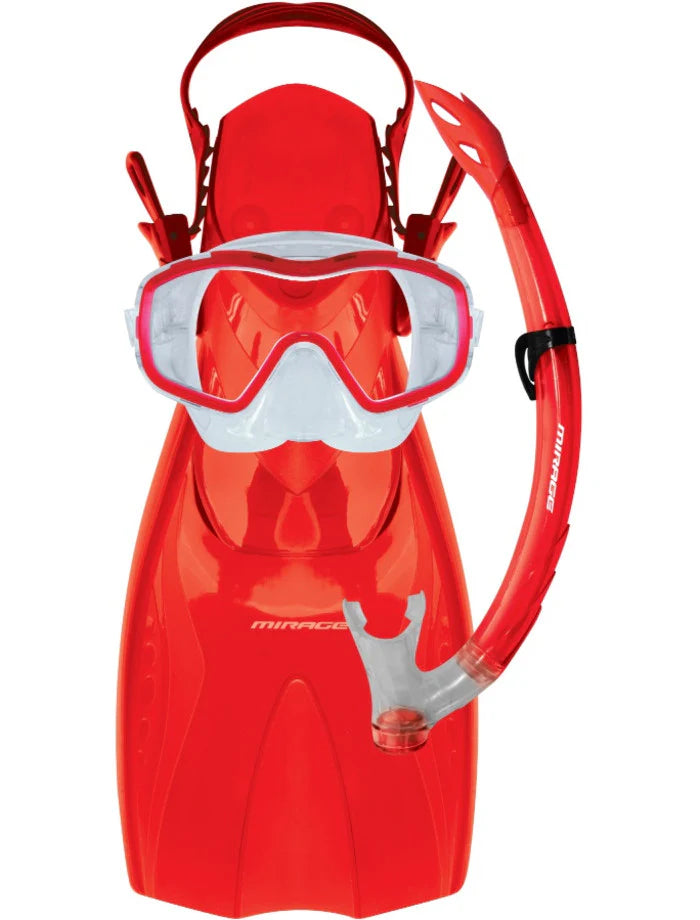

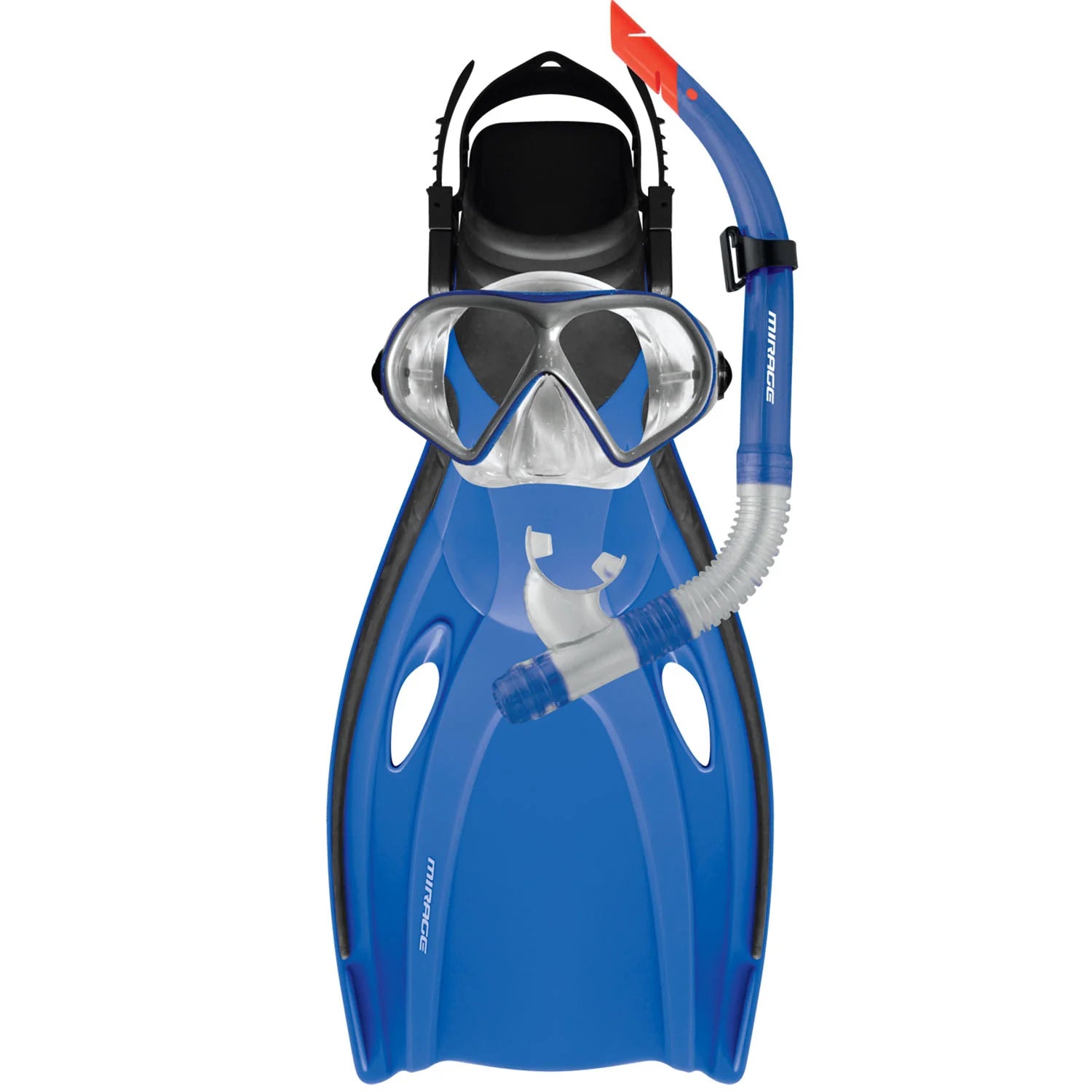

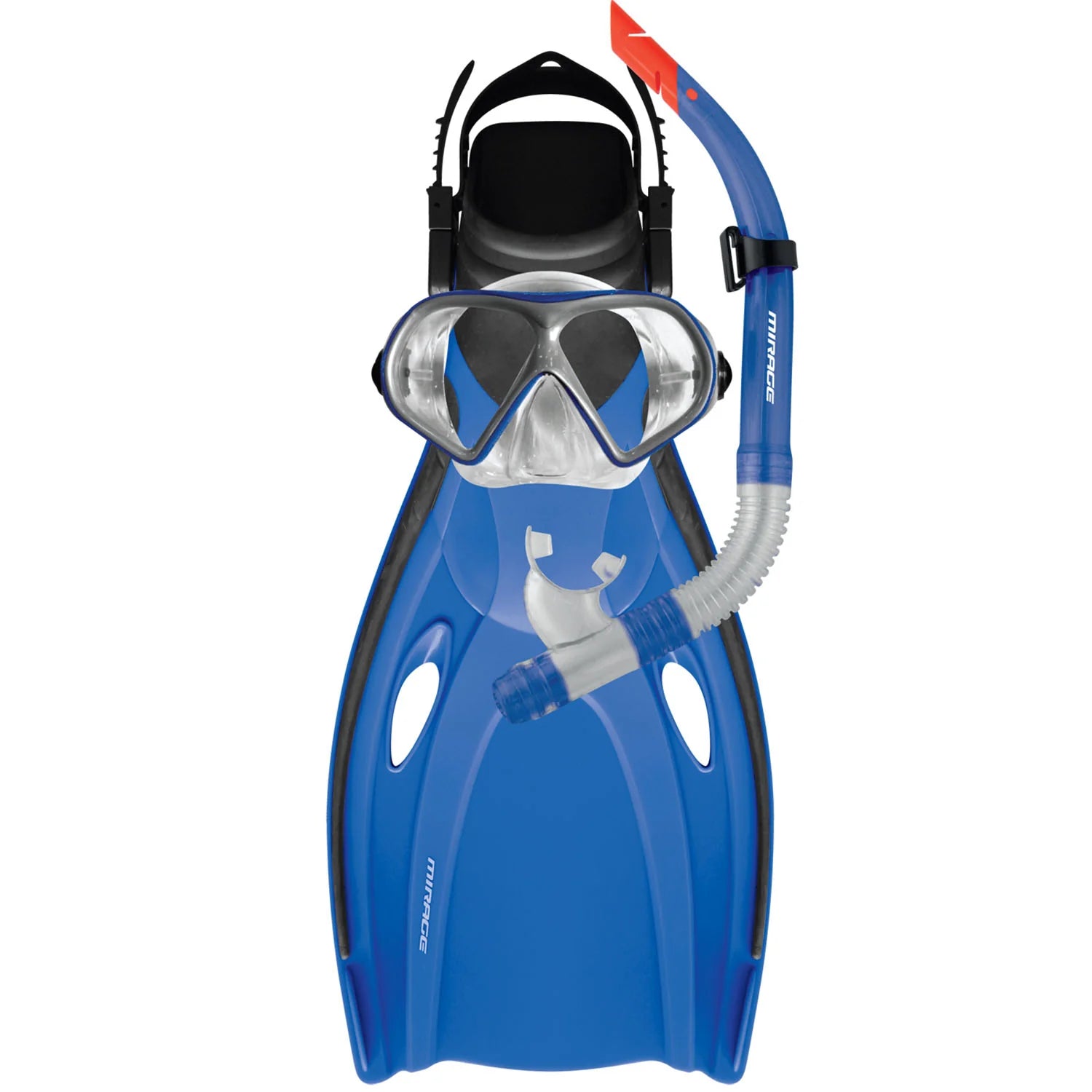

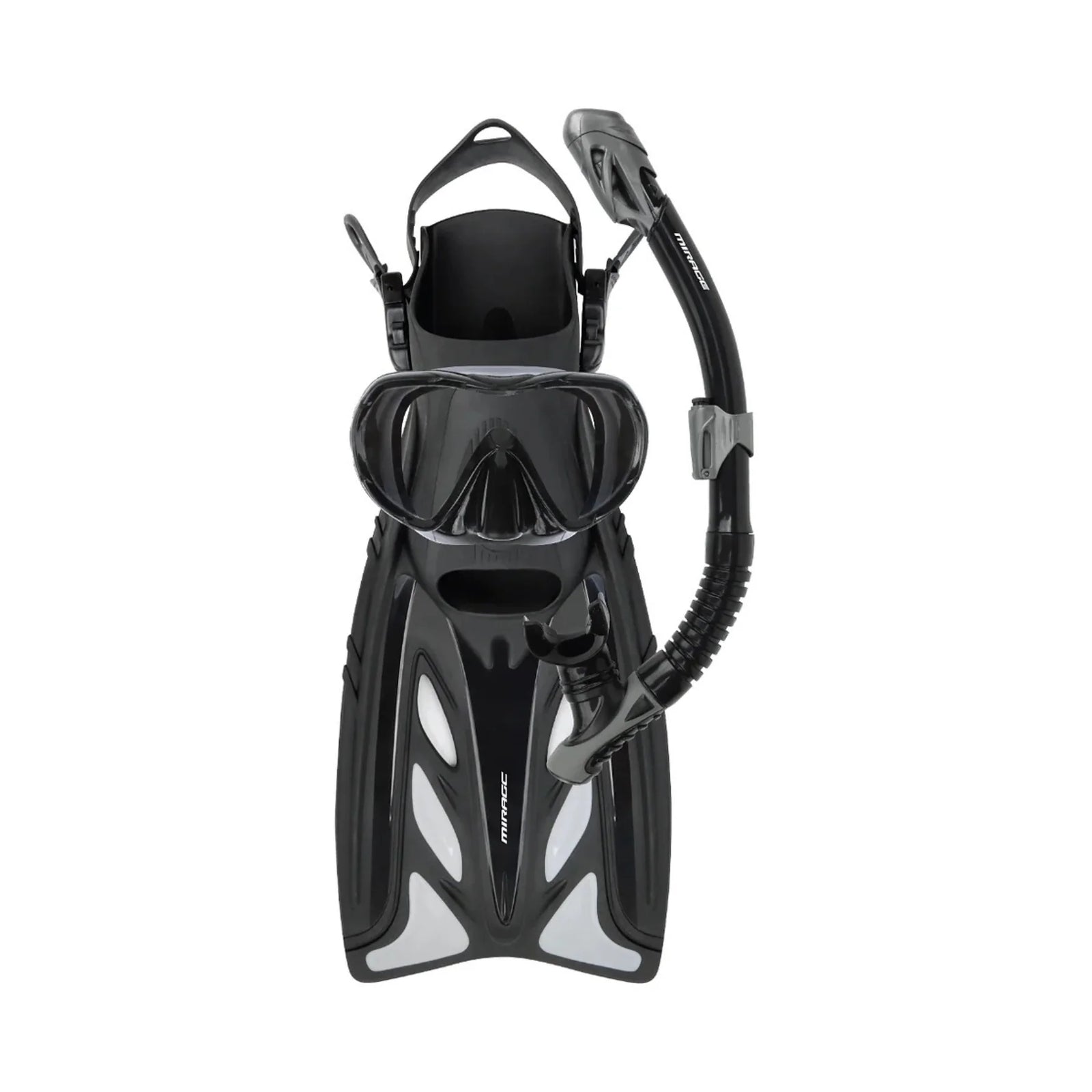

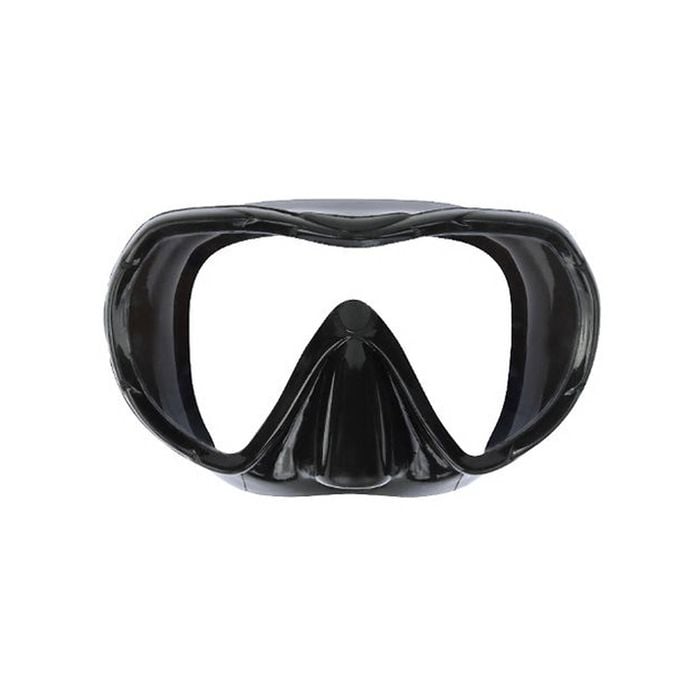

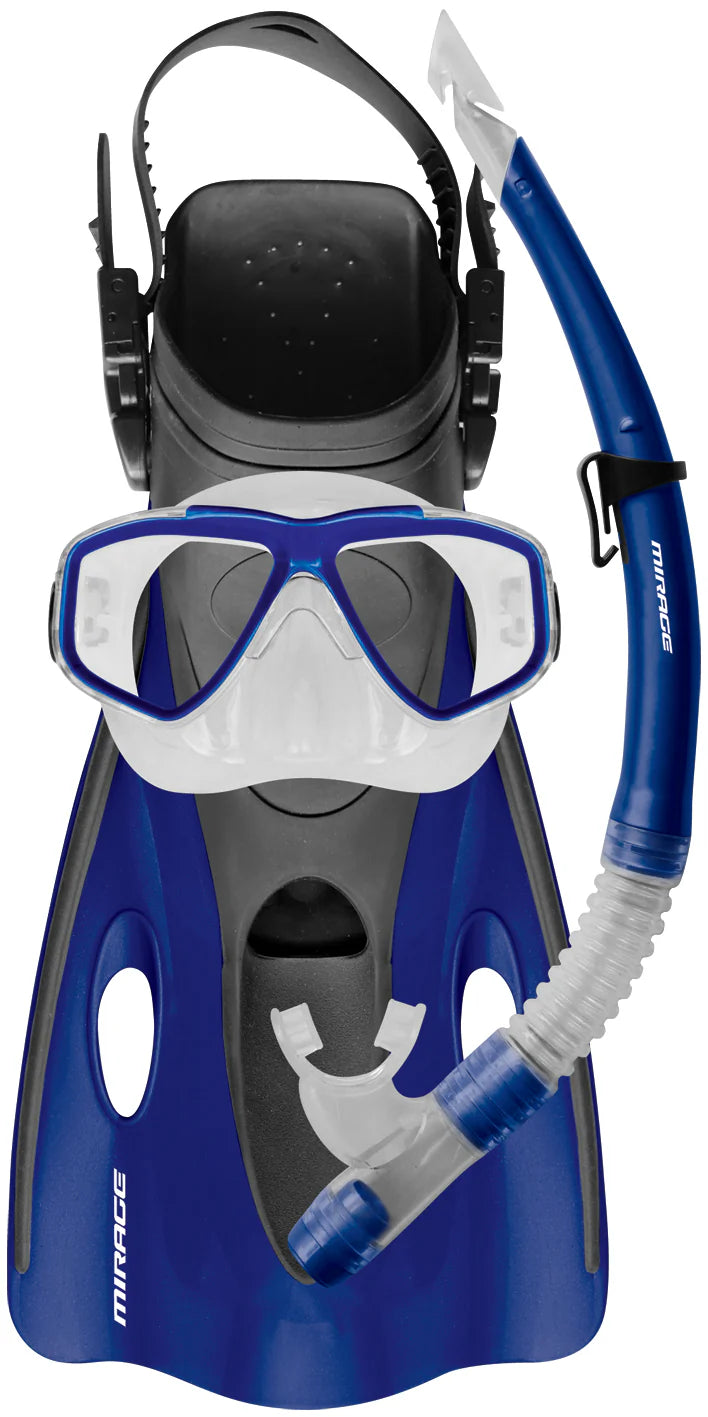

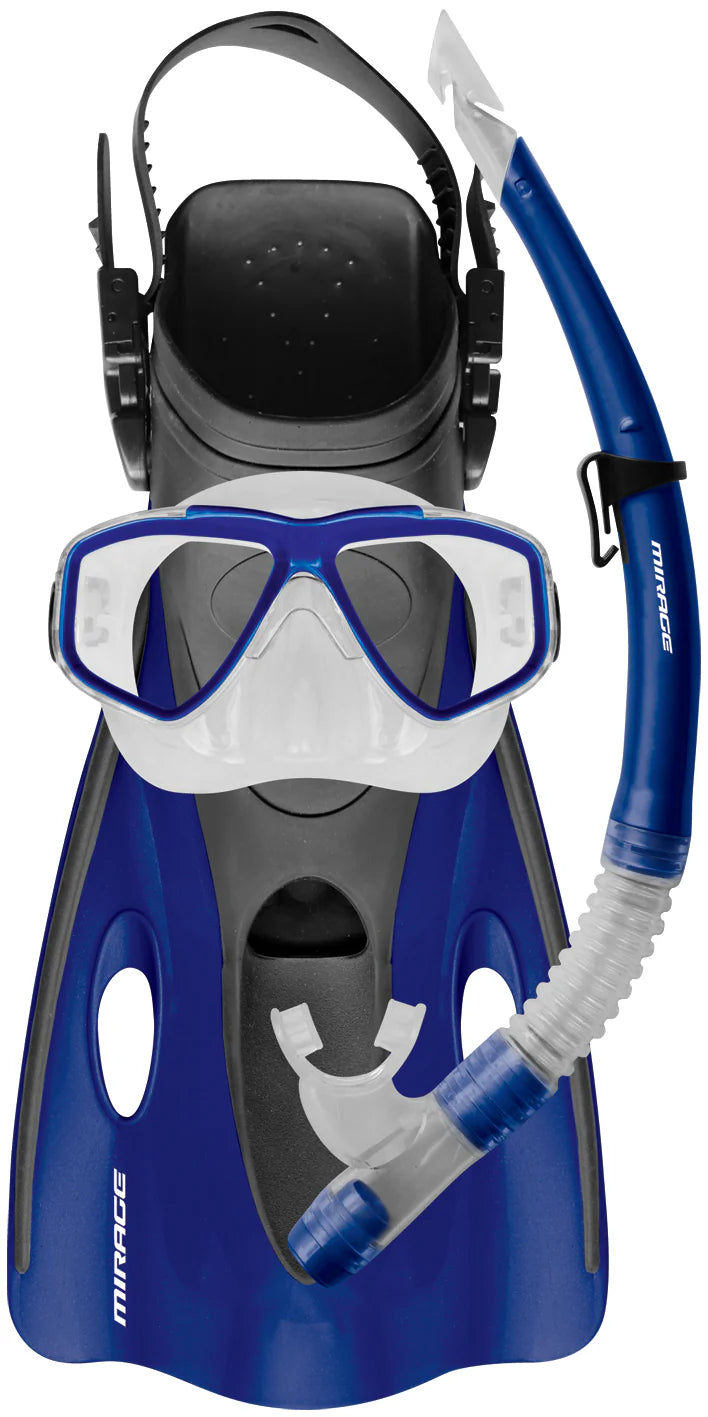


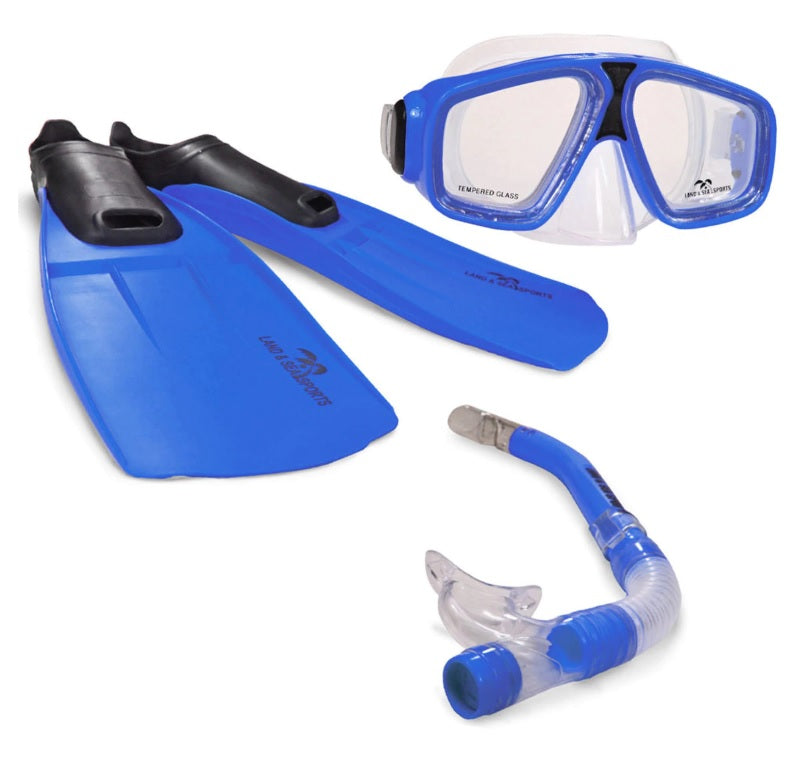


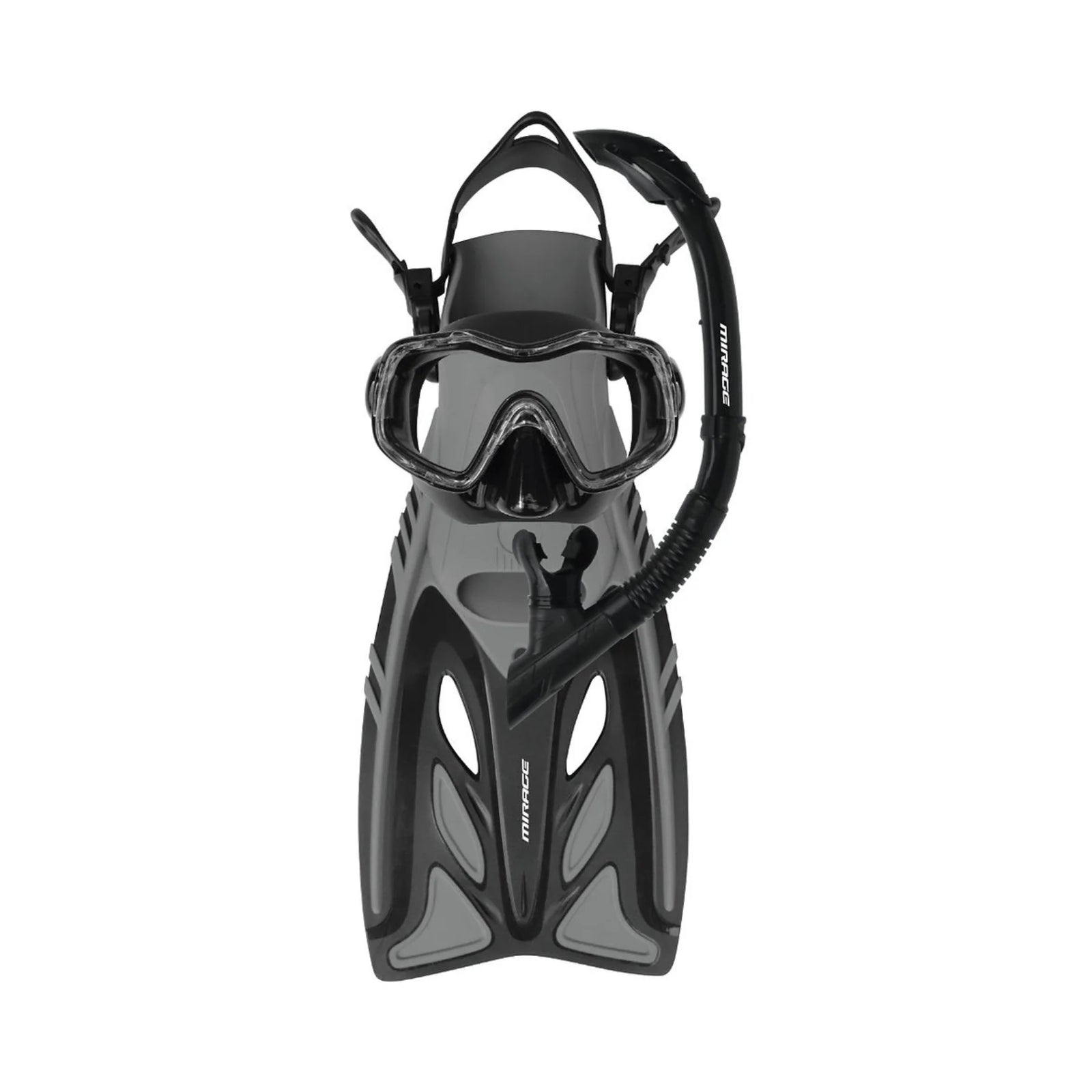

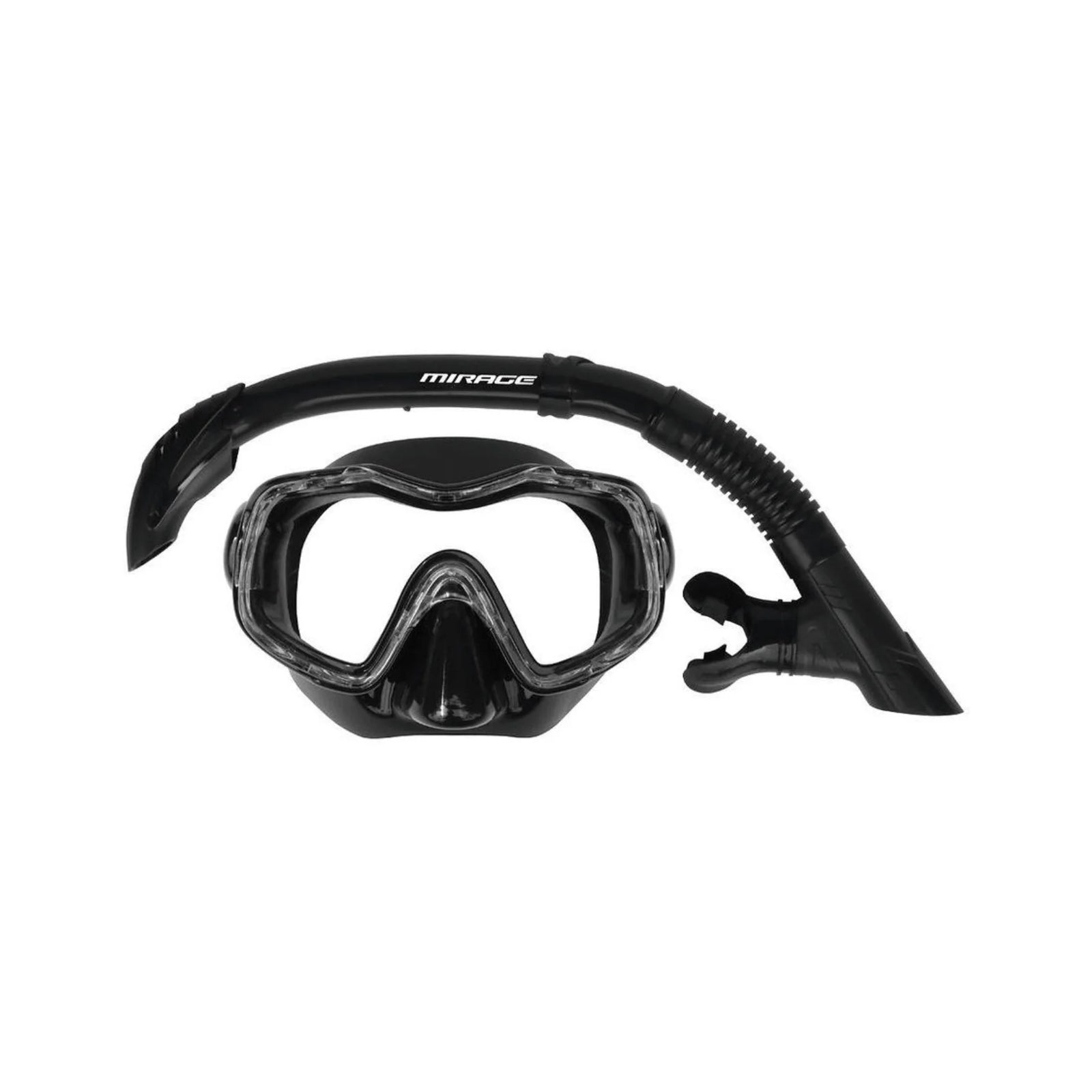

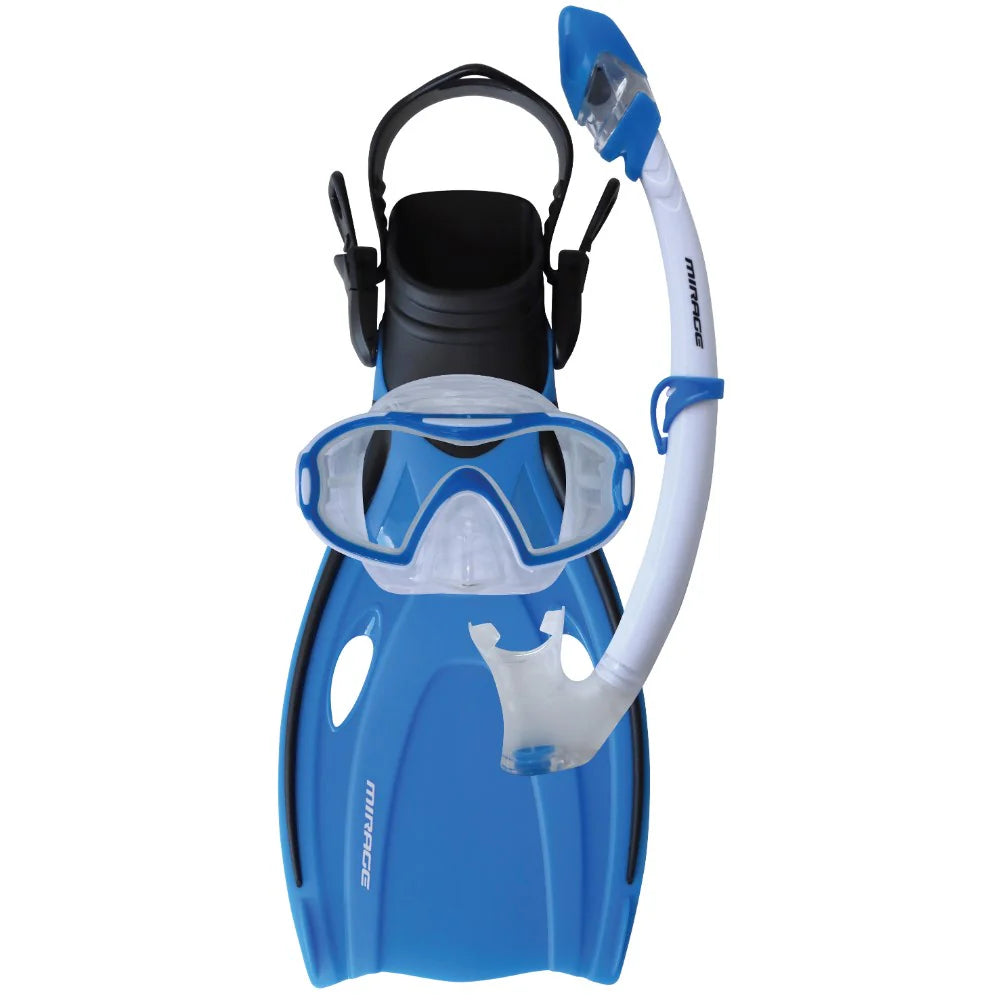

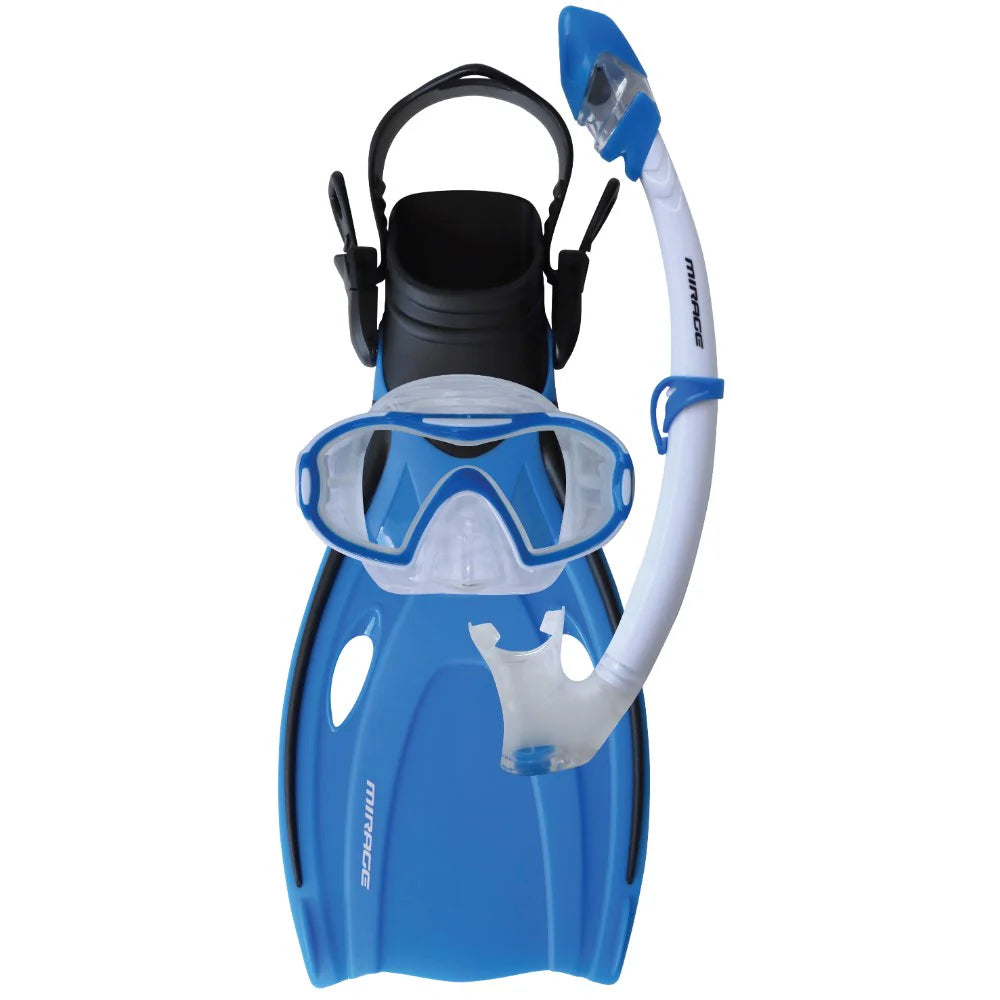

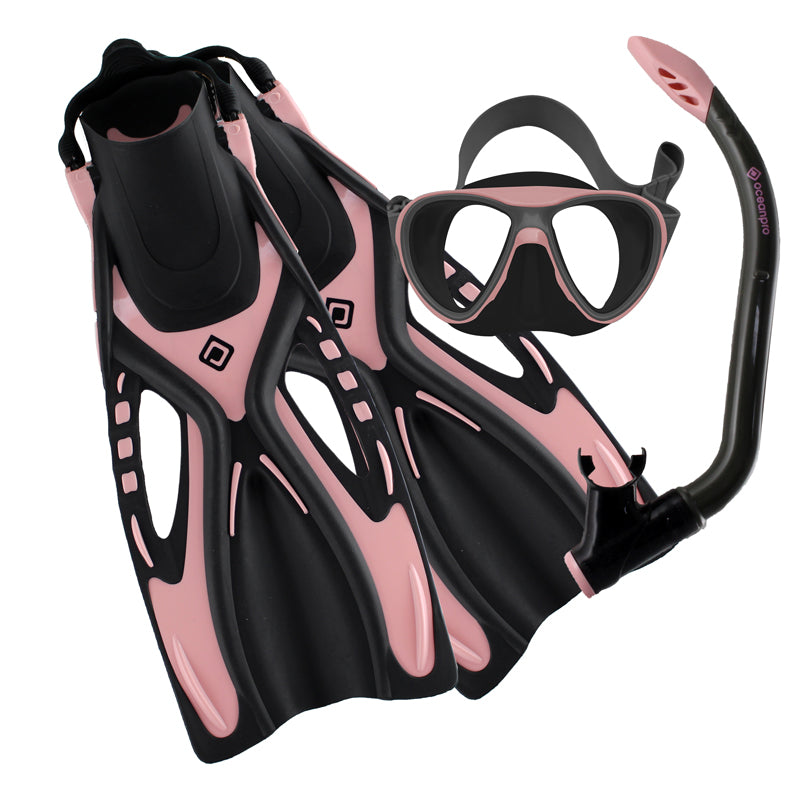

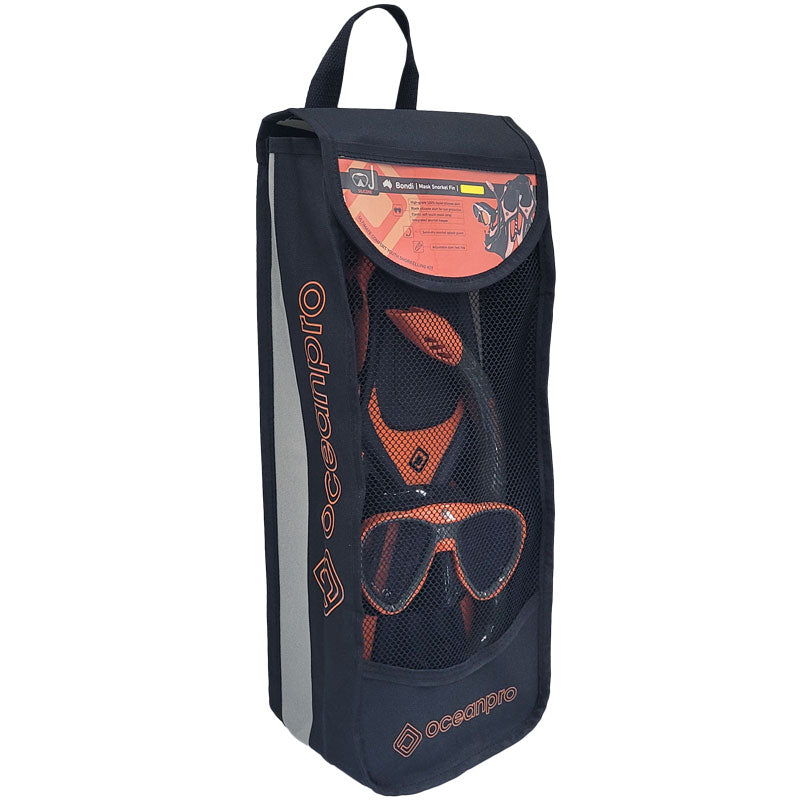


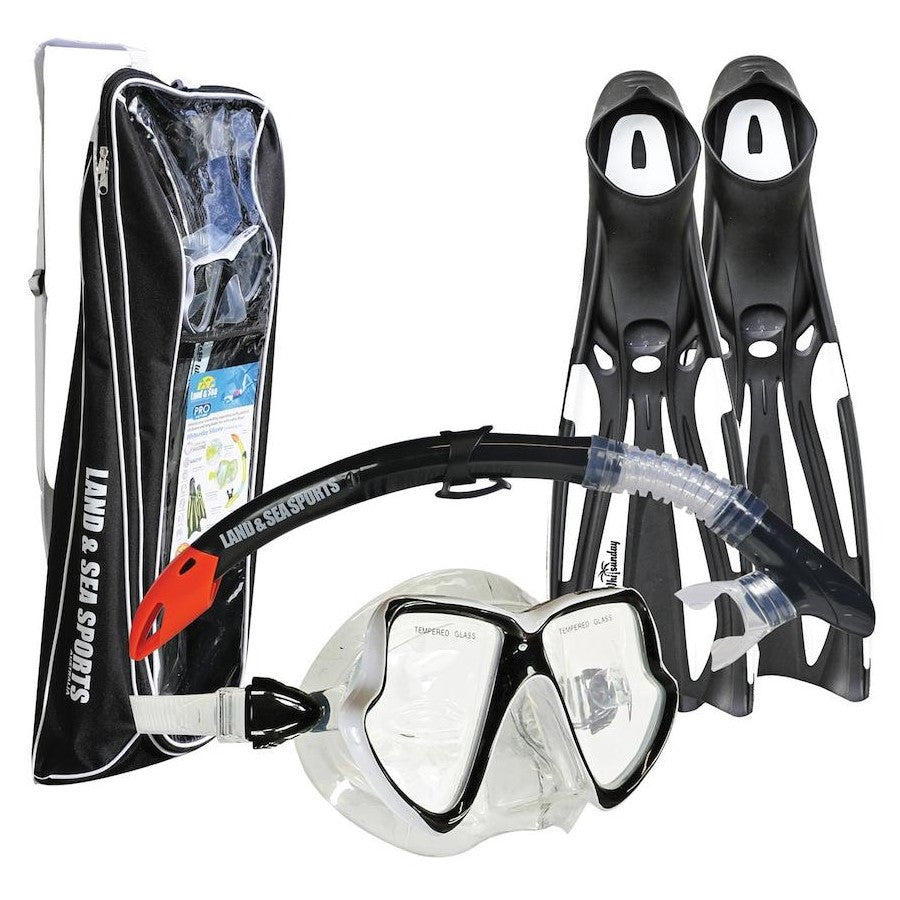


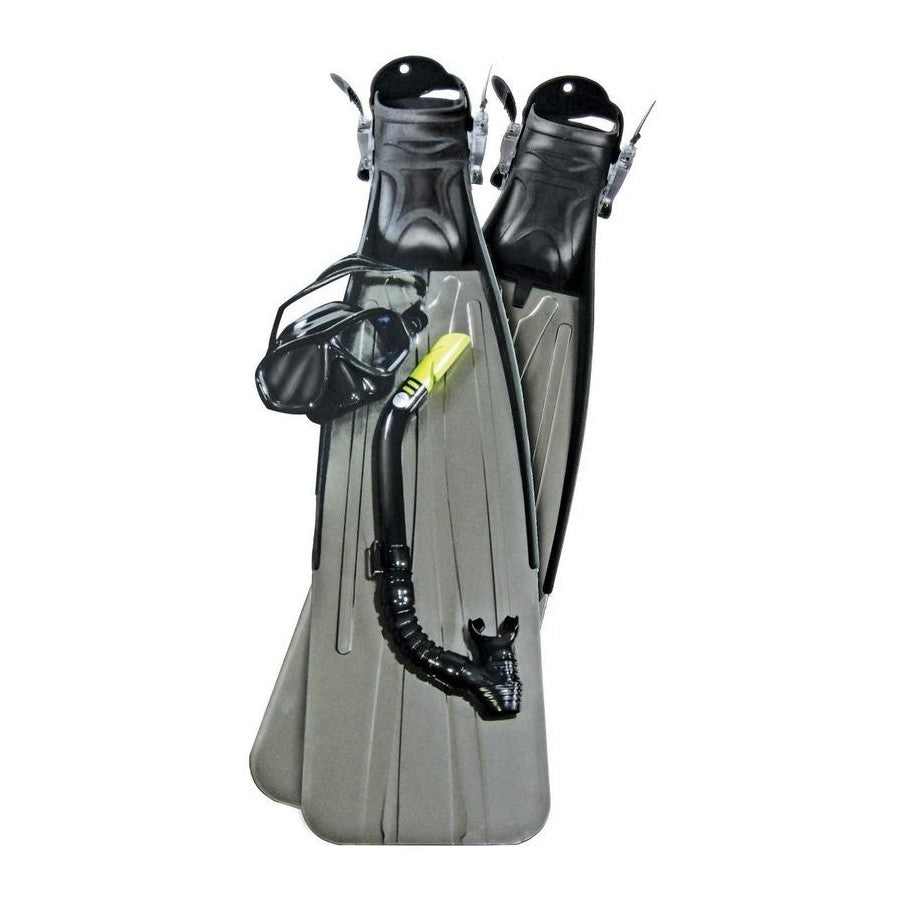

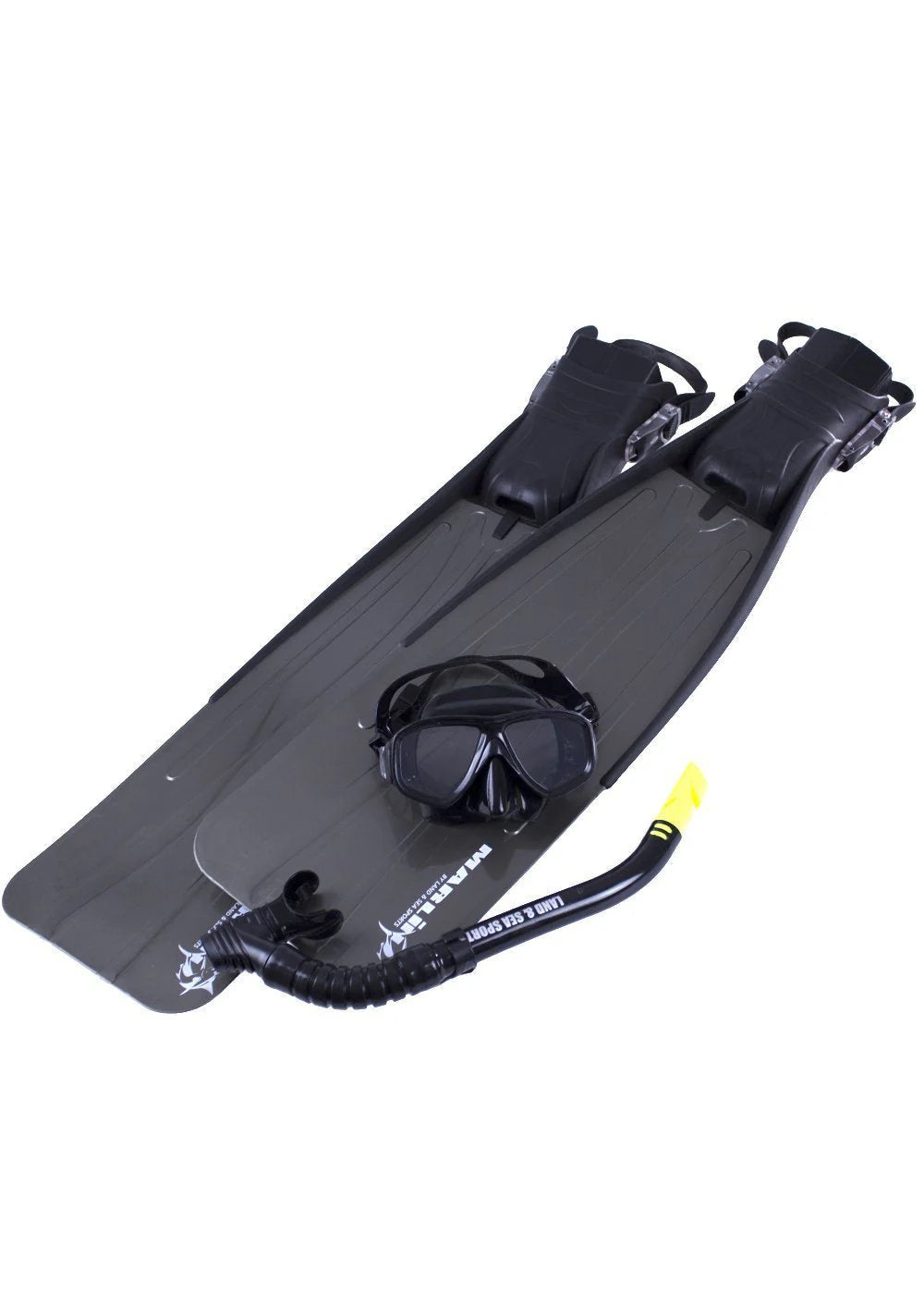


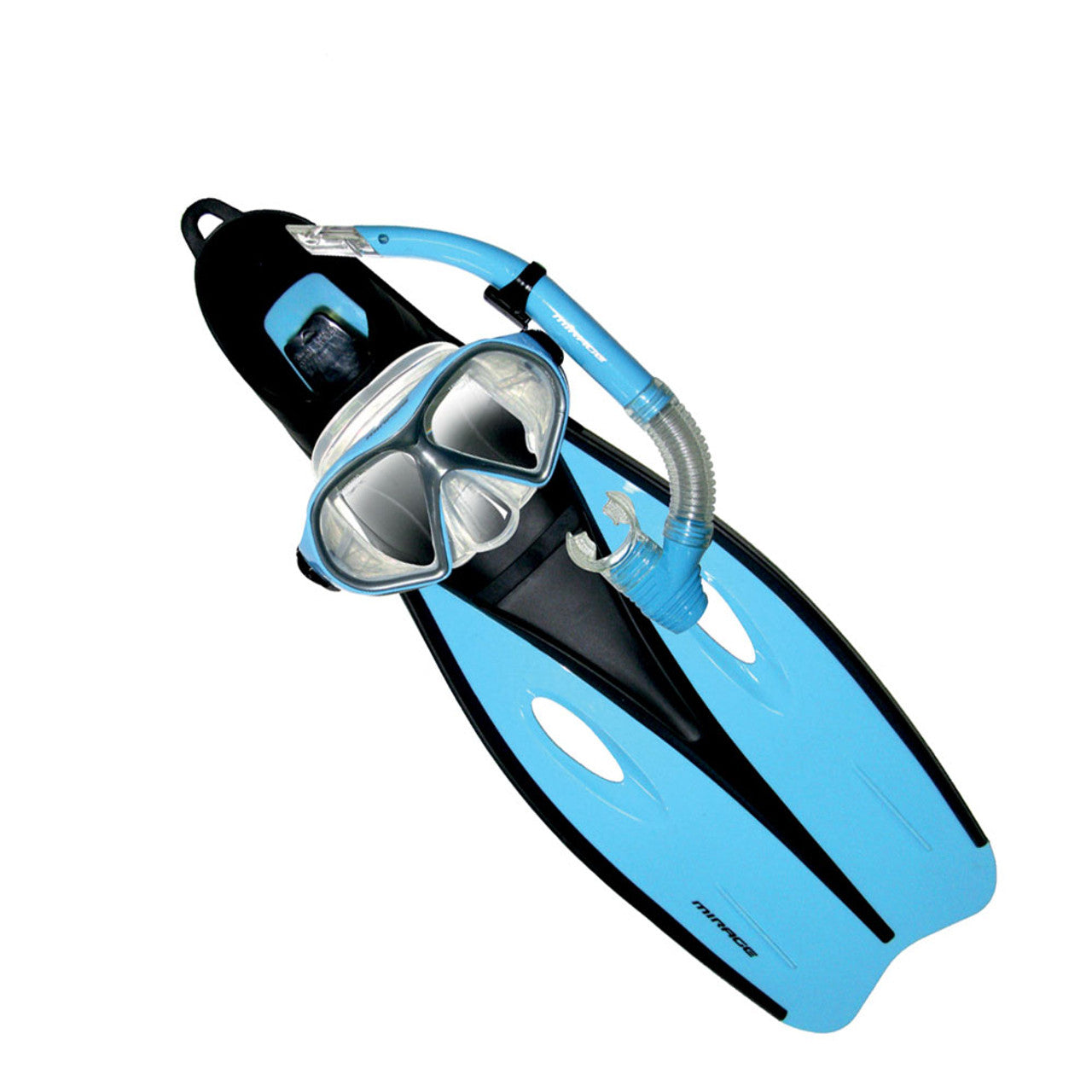

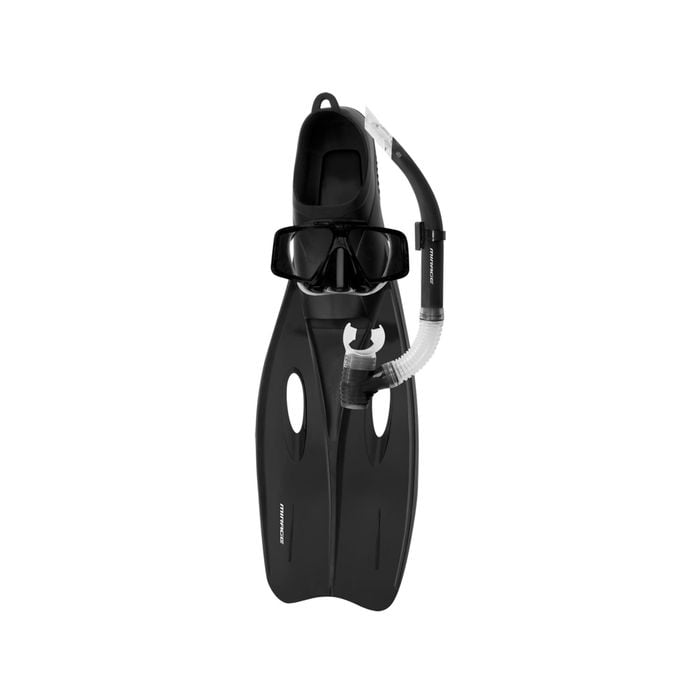

Complete sets with mask, snorkel and fins together, usually in a mesh or carry bag. This is the straightforward way to kit out a family for a holiday or get someone started without working out which pieces go together.
What to check before you buy
Fit is the only thing that really decides whether a set gets used. Sizes are given as ranges covering the foot pockets, and the mask is sized by face rather than by age — junior masks have a smaller skirt shaped for a child's face, which is what makes the seal work. An adult mask on a small face leaks regardless of strap tension.
Fins in a set are usually short recreational blades, which is exactly right for drifting over a reef and much easier to pack than long blades. They are easy to kick for hours and forgiving of poor technique.
Check whether the snorkel is dry or plain. Dry tops suit casual snorkelling because they stay empty when you duck under. If someone in the family is starting to dive down, a plain snorkel is the better long-term choice. Individual pieces are in dive fins and mask and snorkel sets.
Frequently asked questions
What size snorkel set should I buy for a child?
Junior sets, sized on foot length for the fins and on face size for the mask. An adult mask will not seal on a child's face however tight the strap is.
Are snorkel sets good quality?
The better ones use tempered glass lenses and silicone skirts and are perfectly good for recreational use. Cheap plastic-lens sets are the ones to avoid.
Do I need fins to snorkel?
Not in a pool or a sheltered bay, but they make a large difference anywhere with current or distance to cover, and they make swimming far less tiring.
Can I use a snorkel set for diving down?
For short duck dives, yes. If someone is getting serious about freediving they will eventually want a low-volume mask, longer fins and a plain snorkel.