

FREE SHIPPING ON ORDERS OVER $150*

AUSSIE FAMILY OWNED BUSINESS FOR OVER 40 YEARS

100% SATISFACTION GUARANTEED
Skirted Lures
Skirted Lures
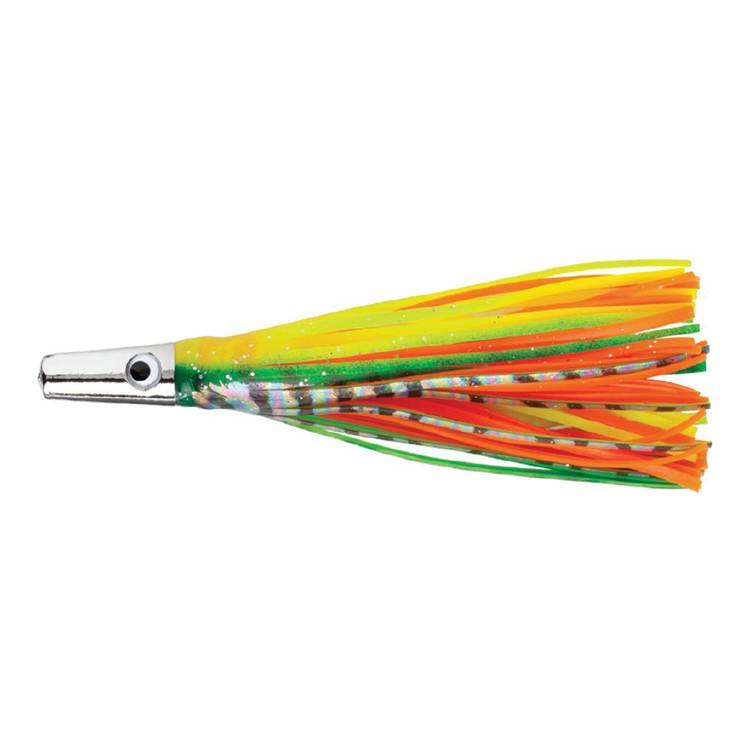
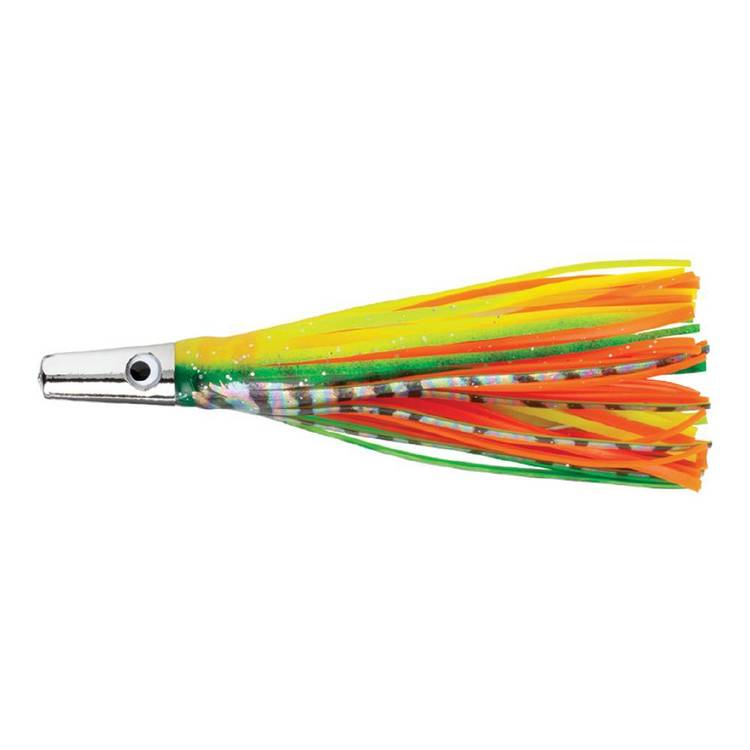
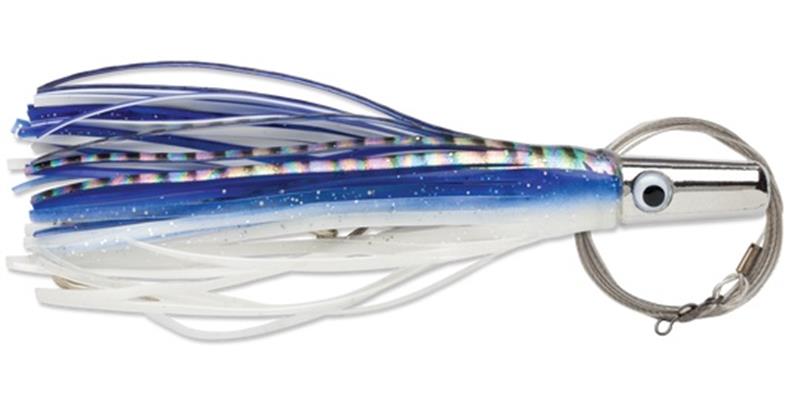
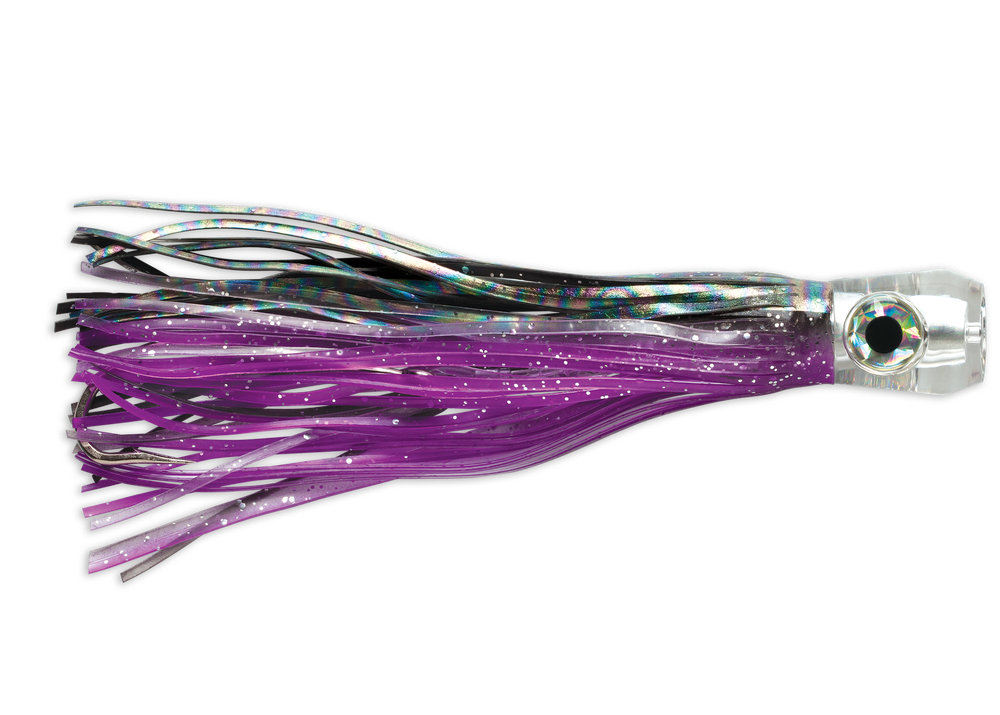
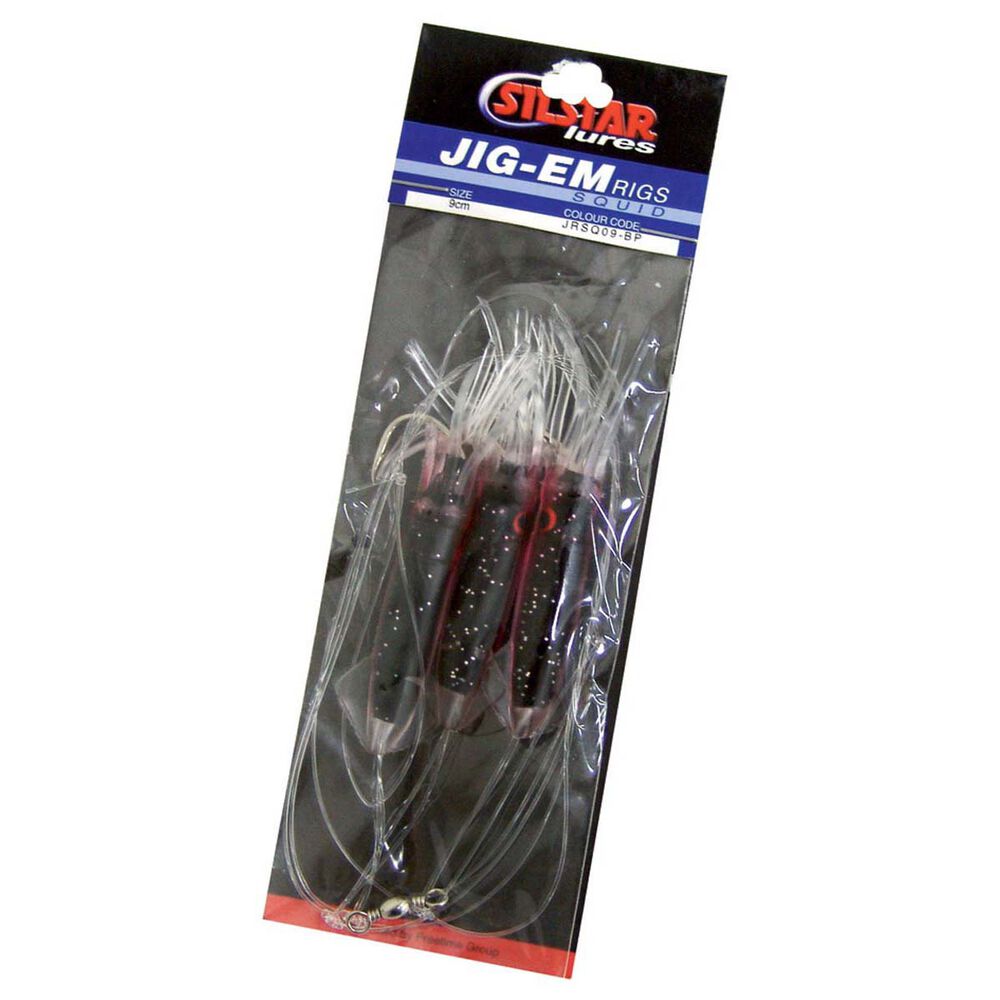
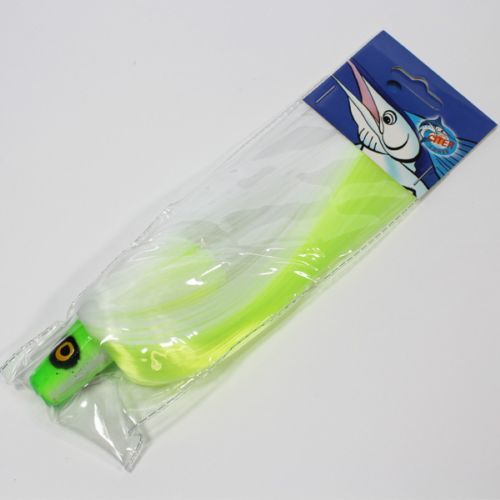
Skirted lures are the trolling lures of offshore game fishing — a moulded head with a vinyl or rubber skirt trailing behind it, rigged on heavy leader and pulled at speed. The head shape makes the action; the skirt provides the profile and the colour.
Head shapes and positions
A pusher or flat-faced head shoulders water and leaves a steady bubble trail, which is the reliable all-rounder. A slant or angled face makes the lure dive and dart, so it swims with more movement. A chugger cups the water and makes noise, which suits rougher conditions.
Where a lure sits in the spread matters as much as which lure it is. Short corner positions get run in the prop wash where the white water hides the leader, while long riggers sit in clean water further back. Most crews build a spread with different head types so the lures are not all doing the same thing.
Skirts are consumable — they get shredded and faded and are meant to be replaced. Many anglers re-skirt heads rather than buying whole new lures. The rest of the lure box is in fishing lures, and rigging accessories covers the components for rigging your own.
Frequently asked questions
What is the difference between a pusher and a slant head?
A pusher has a flat face that shoulders water and leaves a smoke trail while swimming fairly straight. A slant head is cut on an angle, so it dives and darts with a more erratic action.
How fast do you troll skirted lures?
Faster than bait trolling. Most skirted lures are designed for a brisk trolling speed, and the right speed is the one where the lure swims and breathes rather than skipping clear of the water.
Do skirted lures need a hook rig?
Yes. They are sold as lure heads and skirts, and are rigged onto heavy mono or cable with single or double hooks to suit what you are chasing.
Can I replace just the skirt?
Yes, and most regular game fishers do. Heads last for years while skirts get chewed and faded, so re-skirting is normal maintenance rather than a repair.
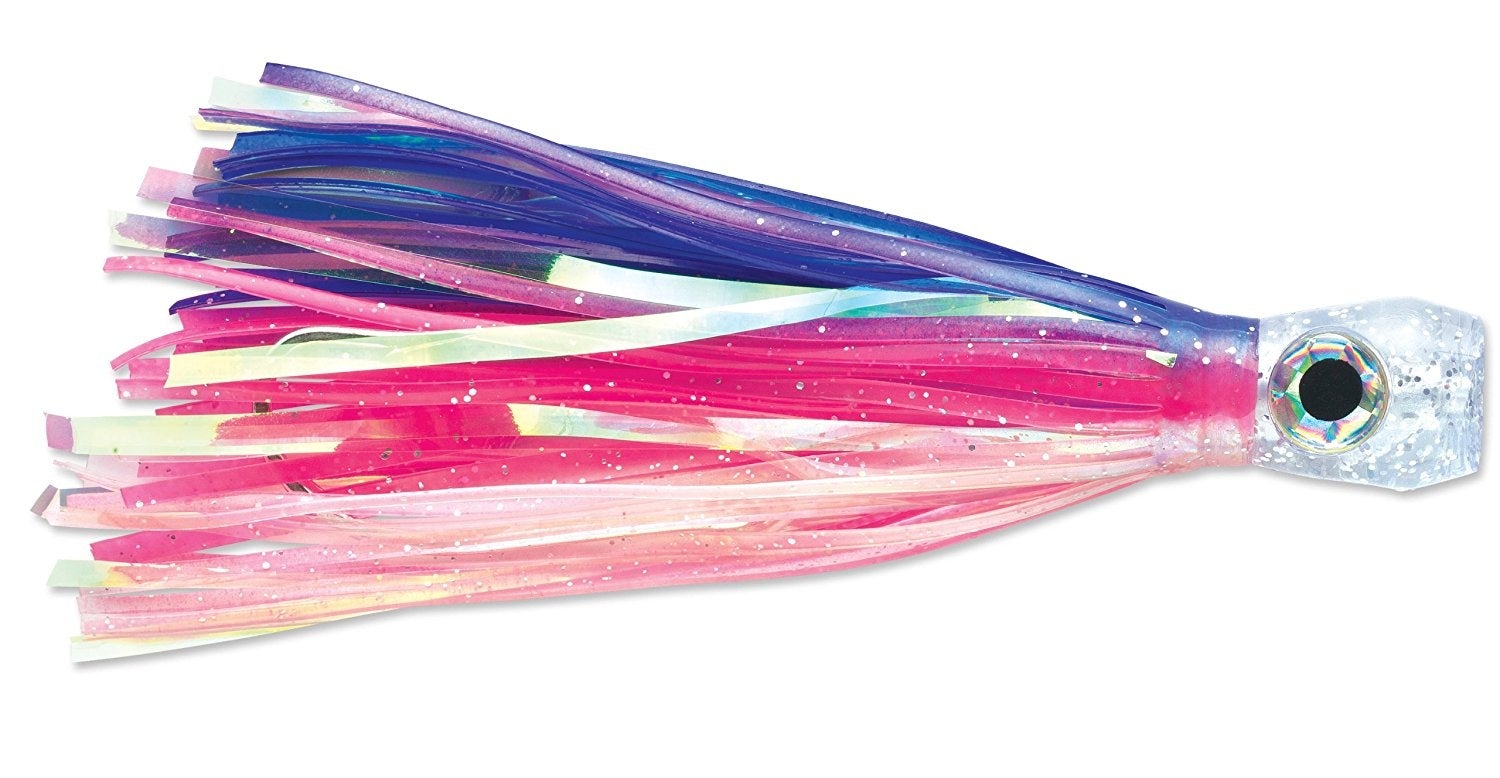
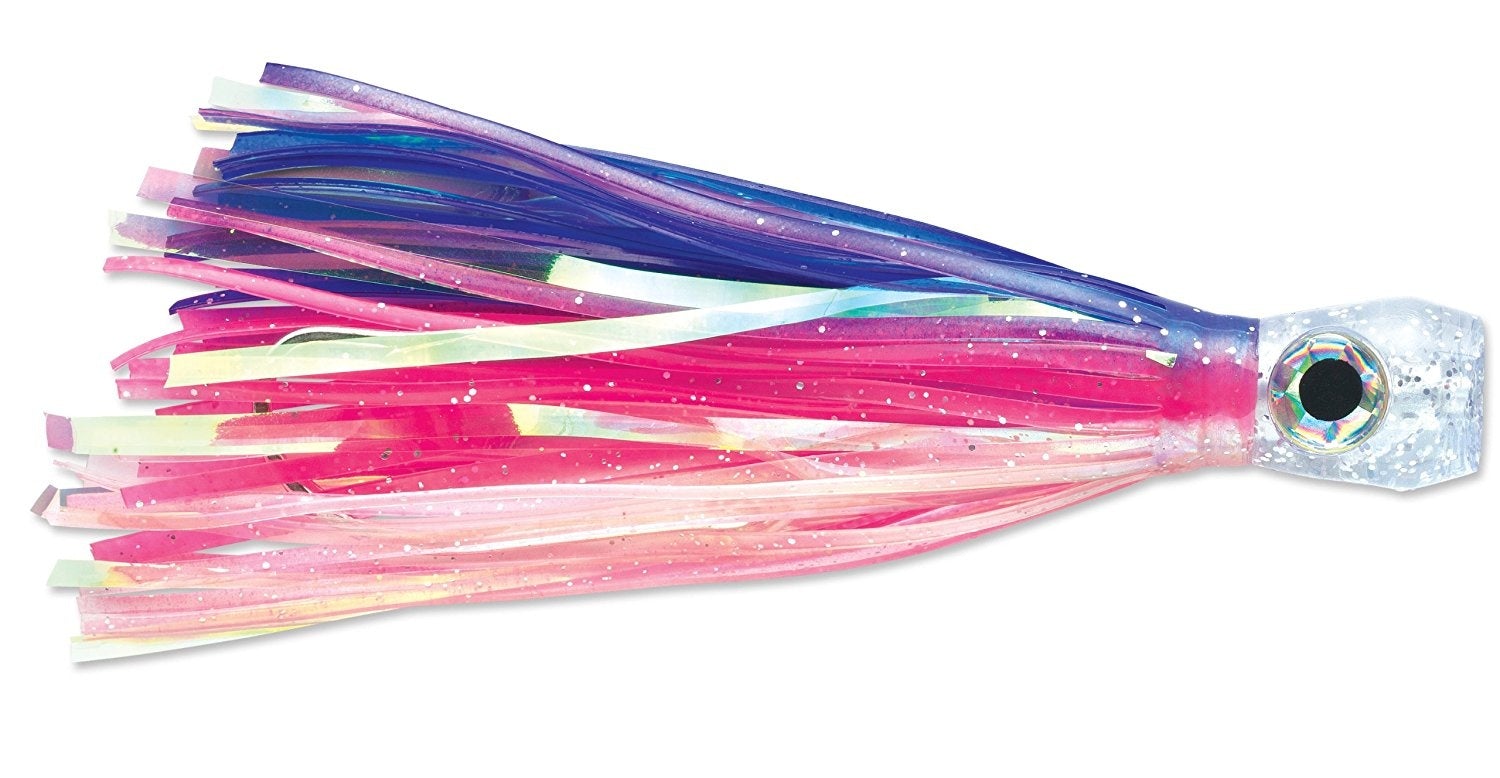
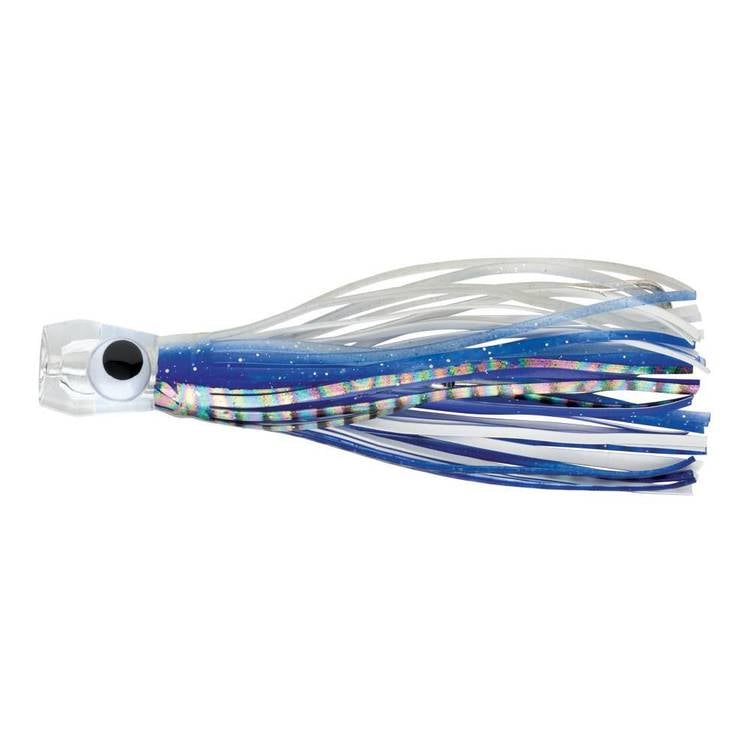
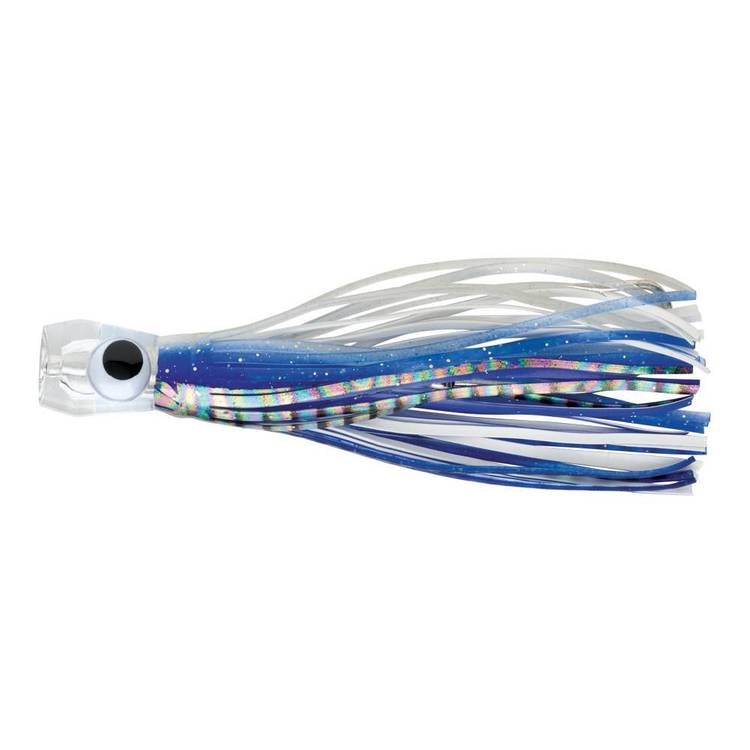

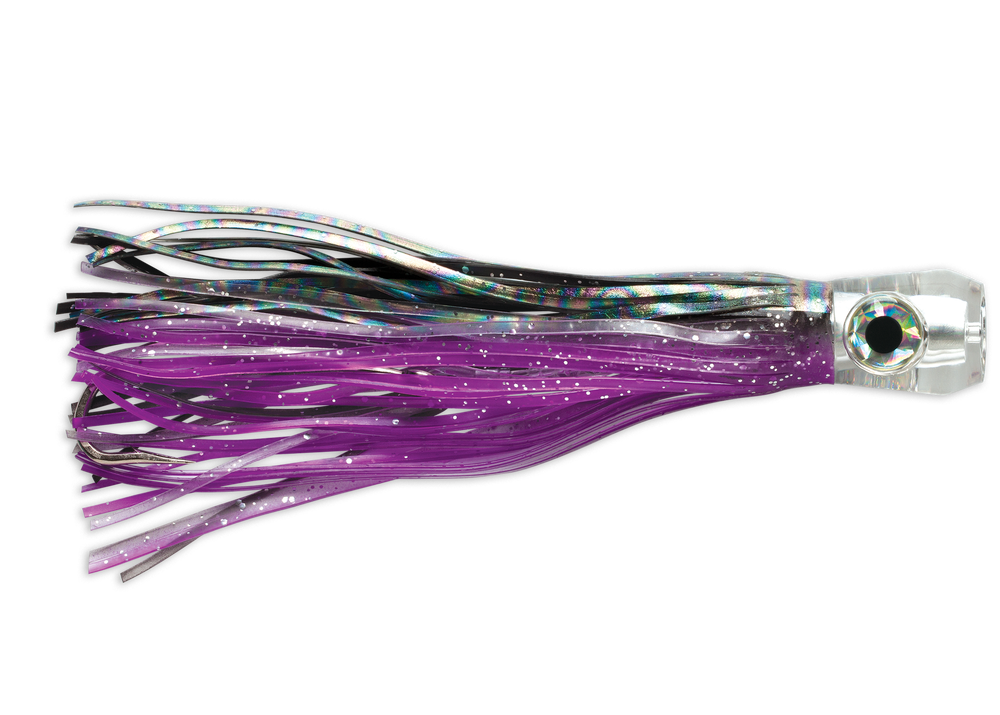
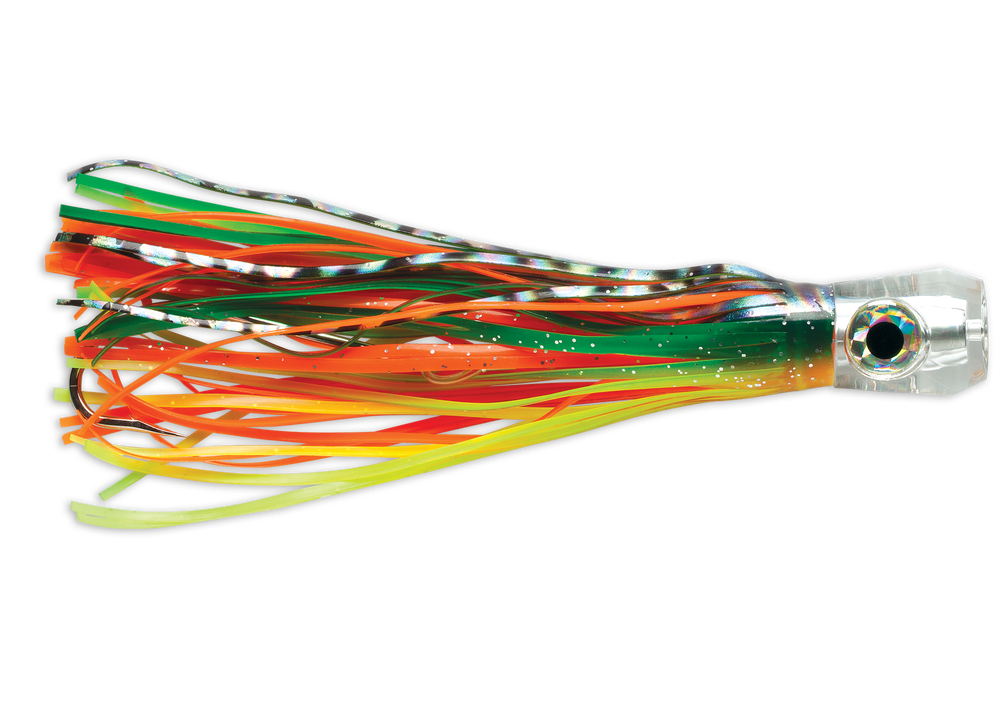

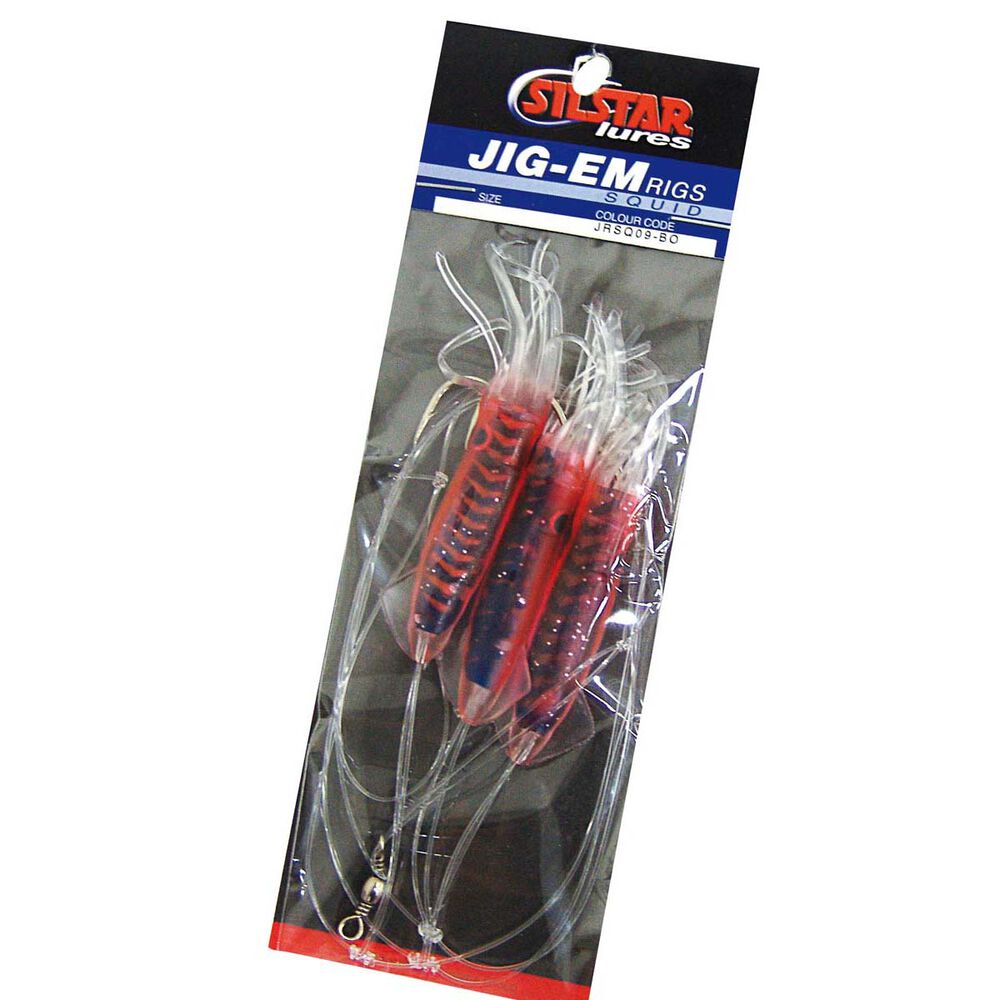
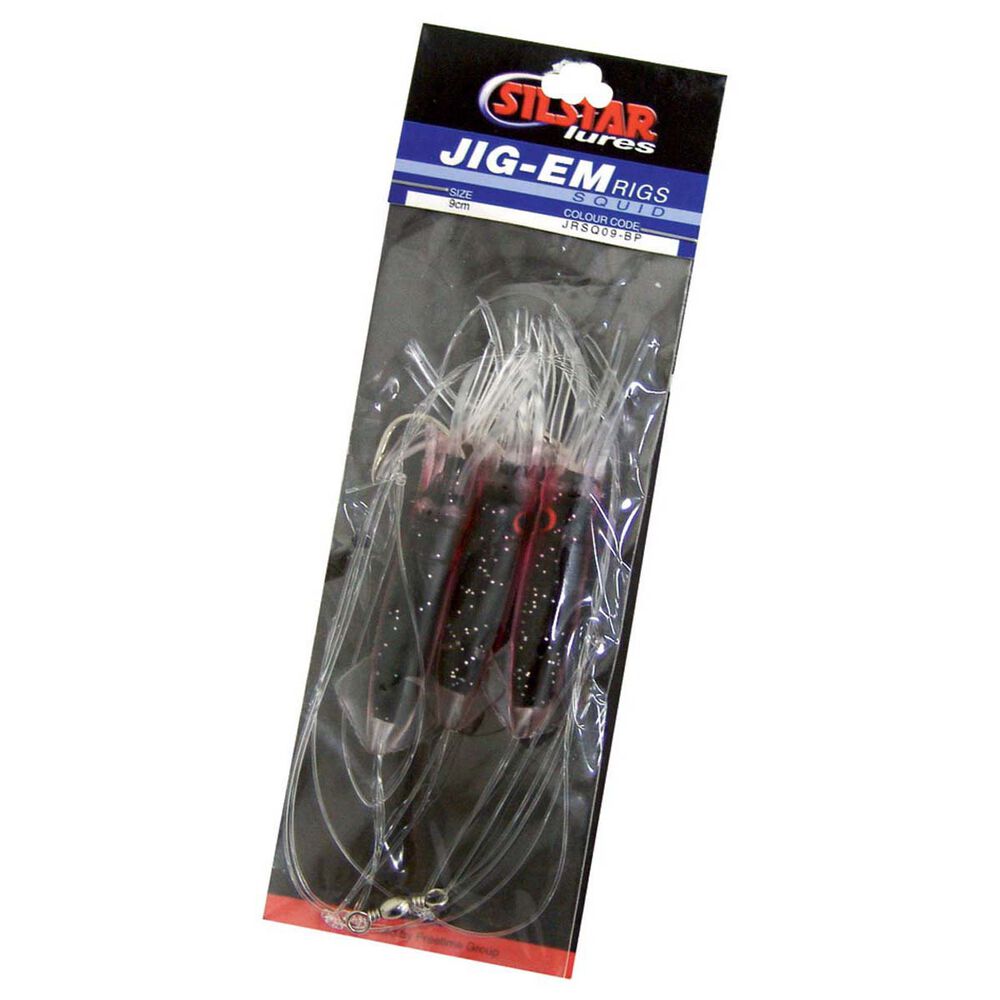
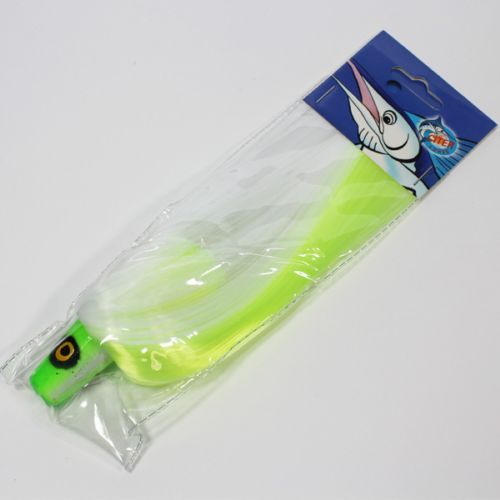
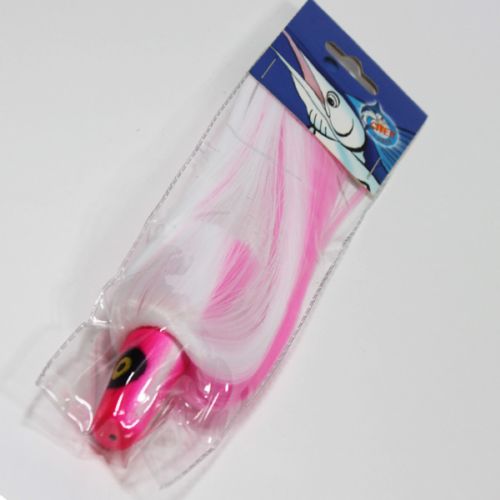

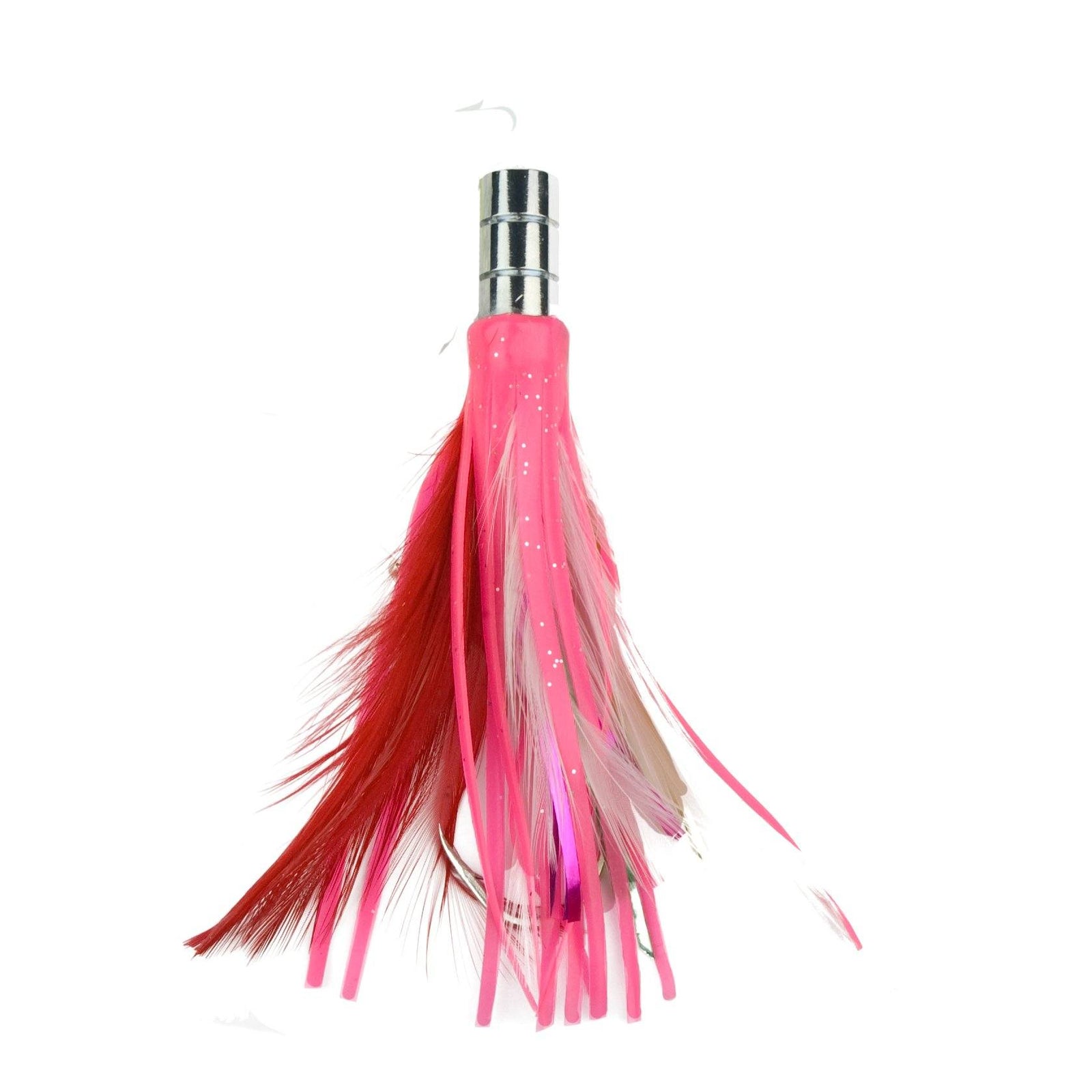
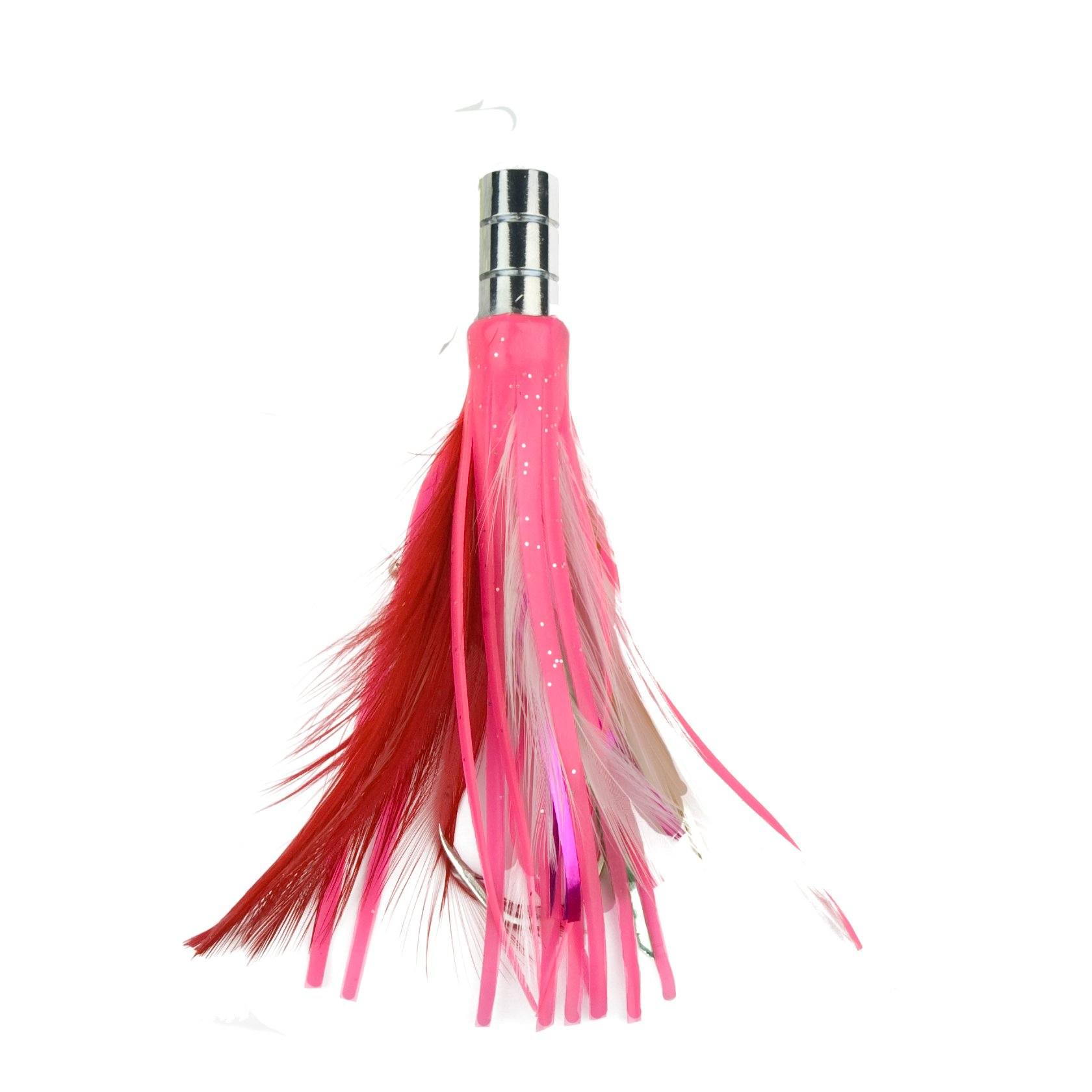
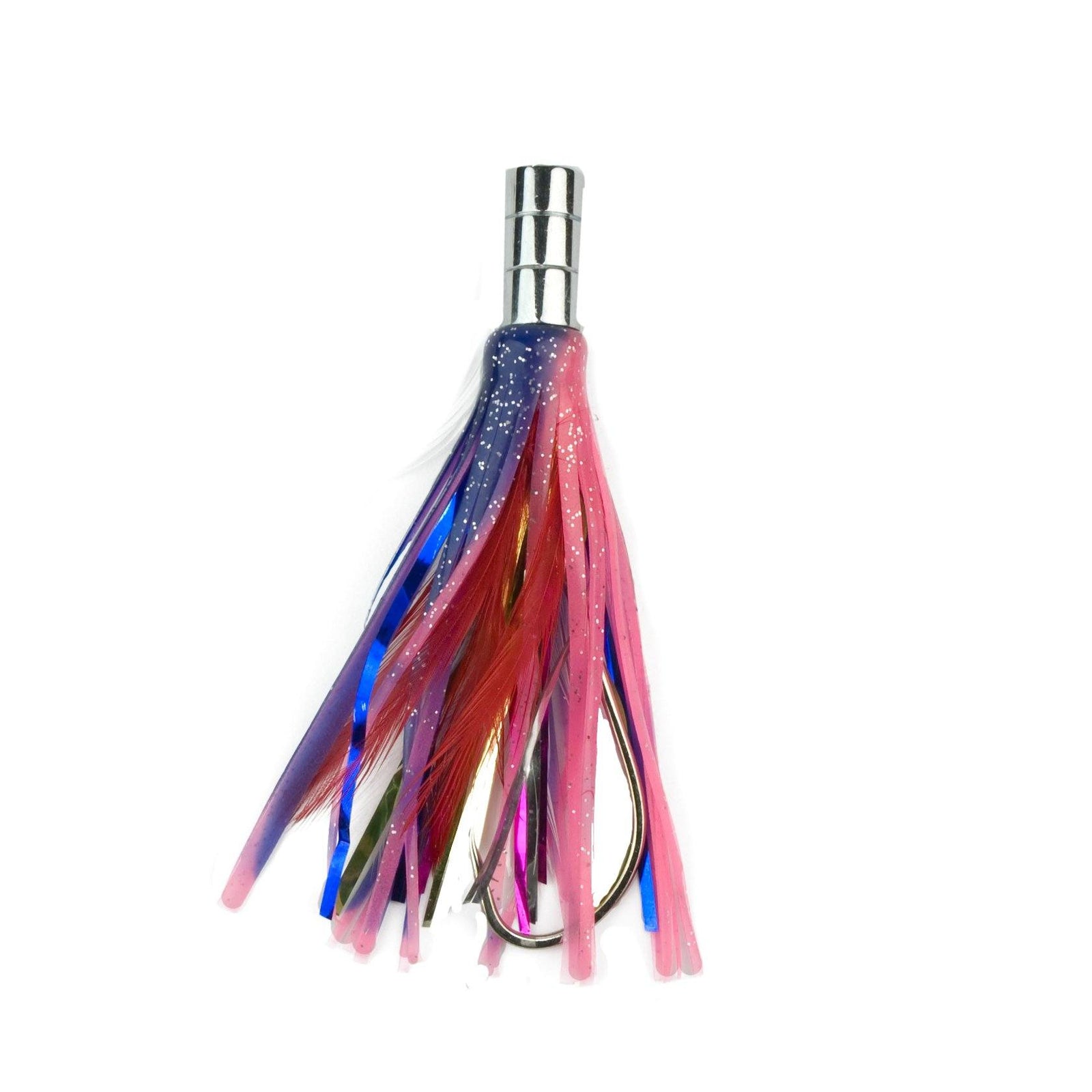
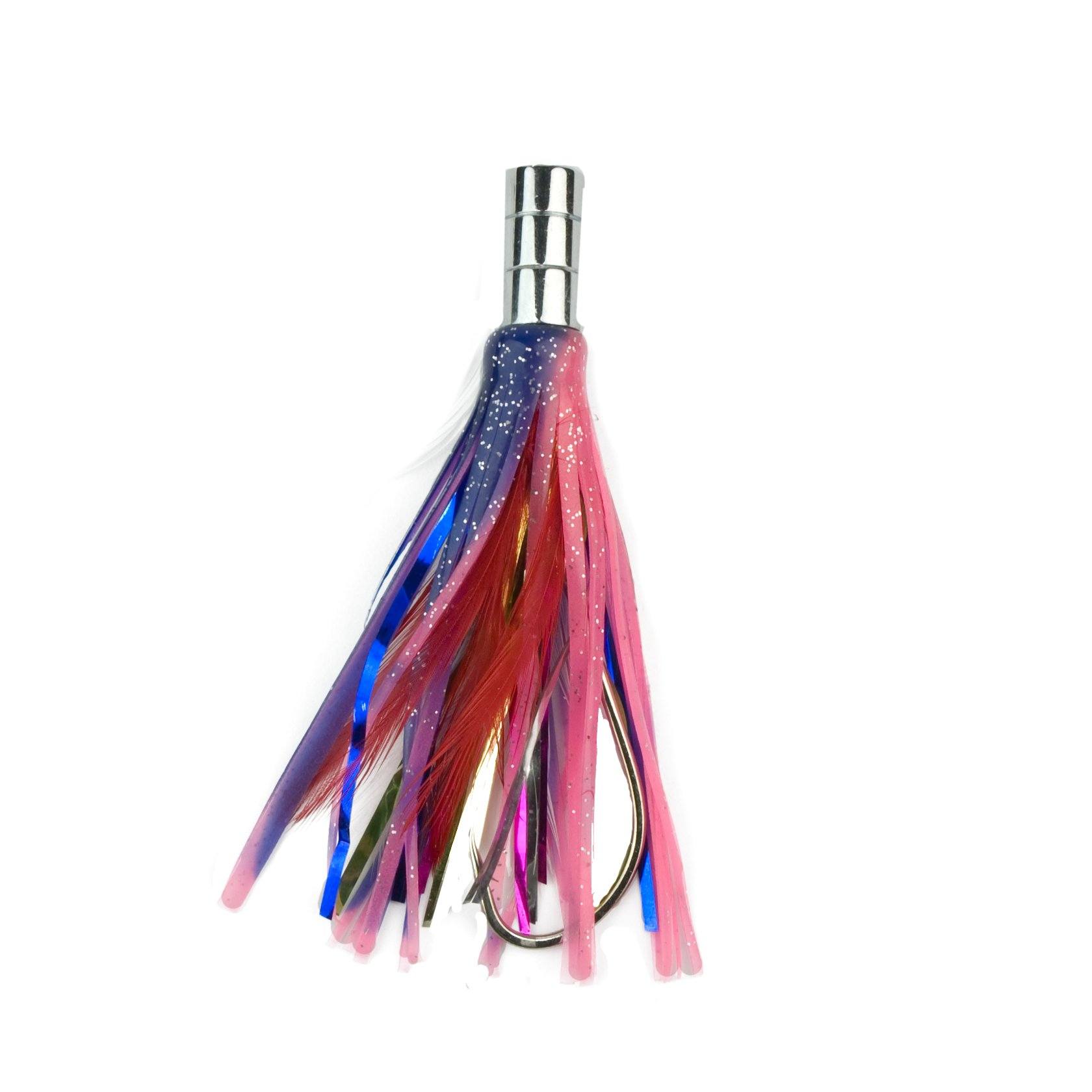
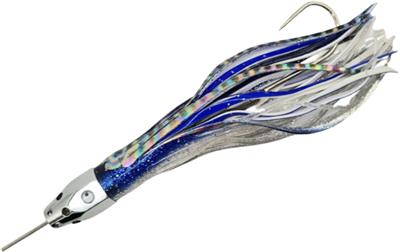
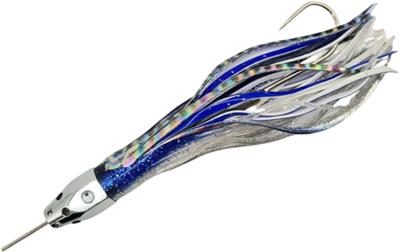
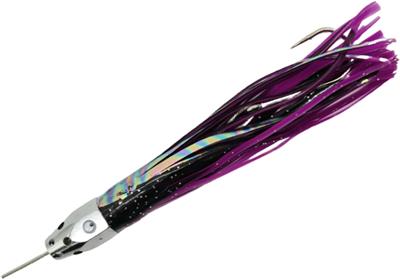

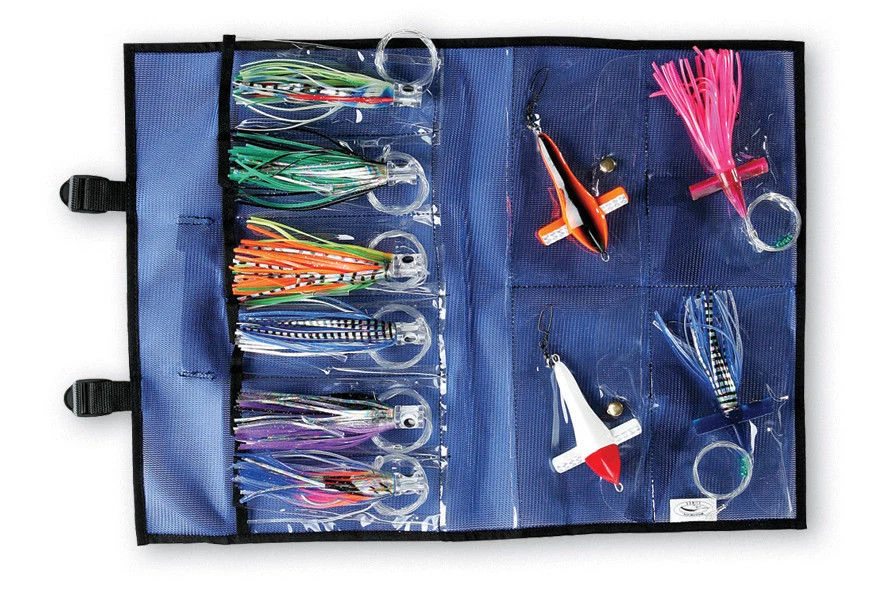

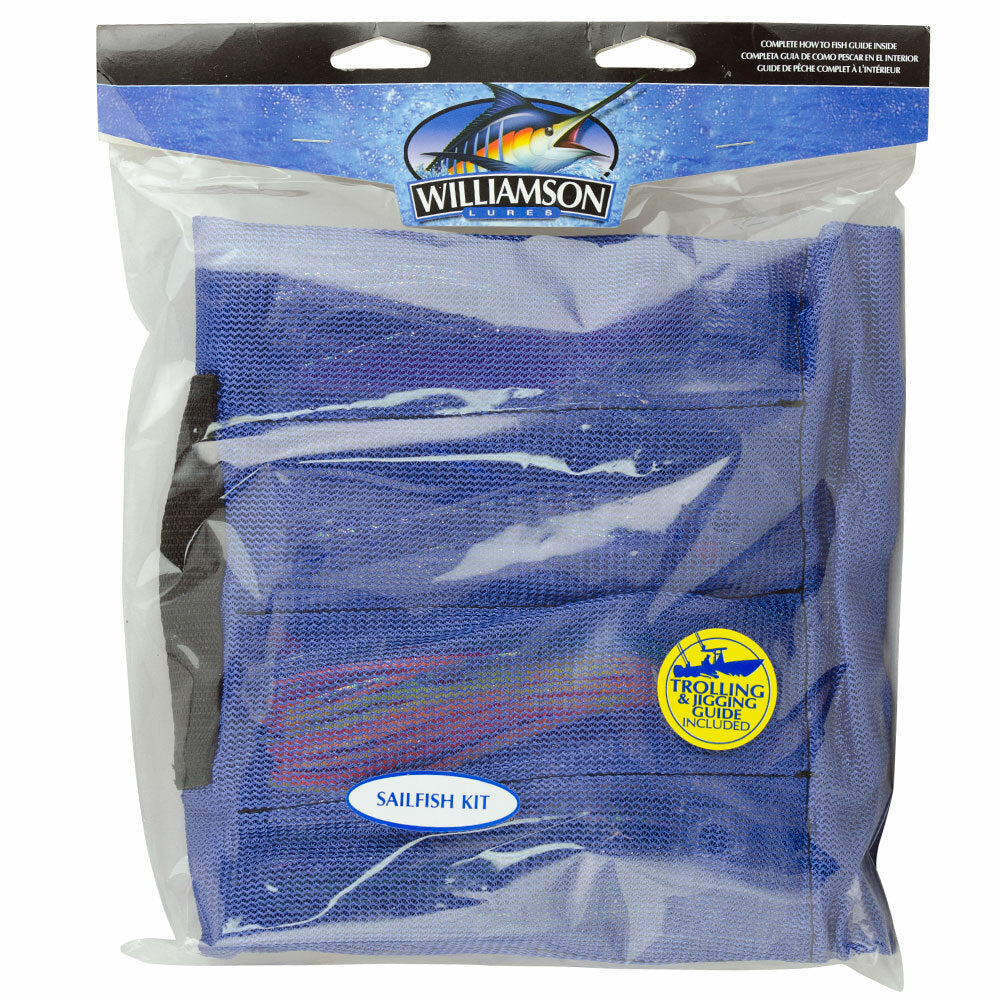


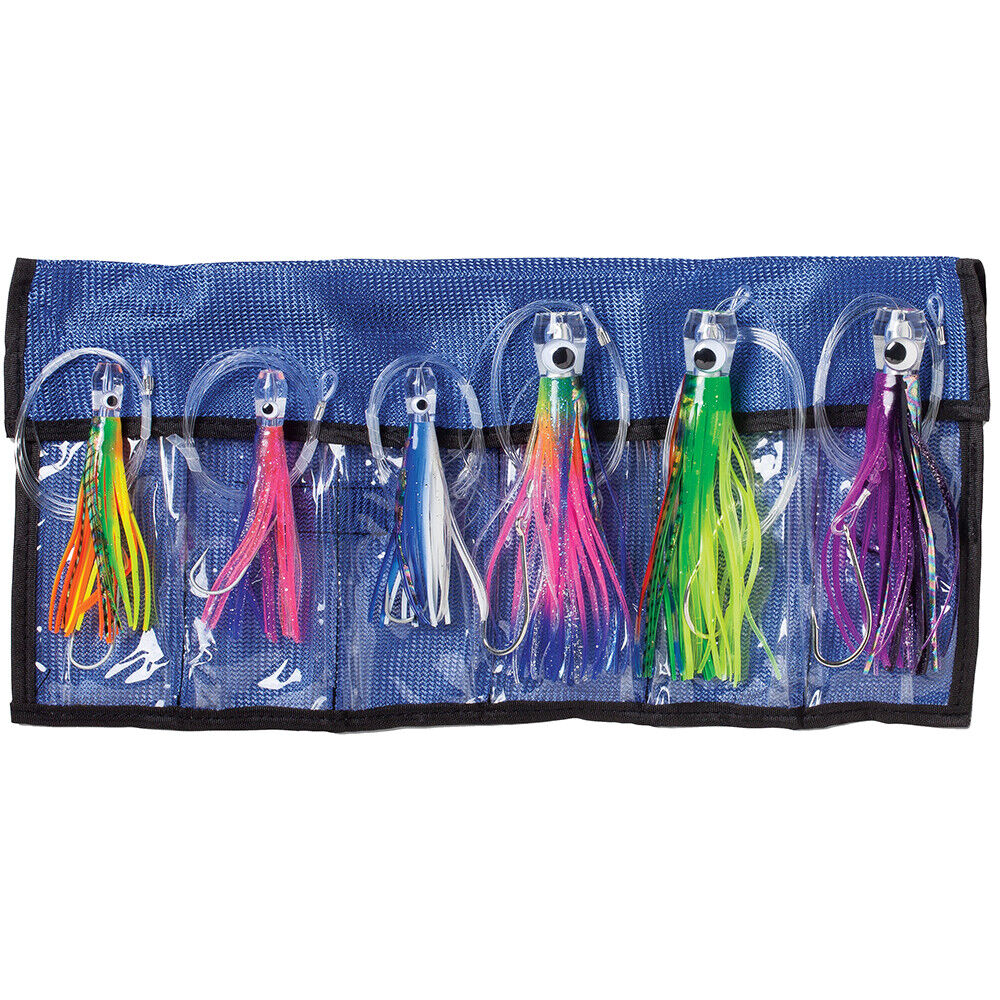
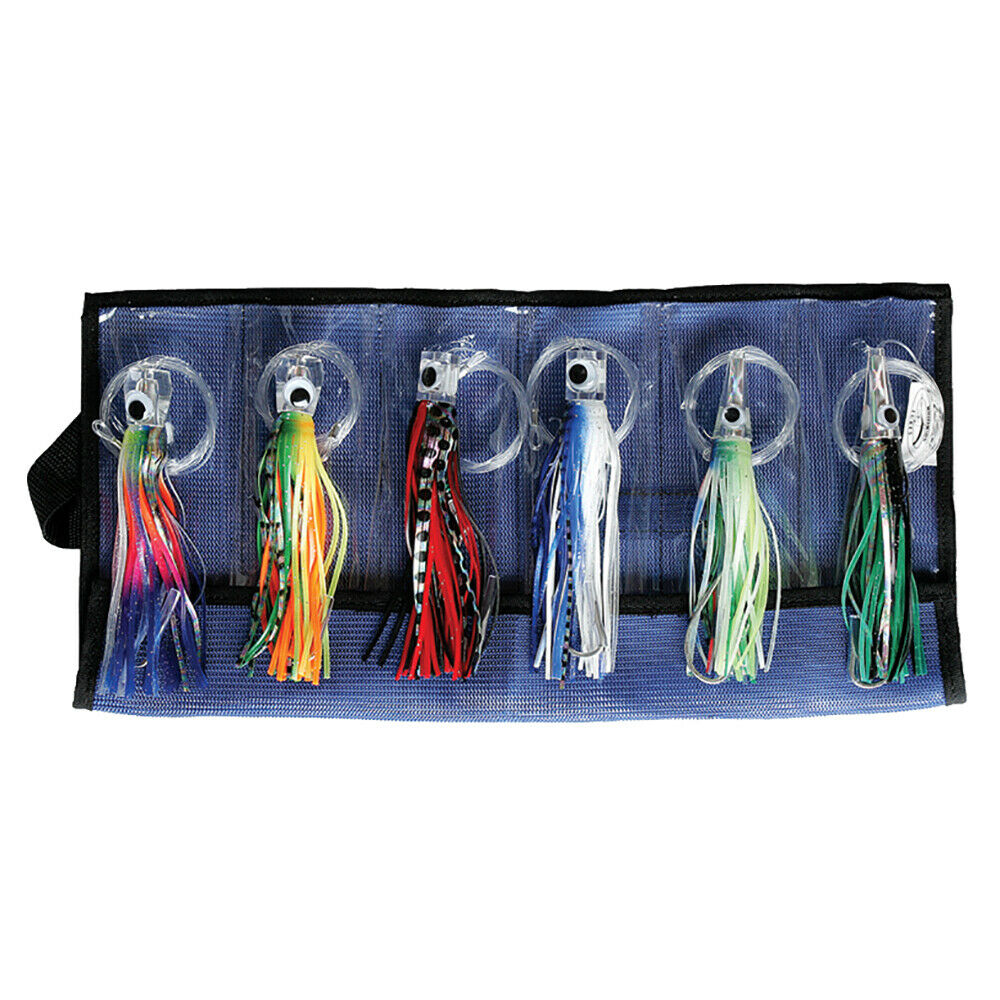
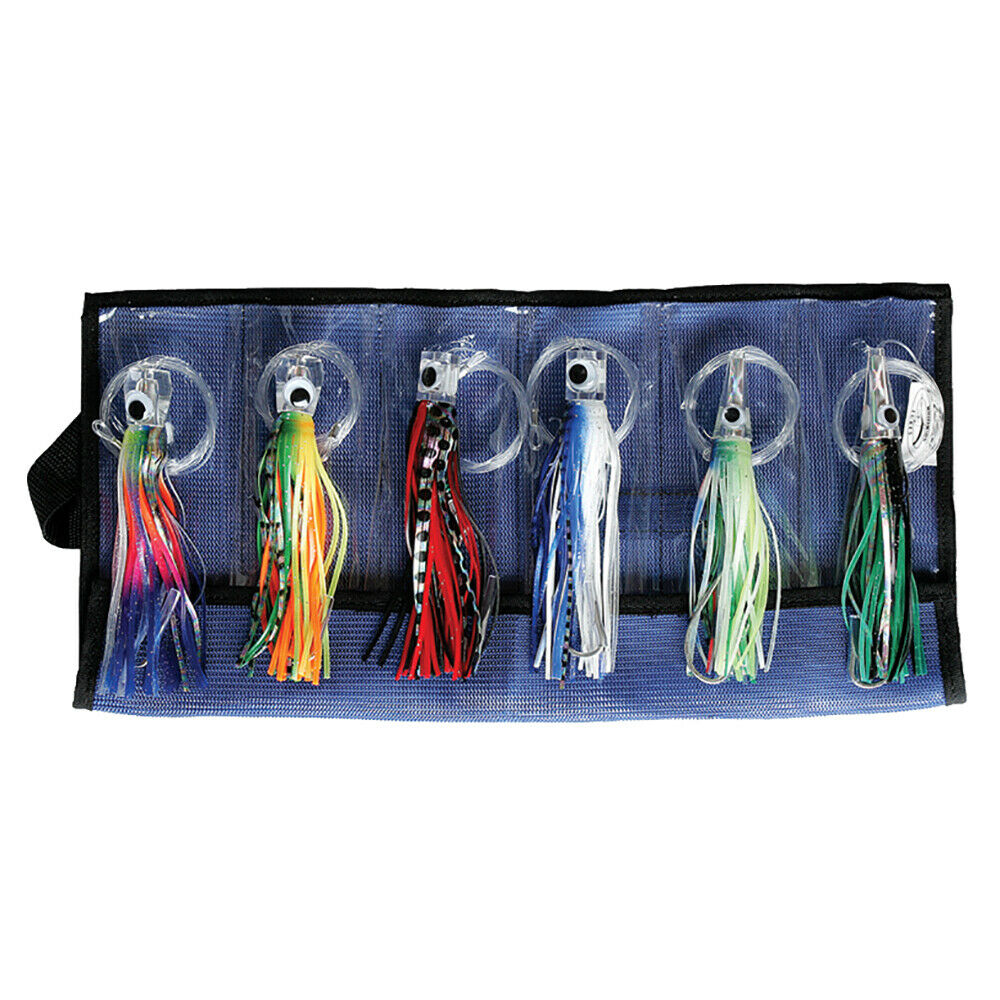
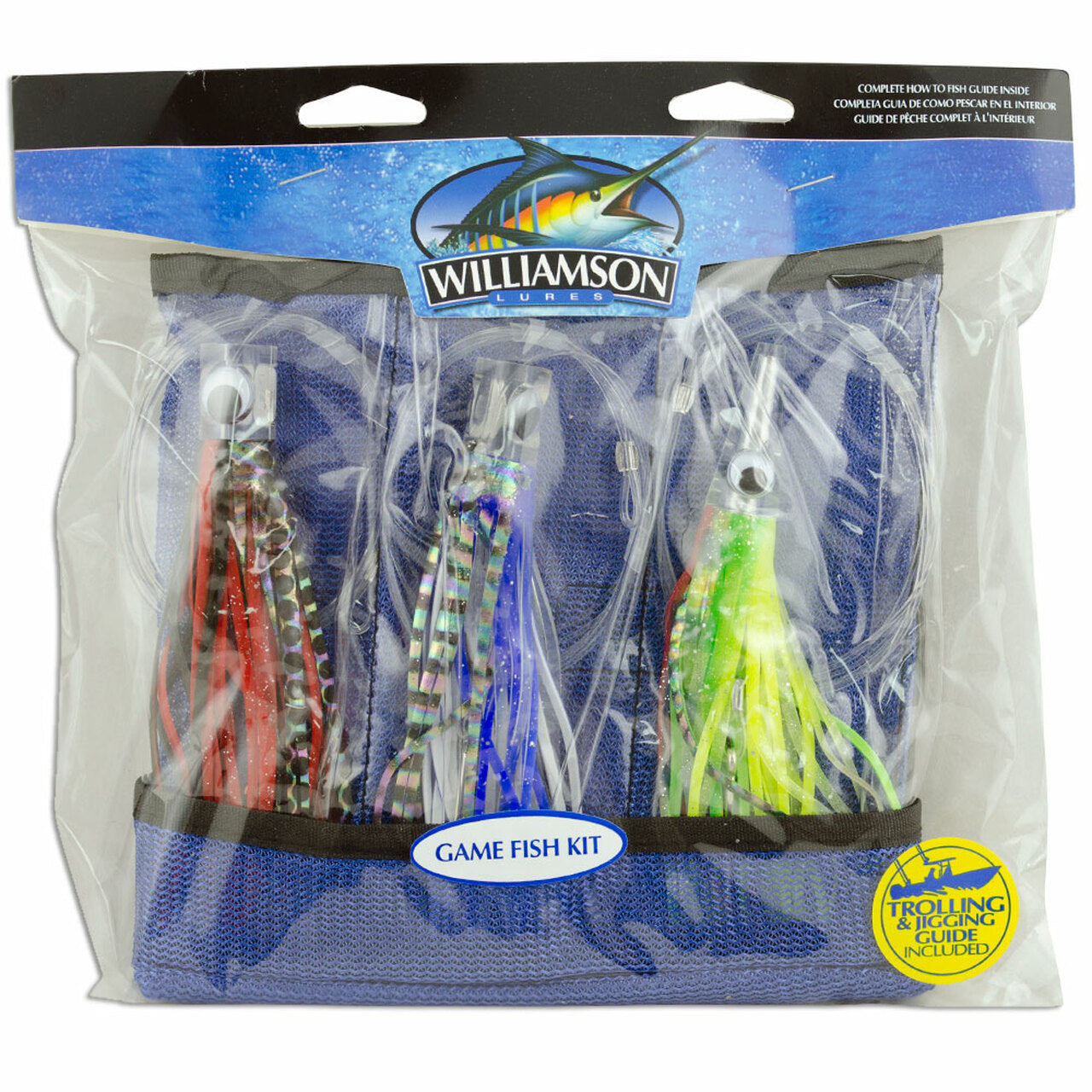
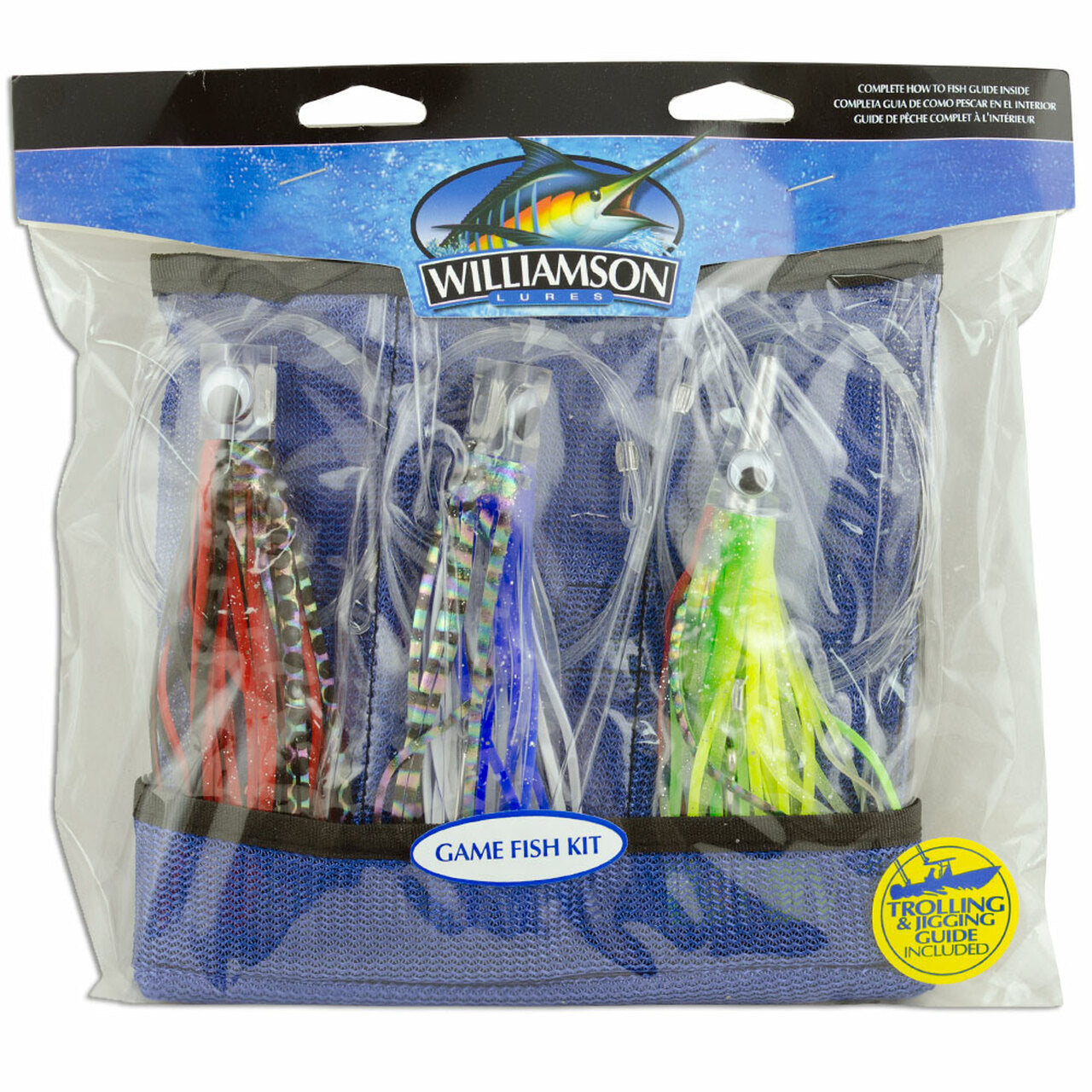
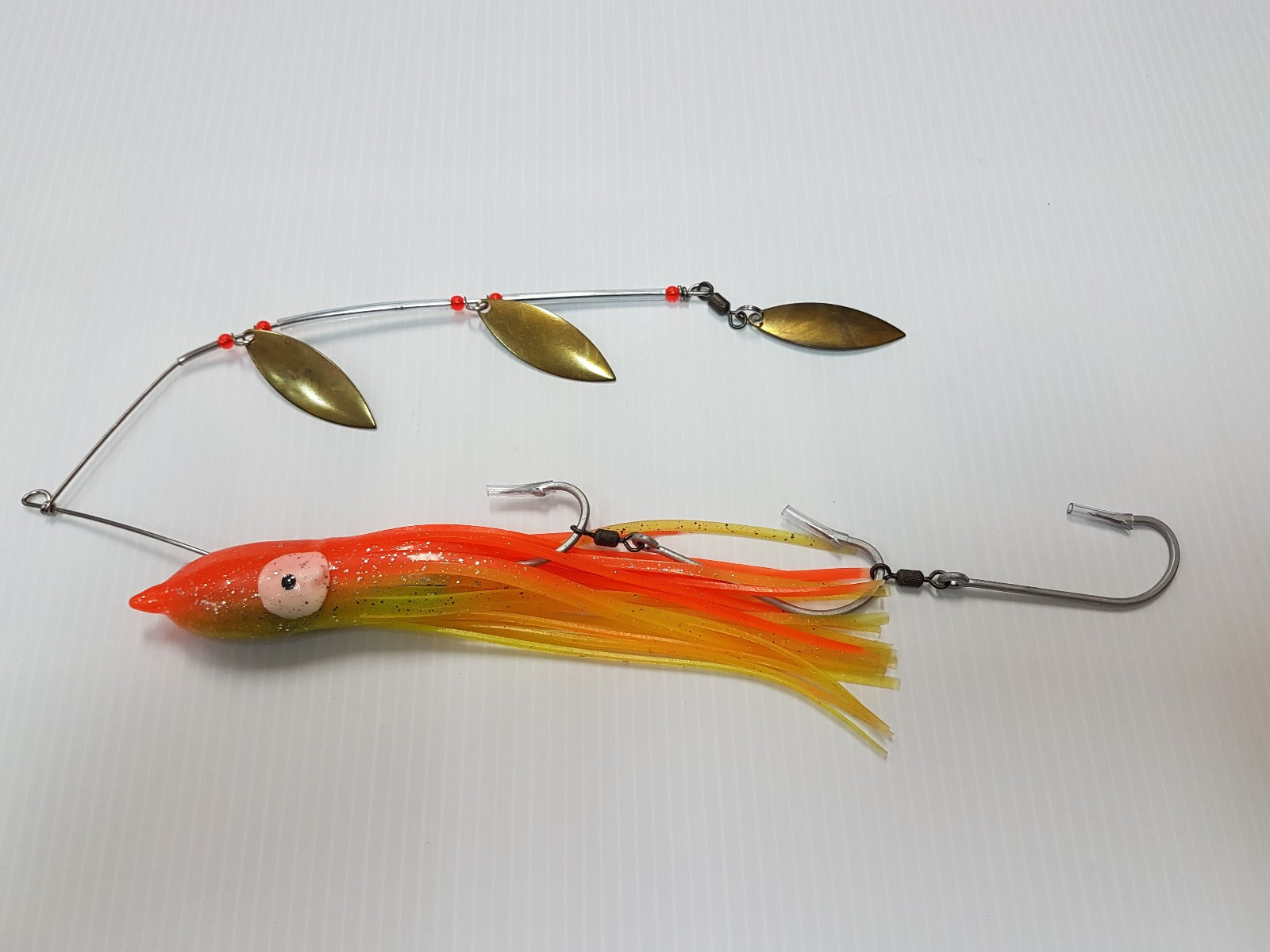
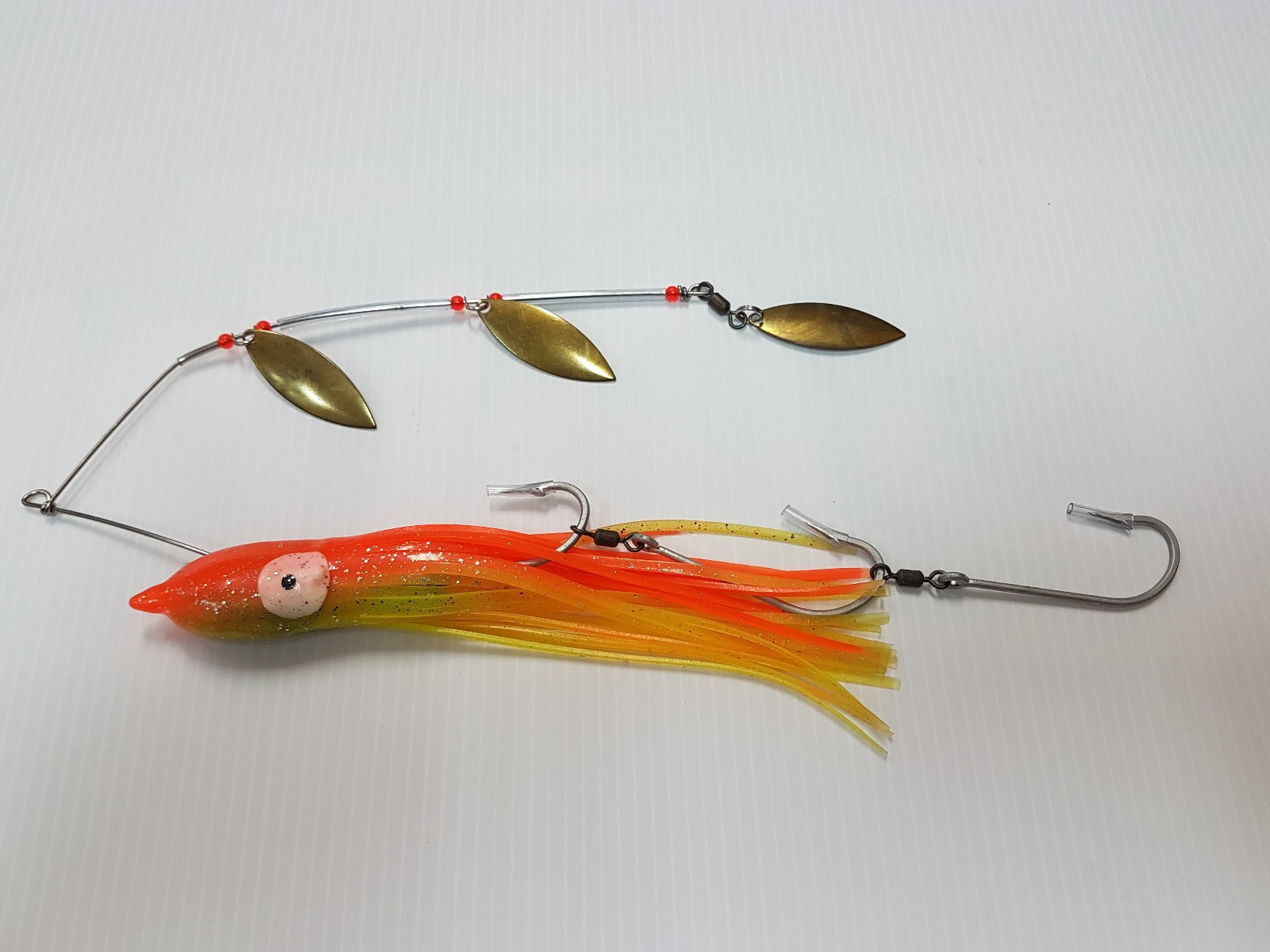
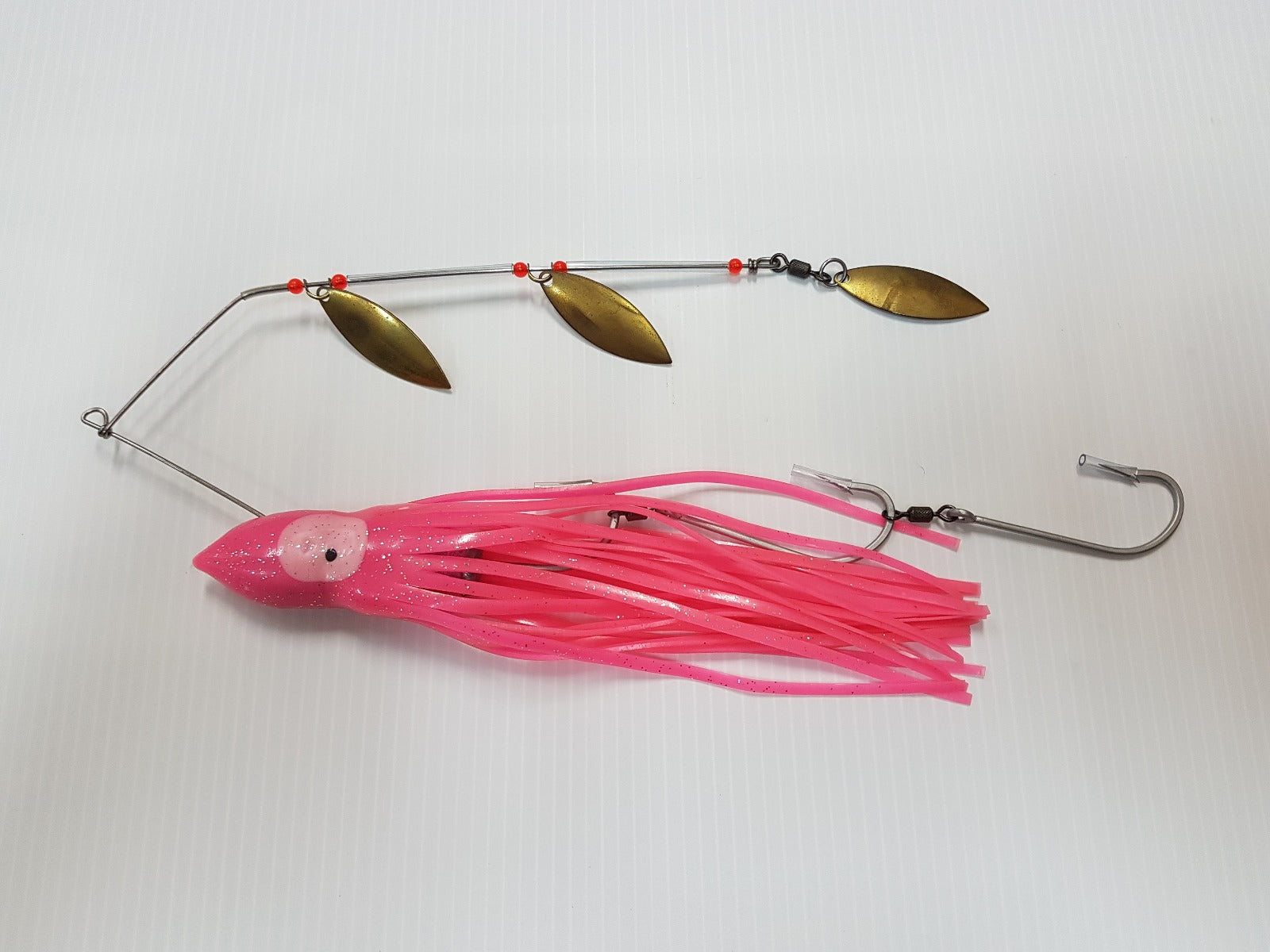


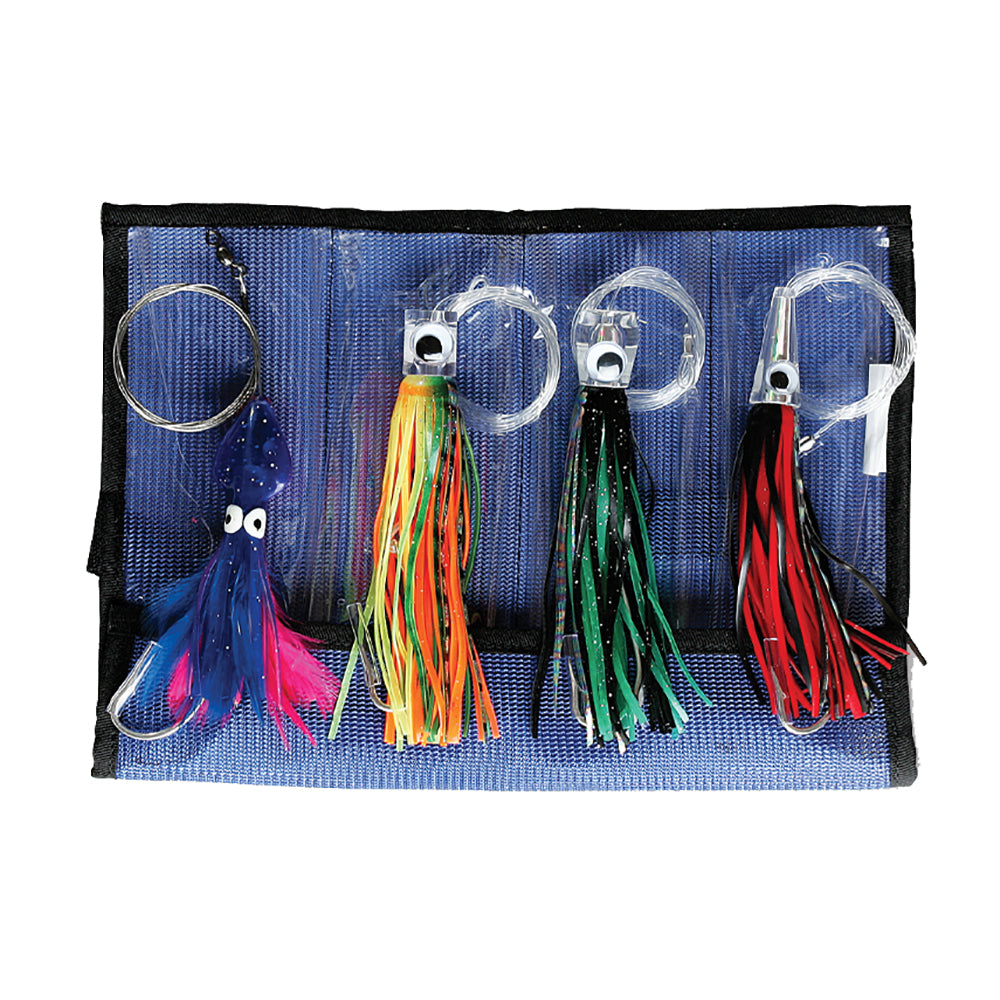
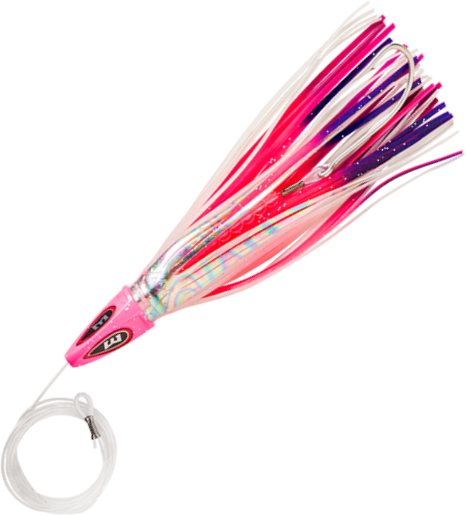

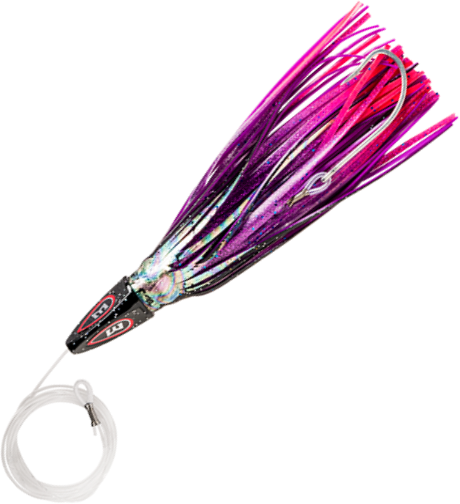

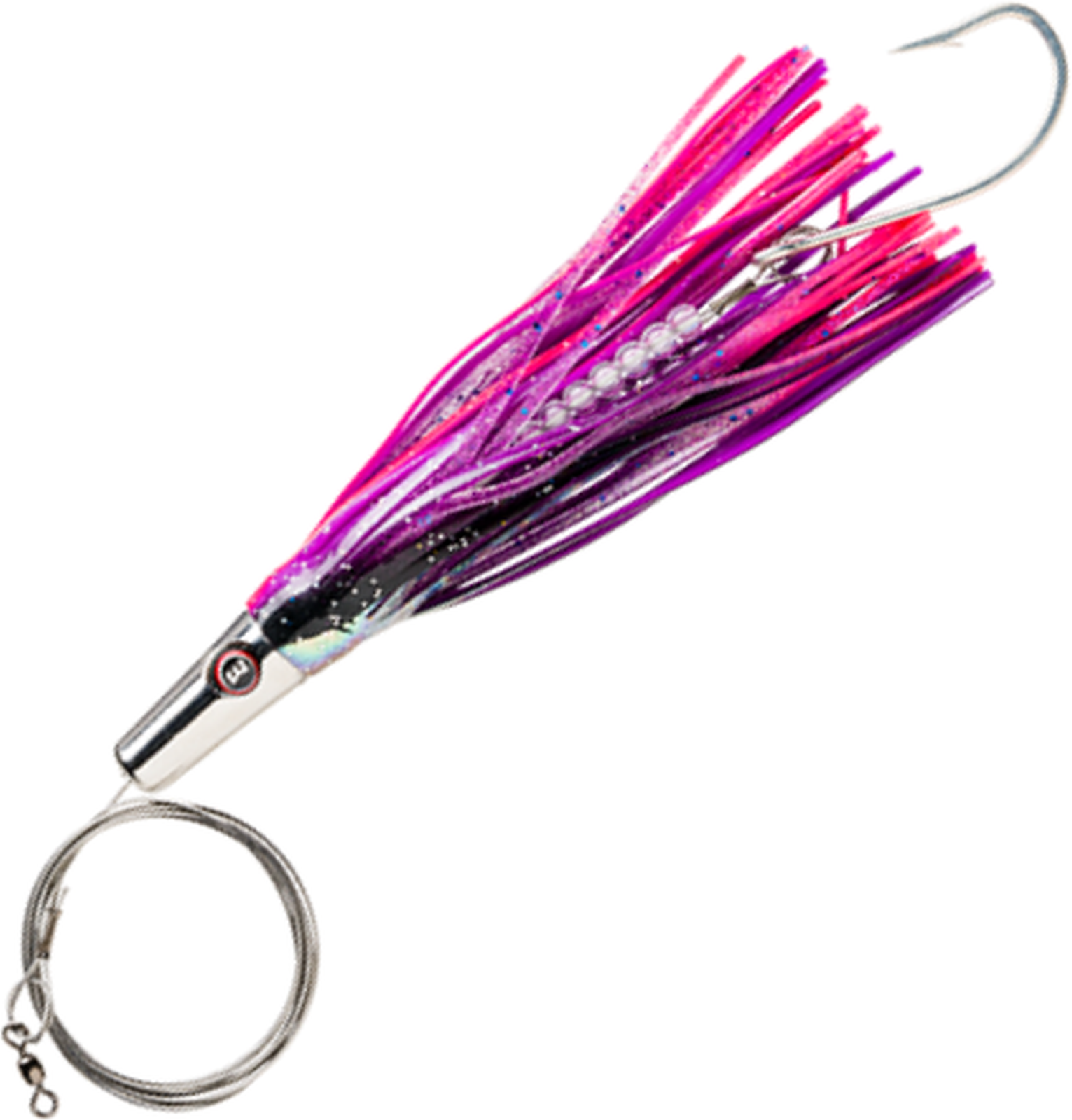

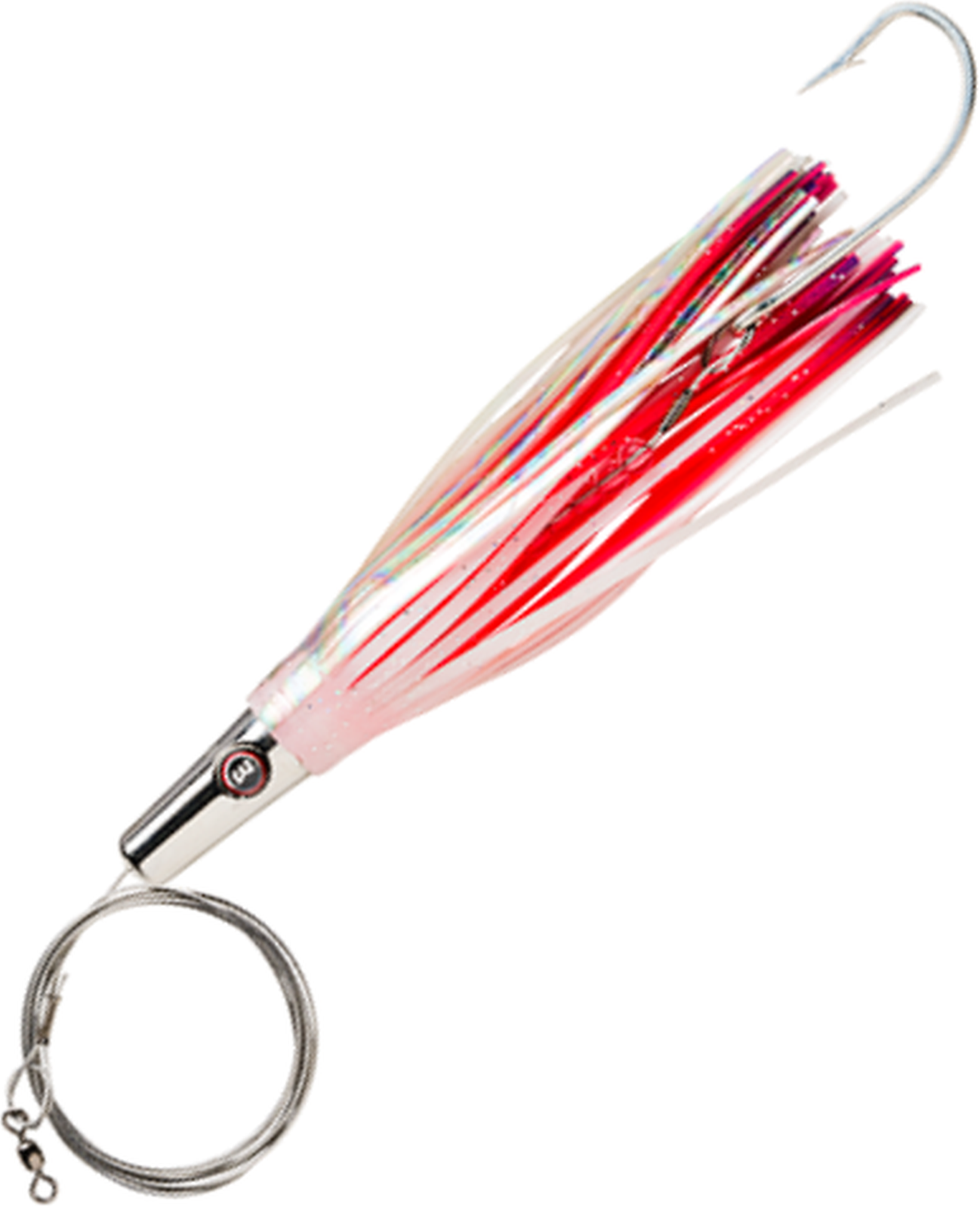


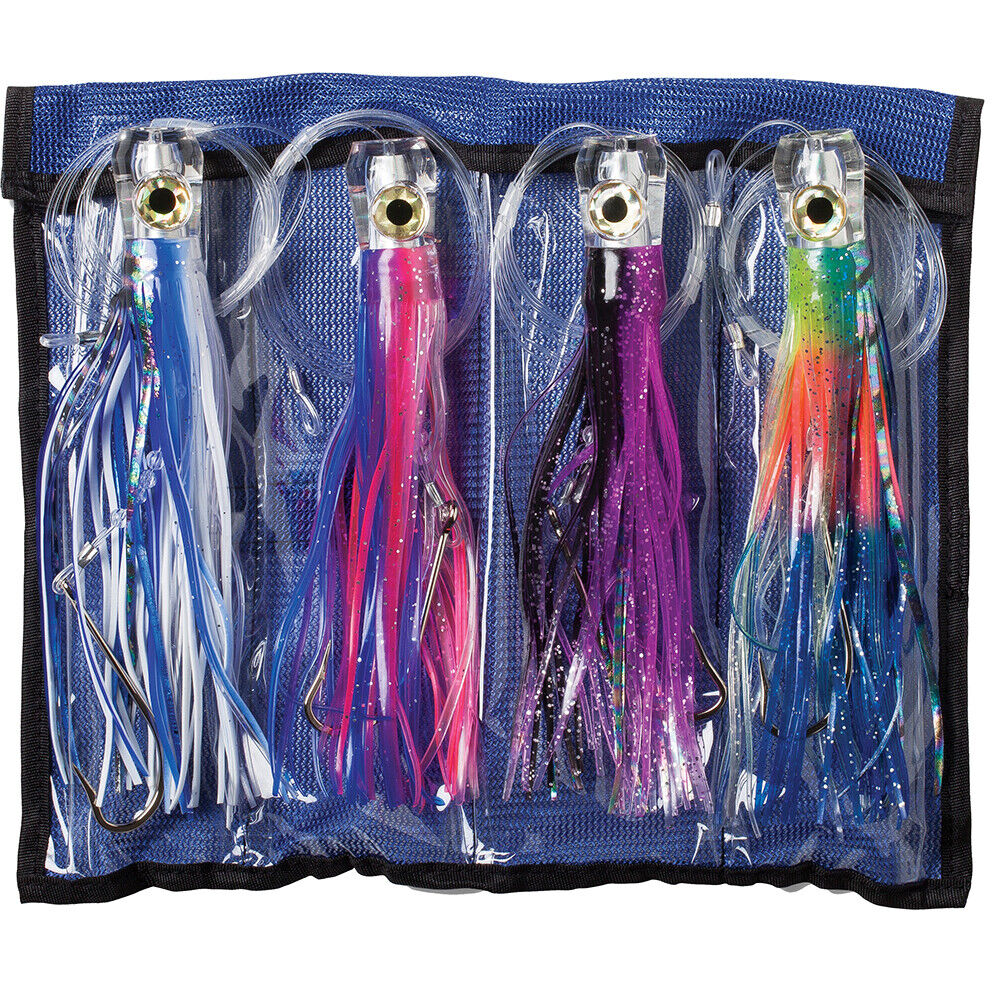
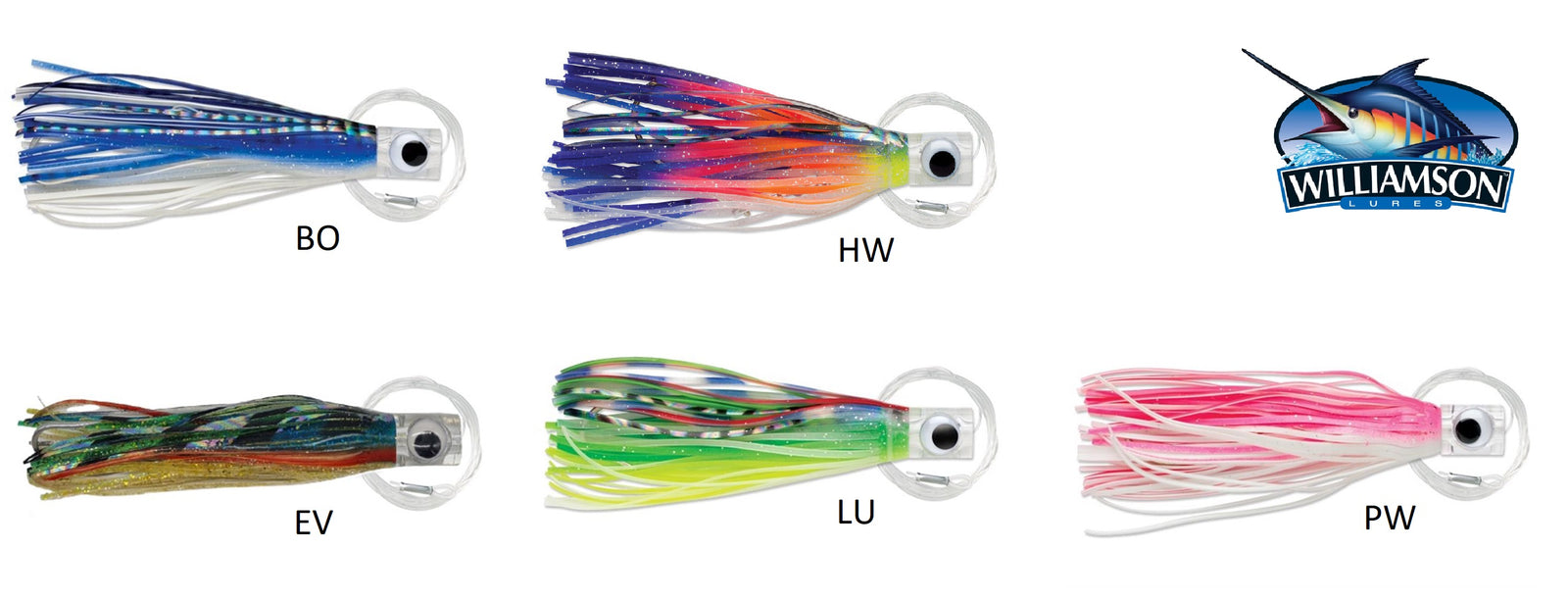
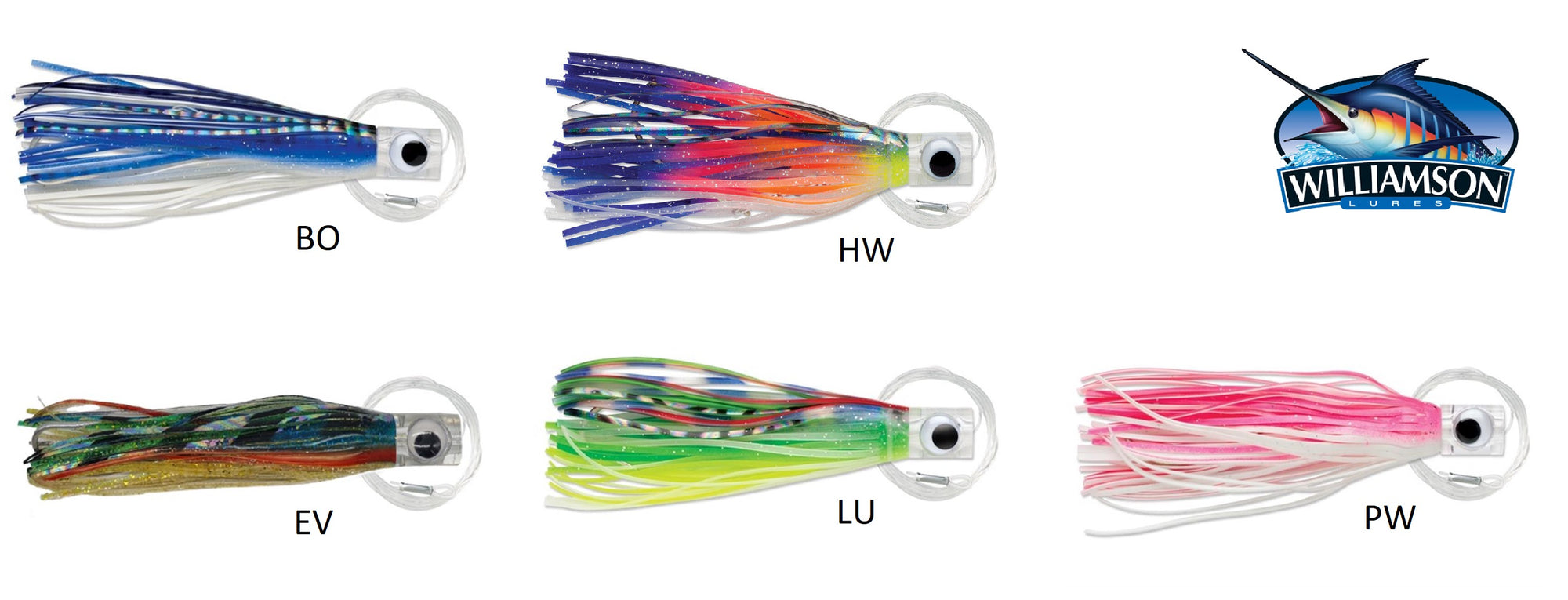
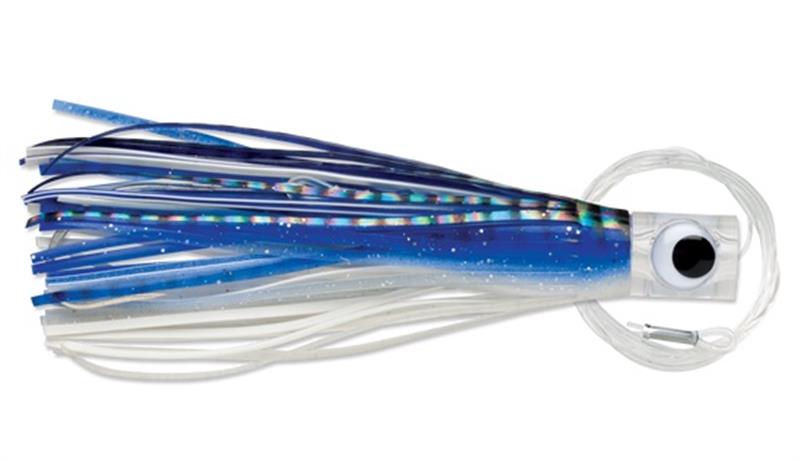

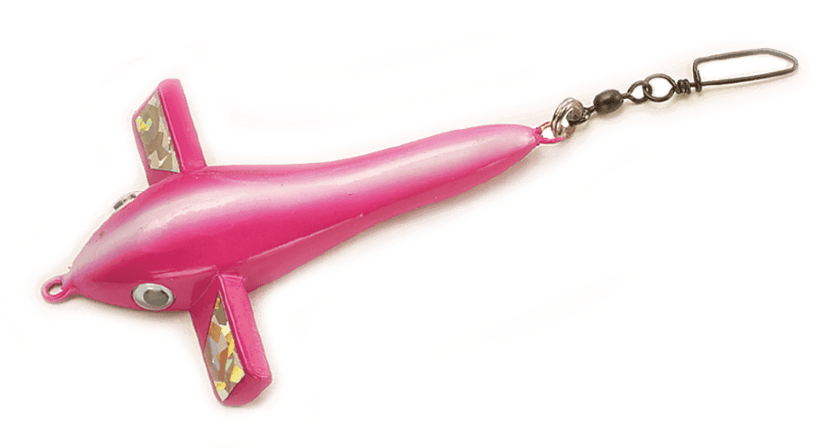
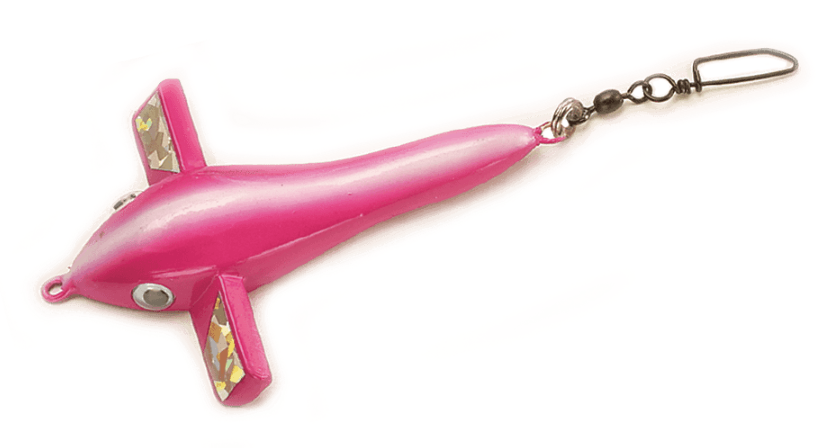
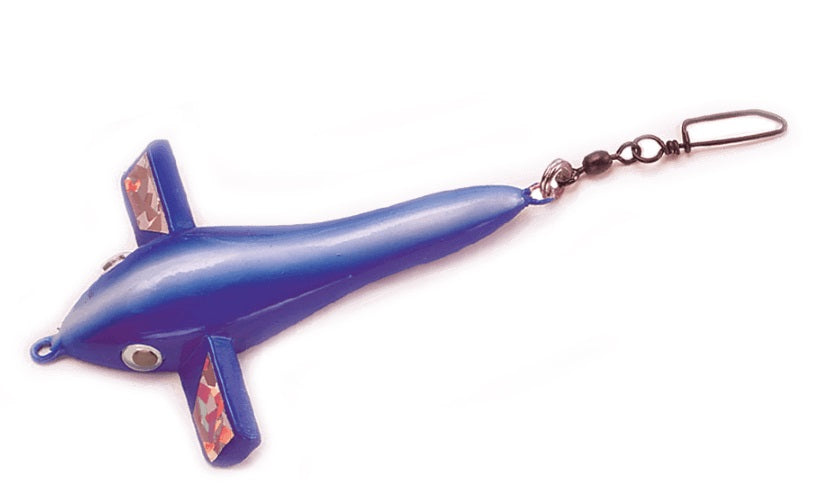
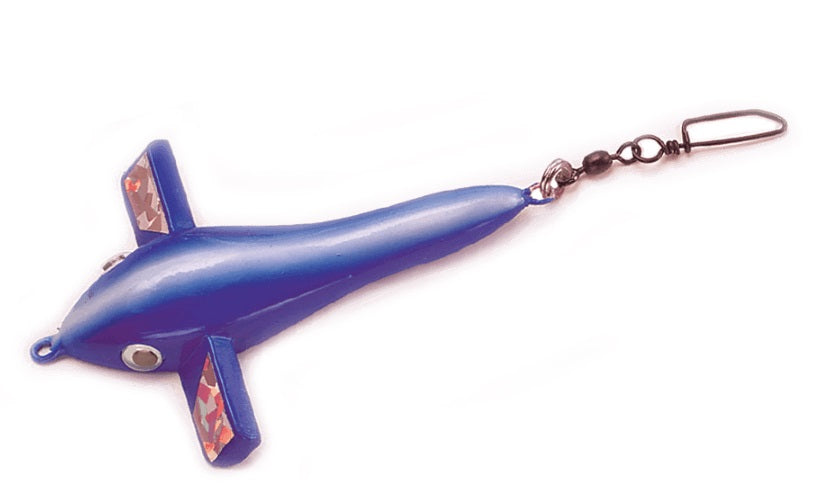
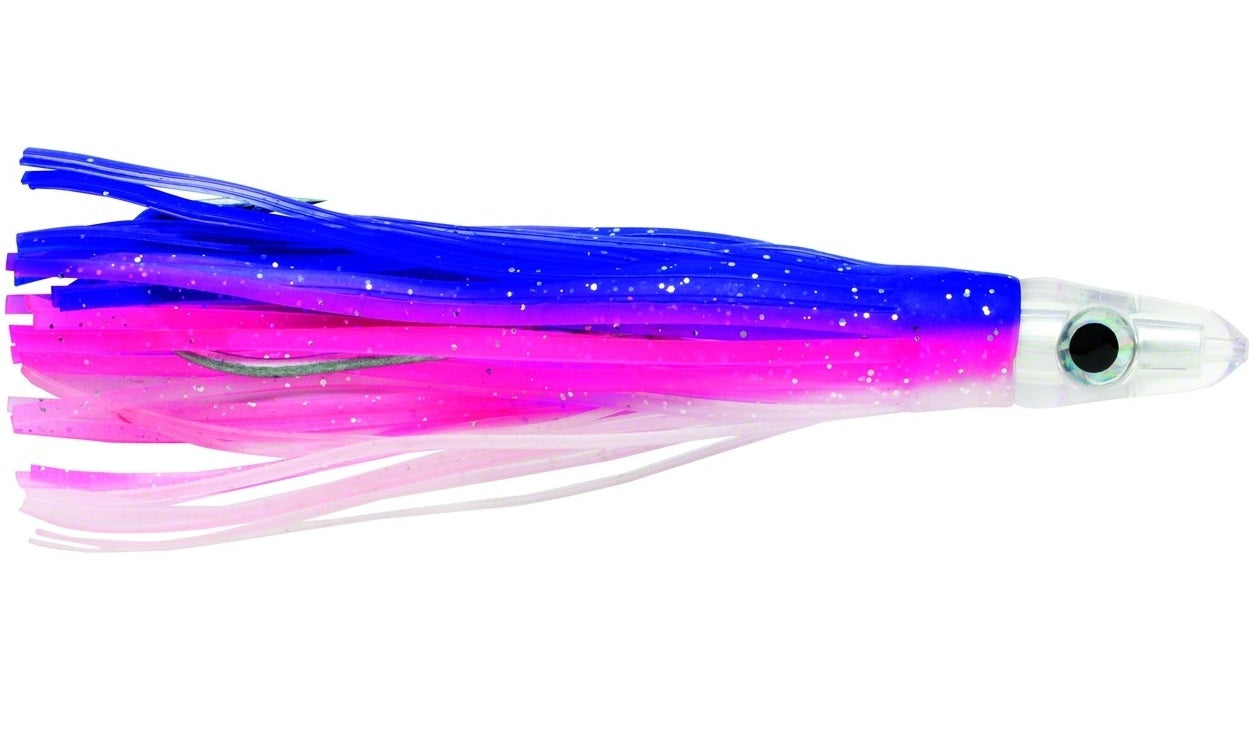
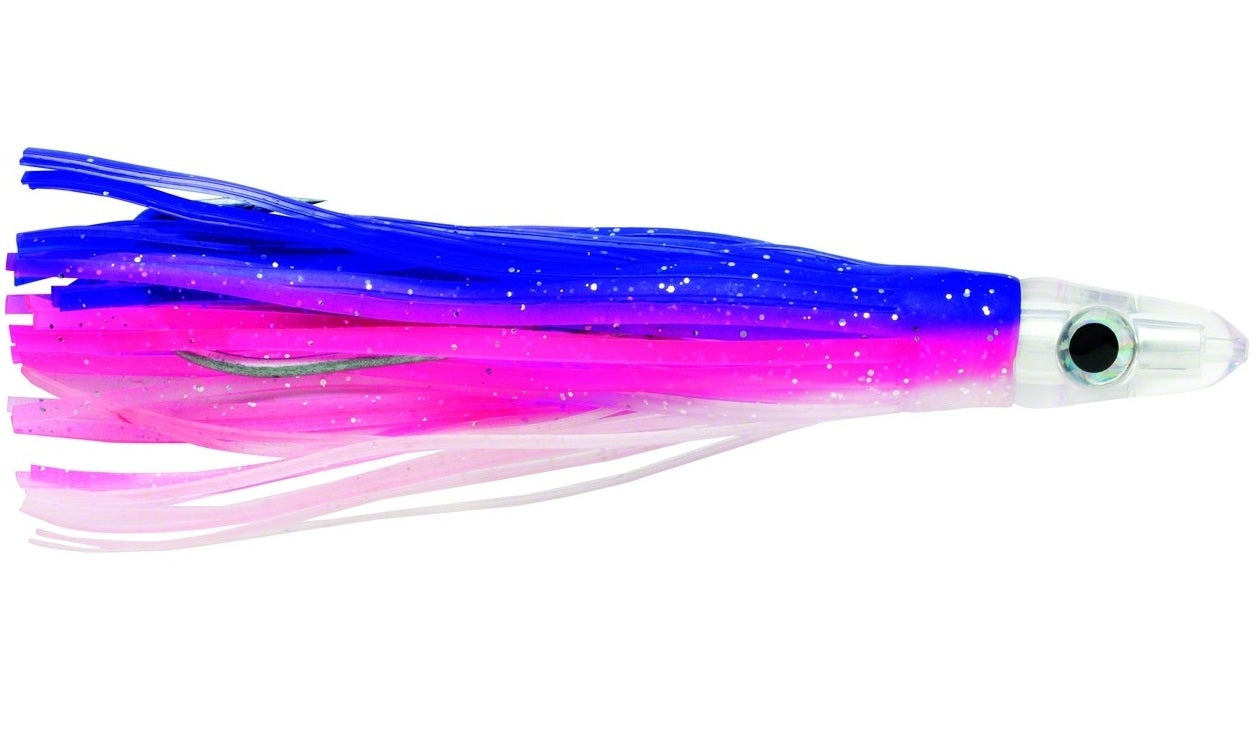
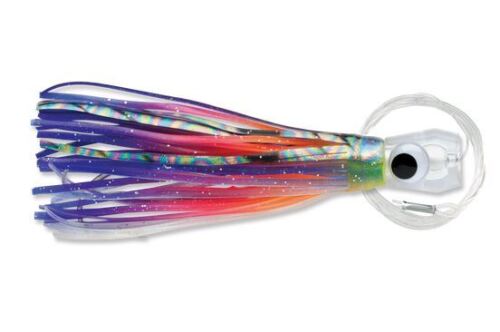

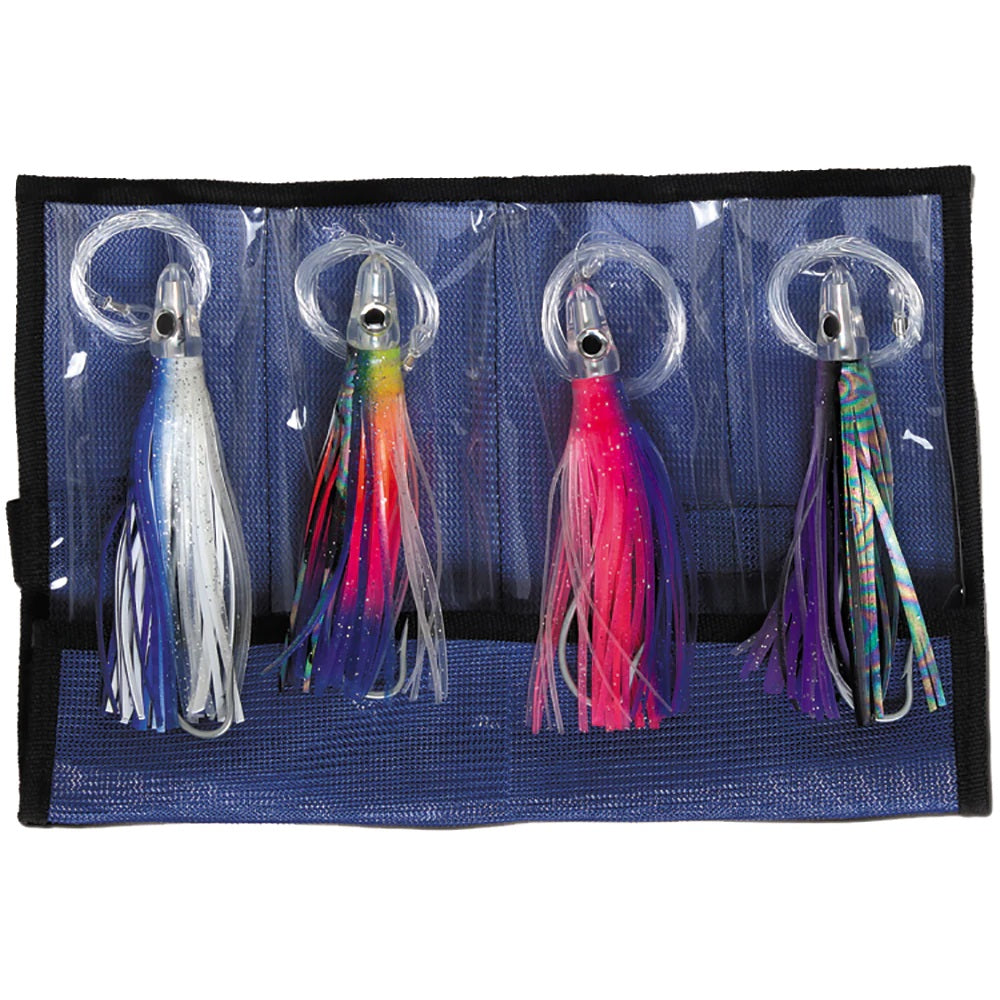
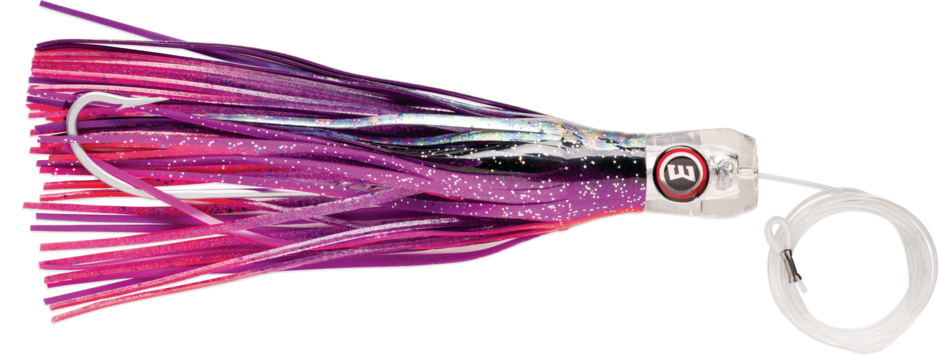

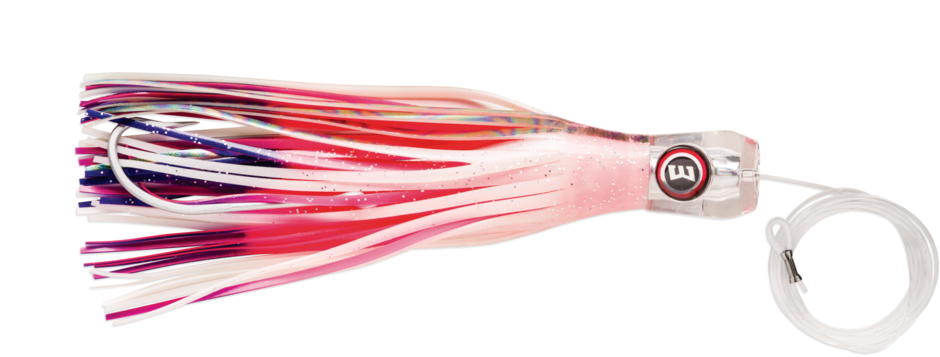

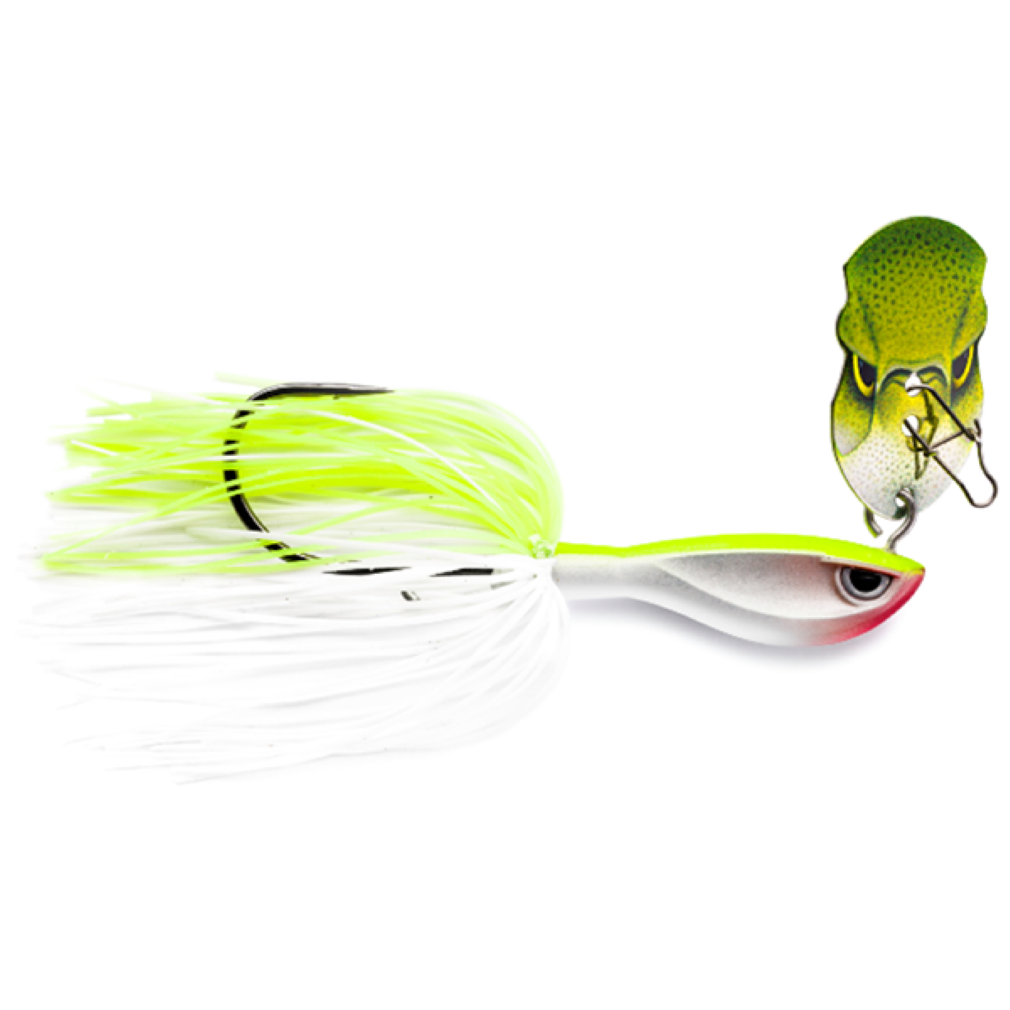
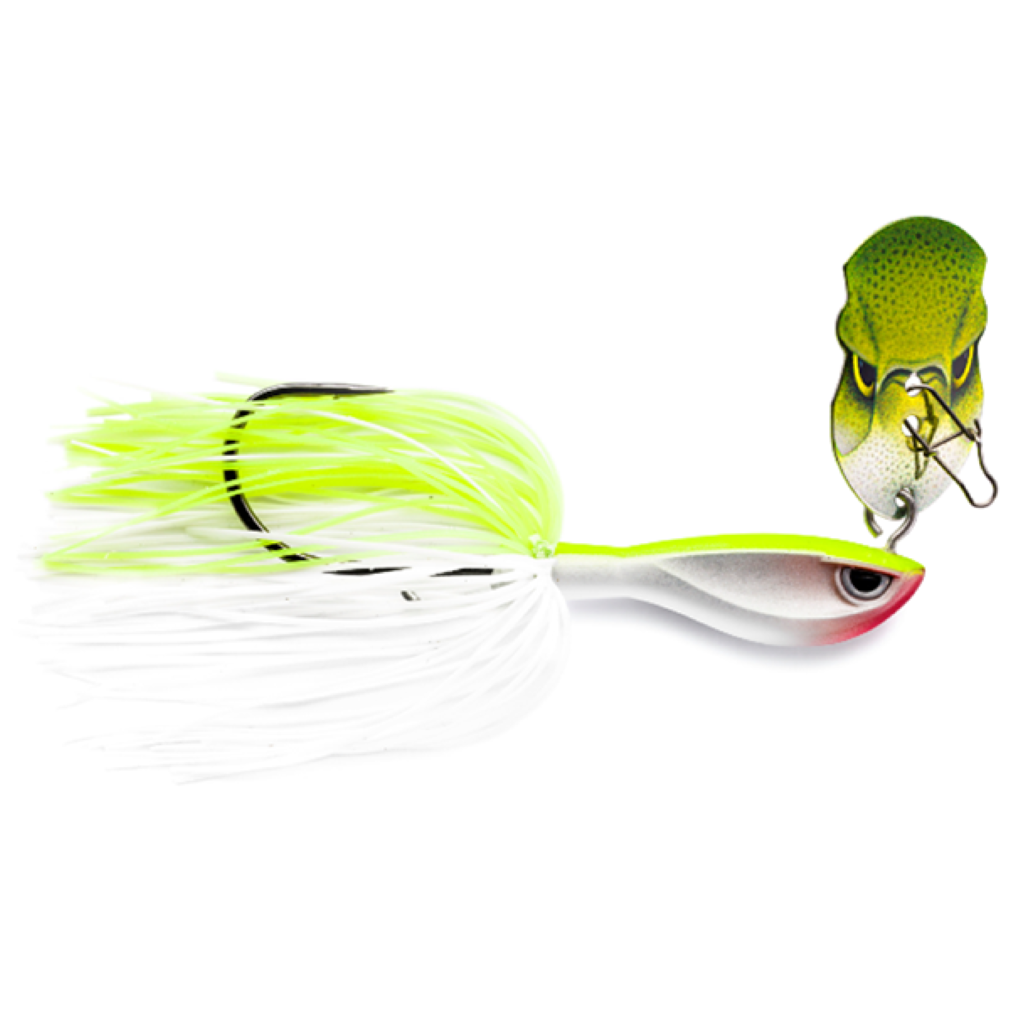
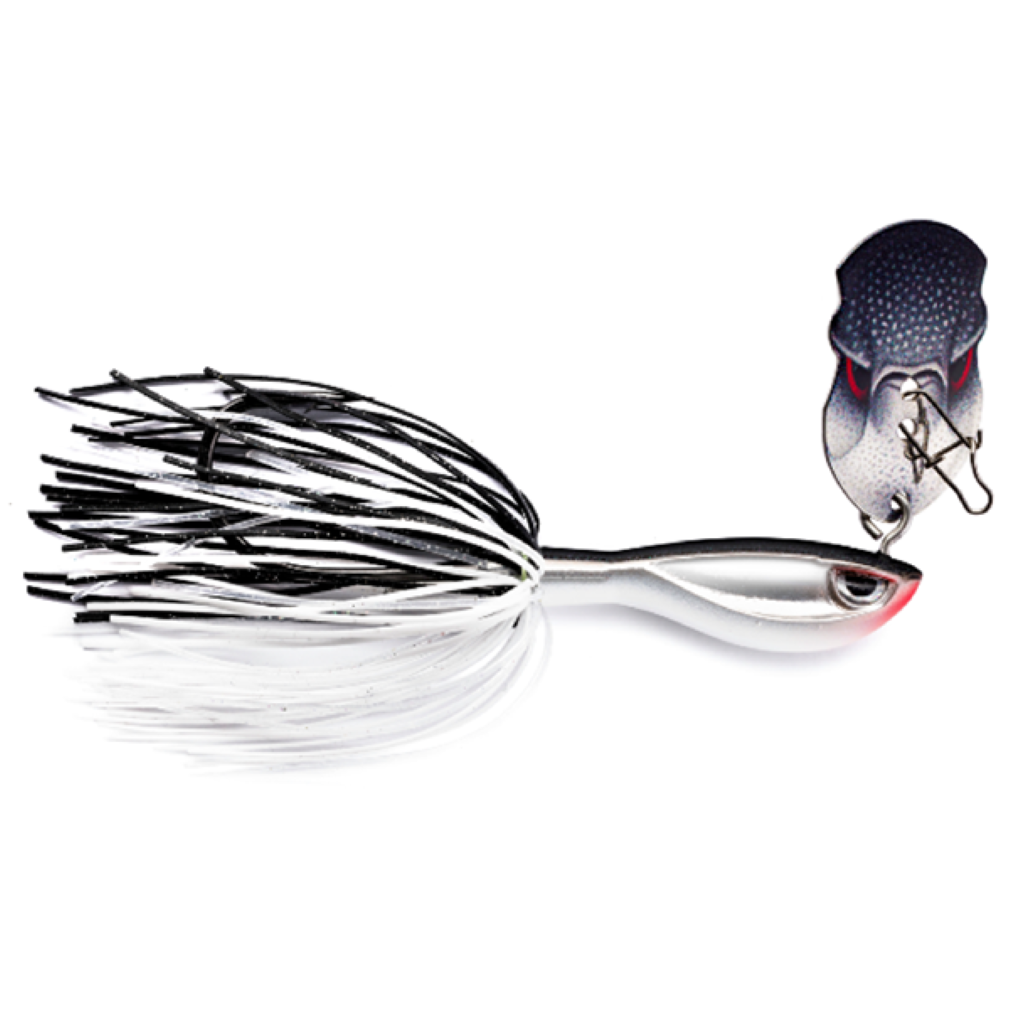
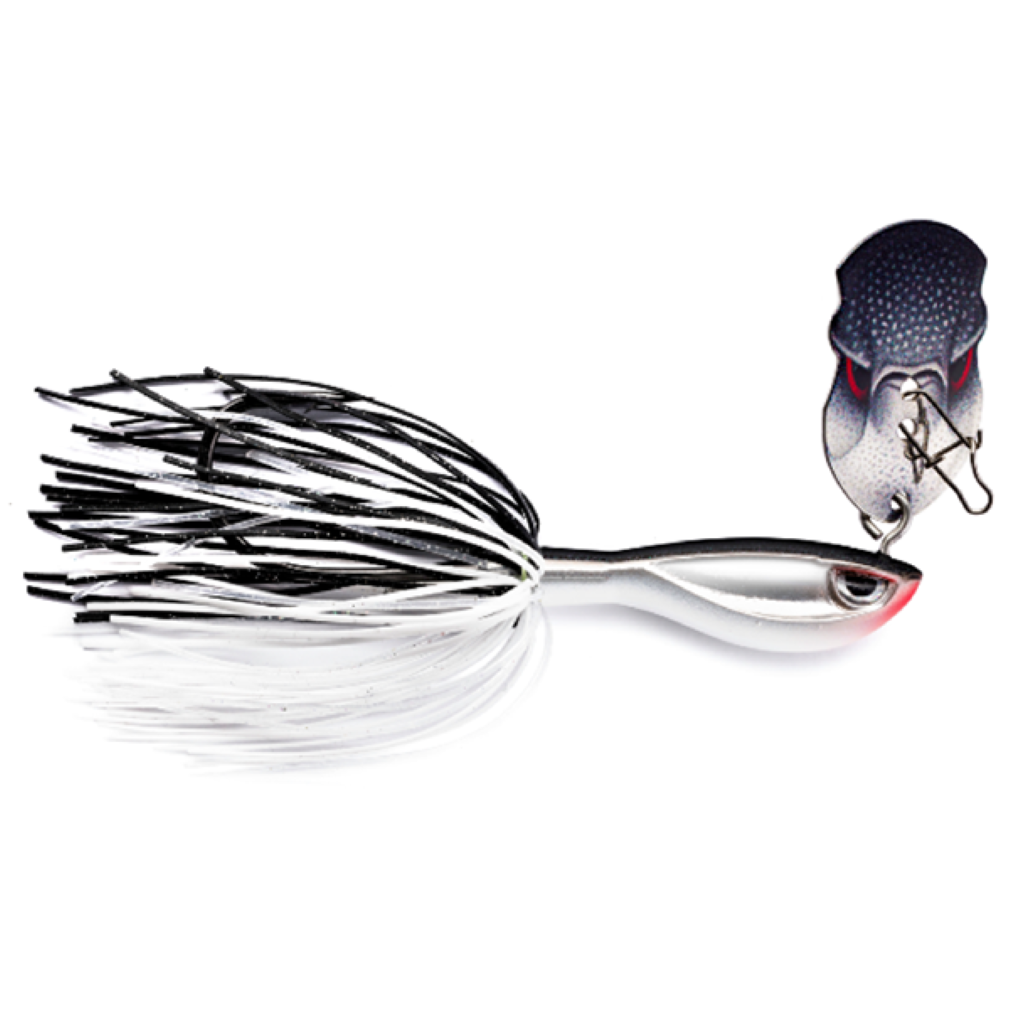
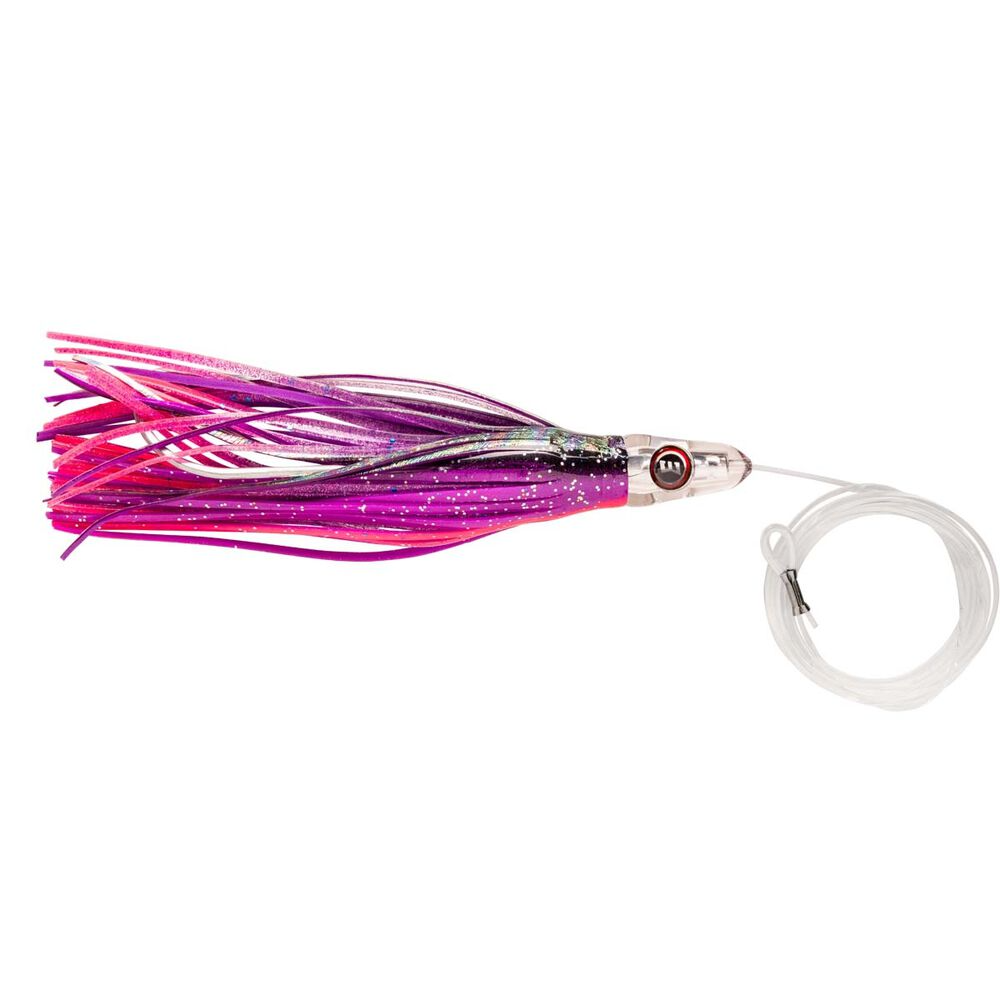

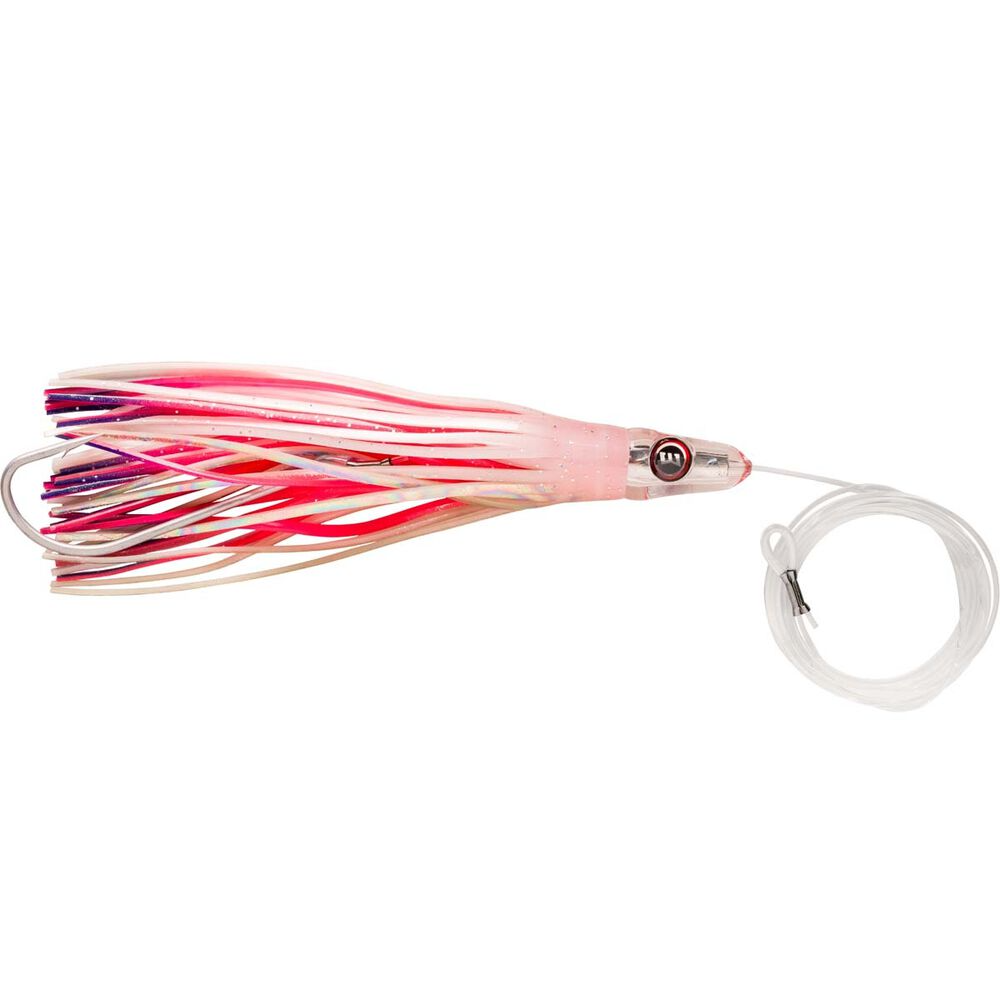

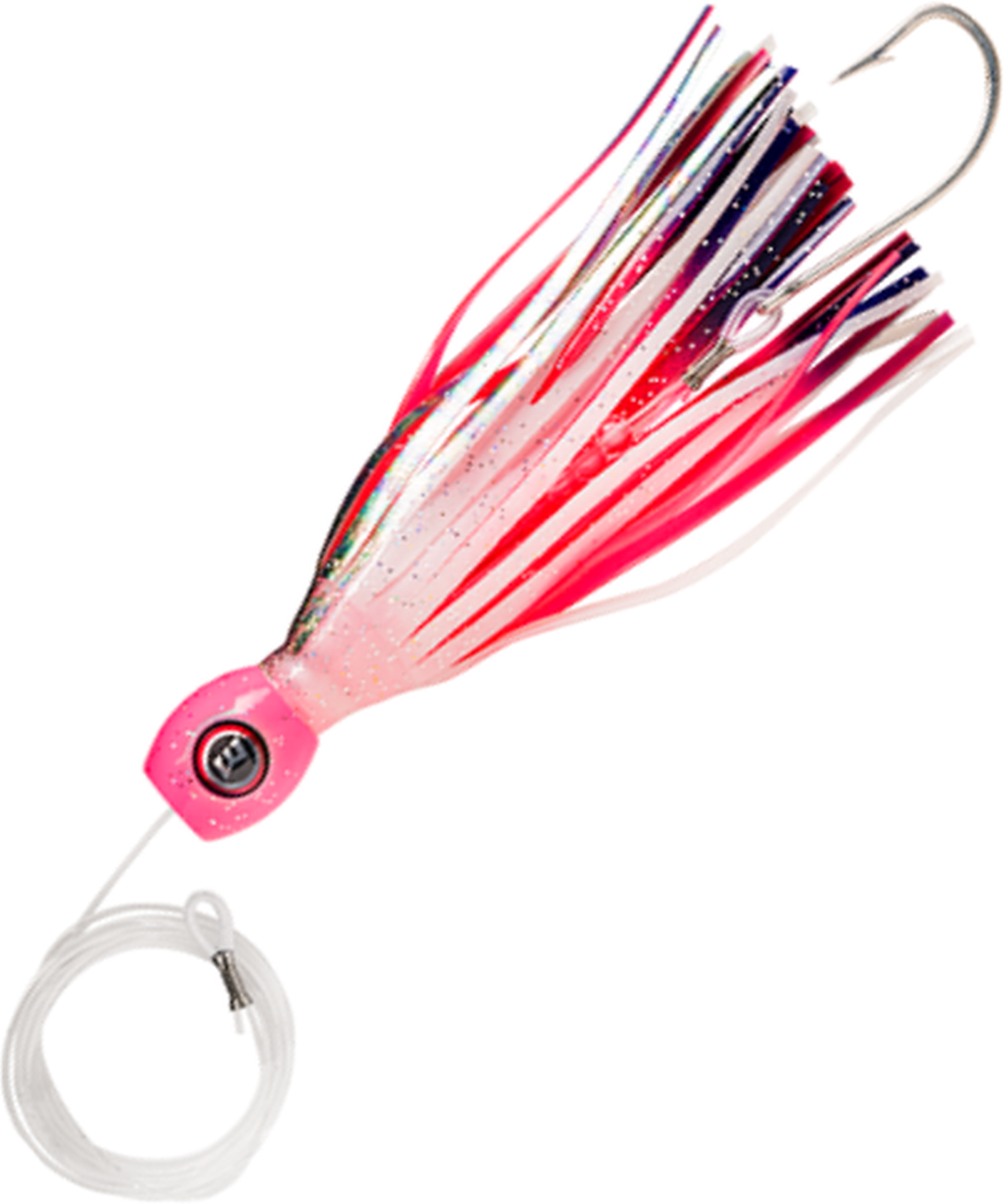

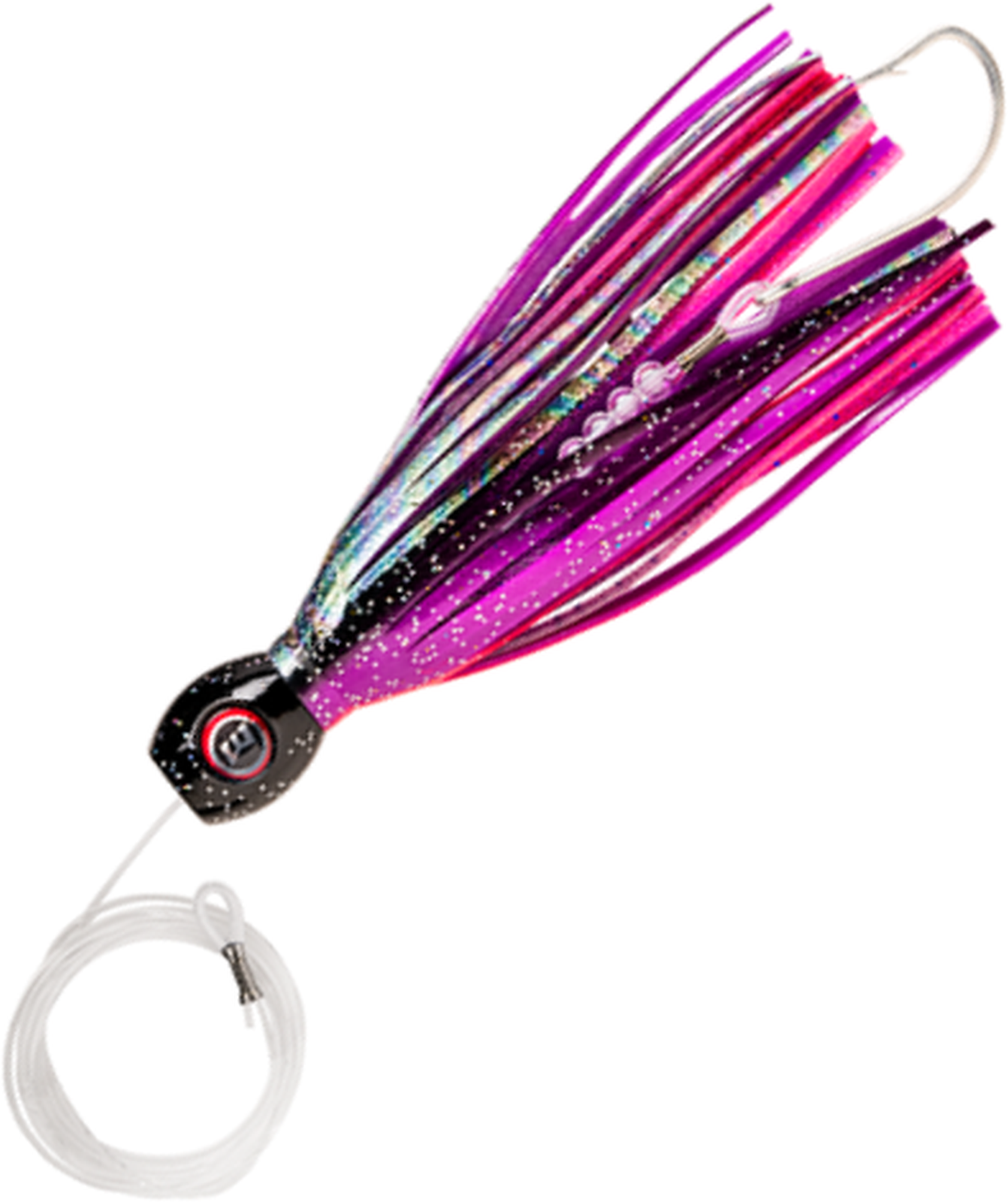


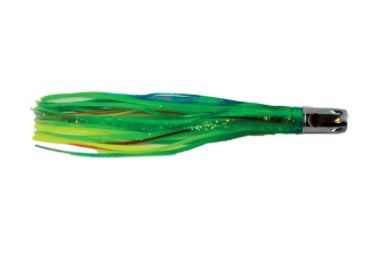


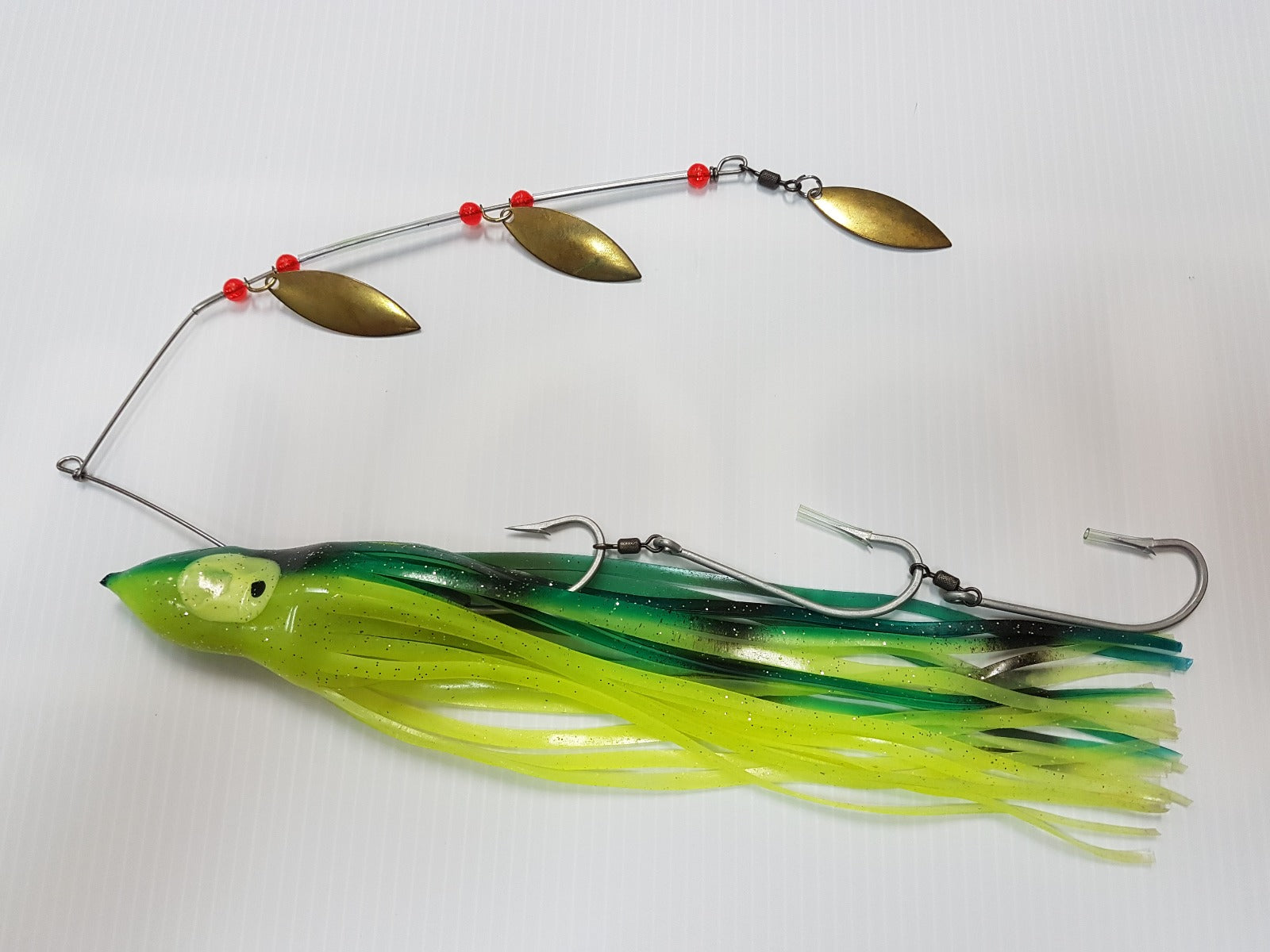
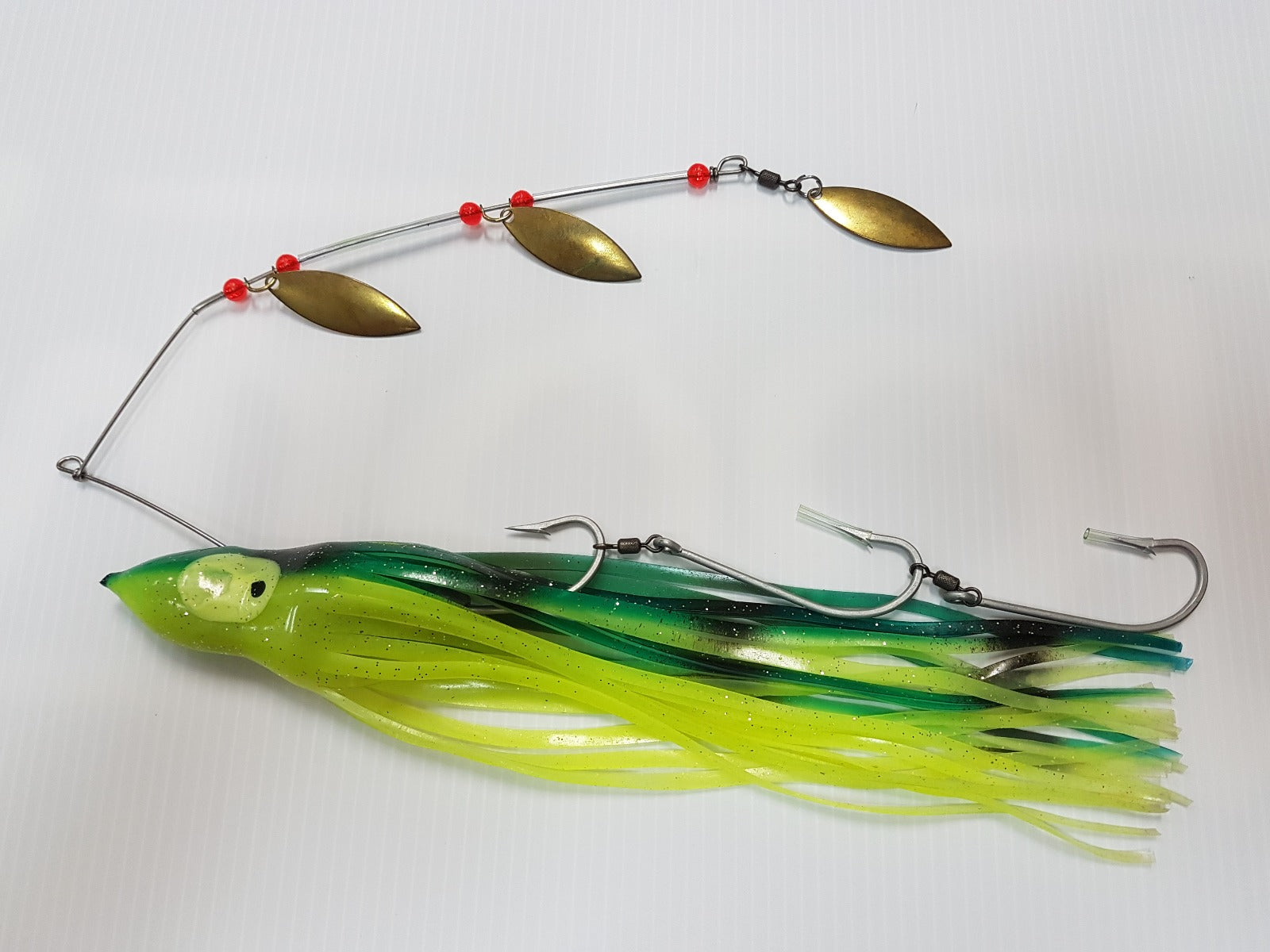
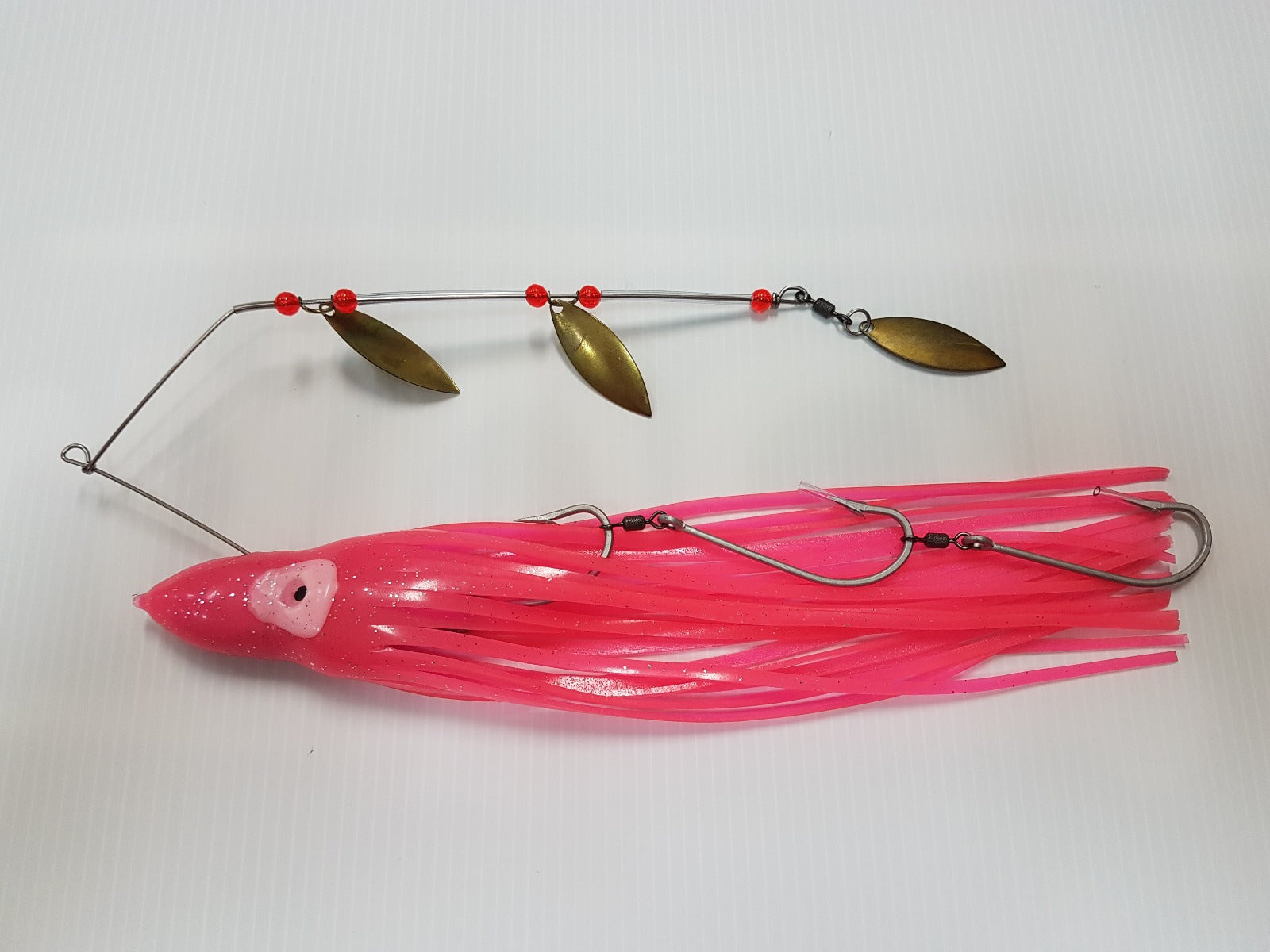
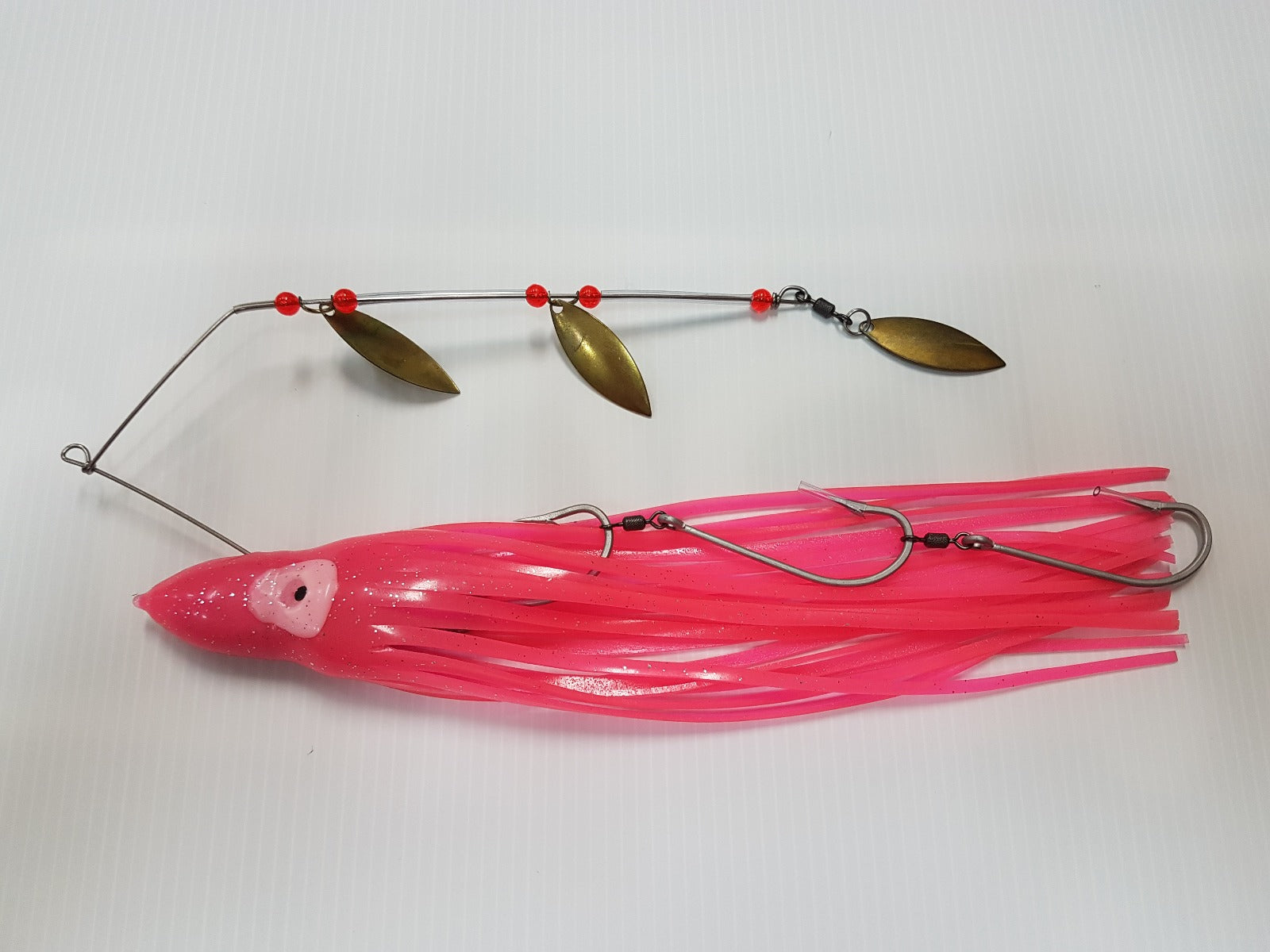


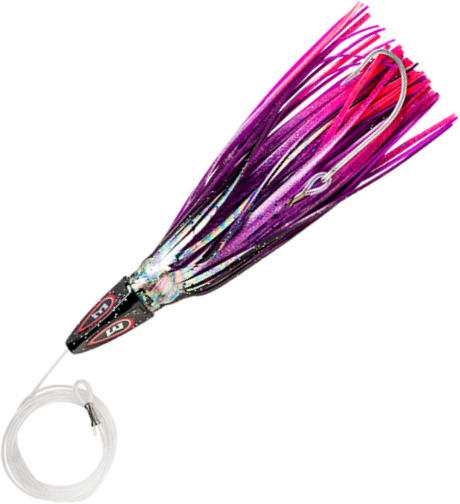

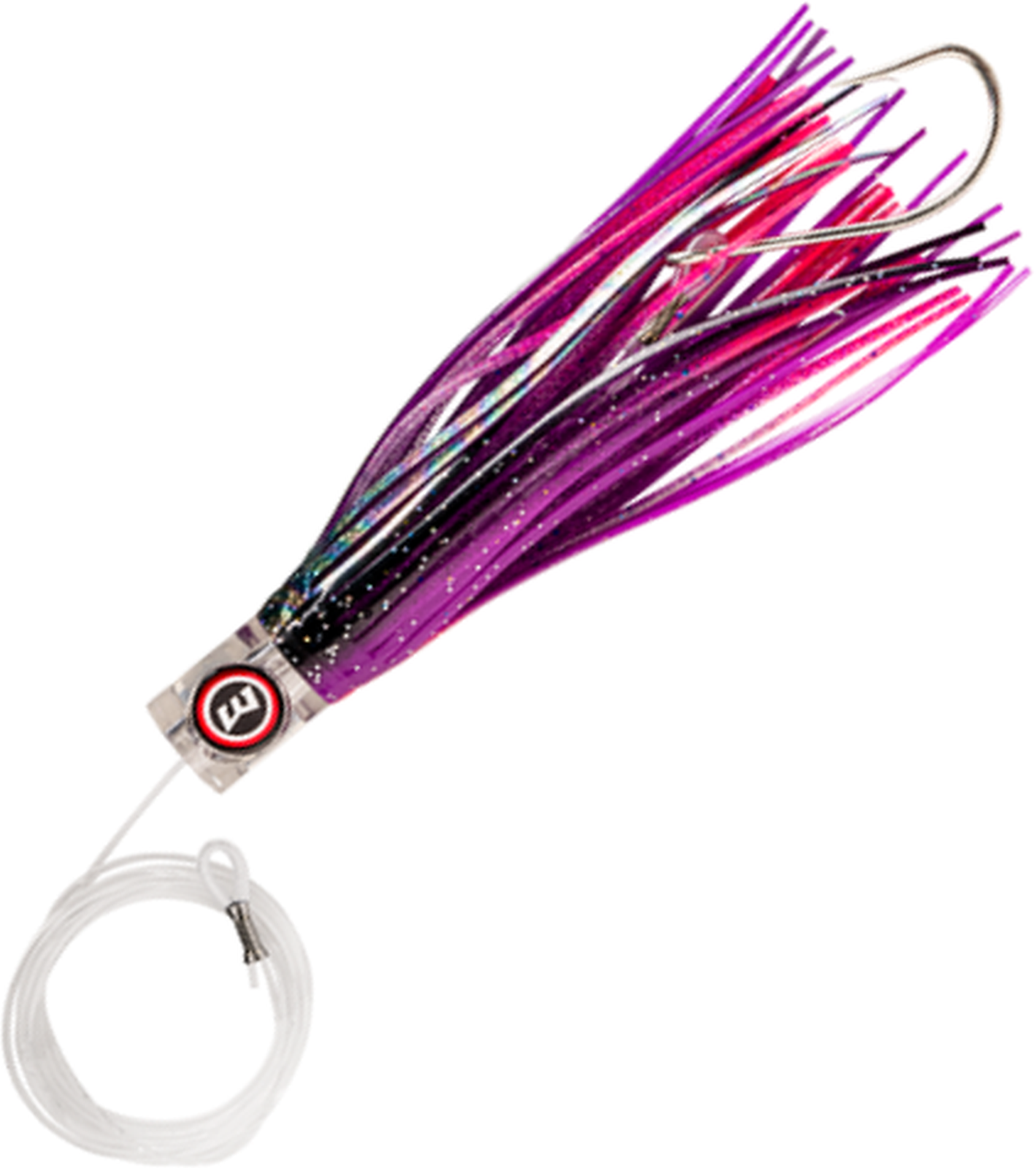

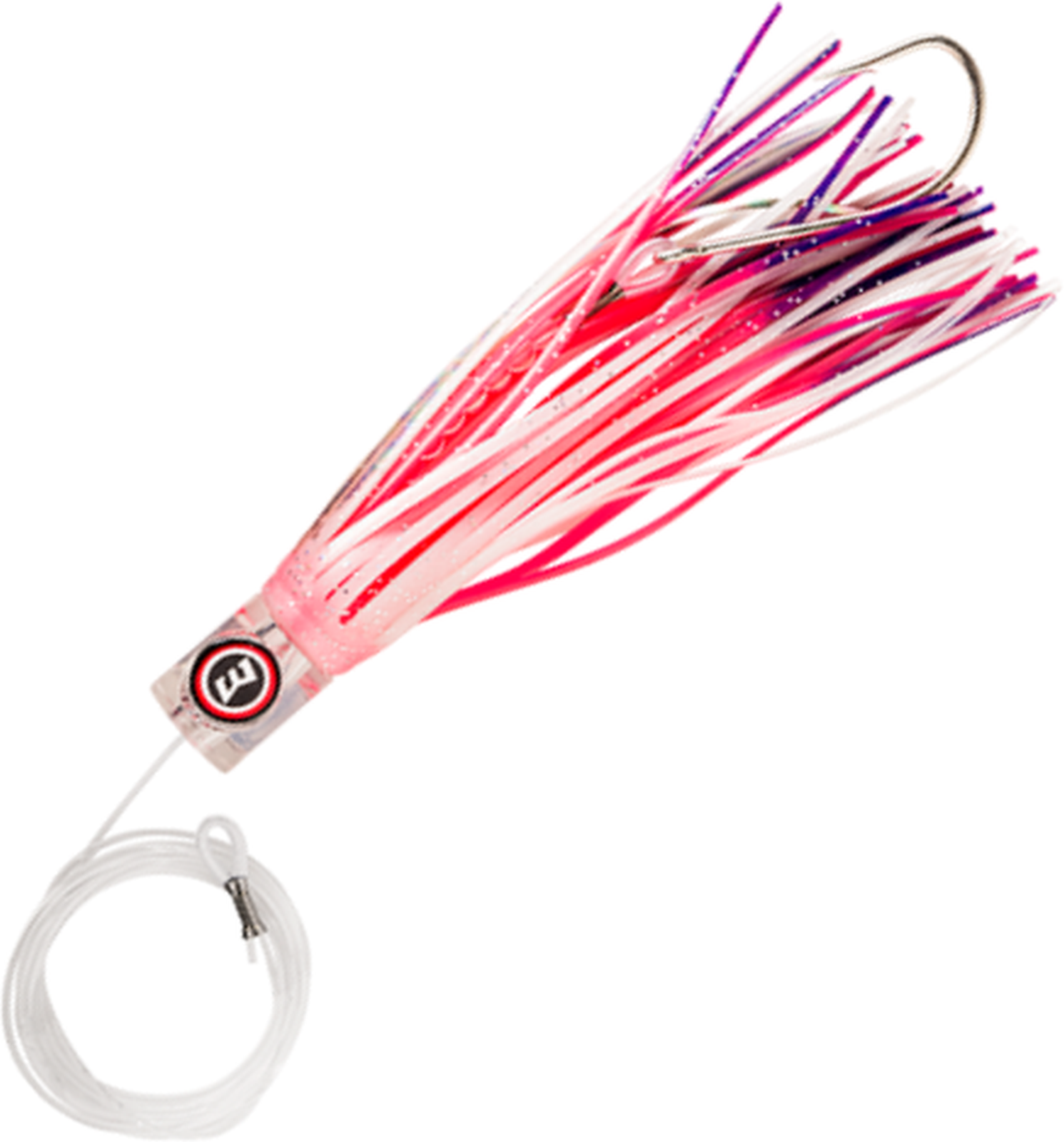


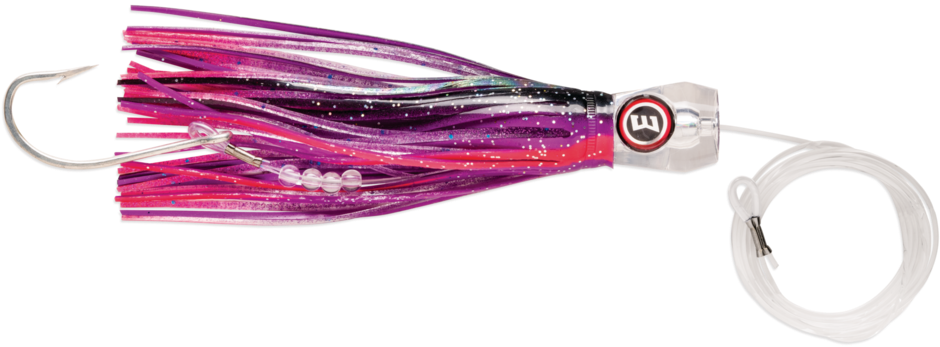

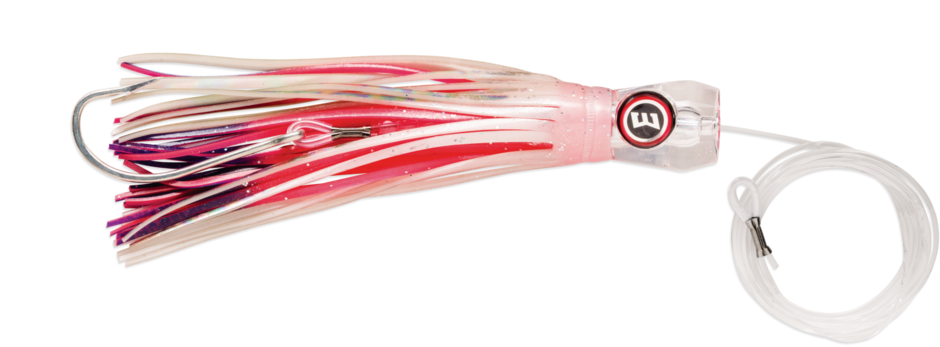

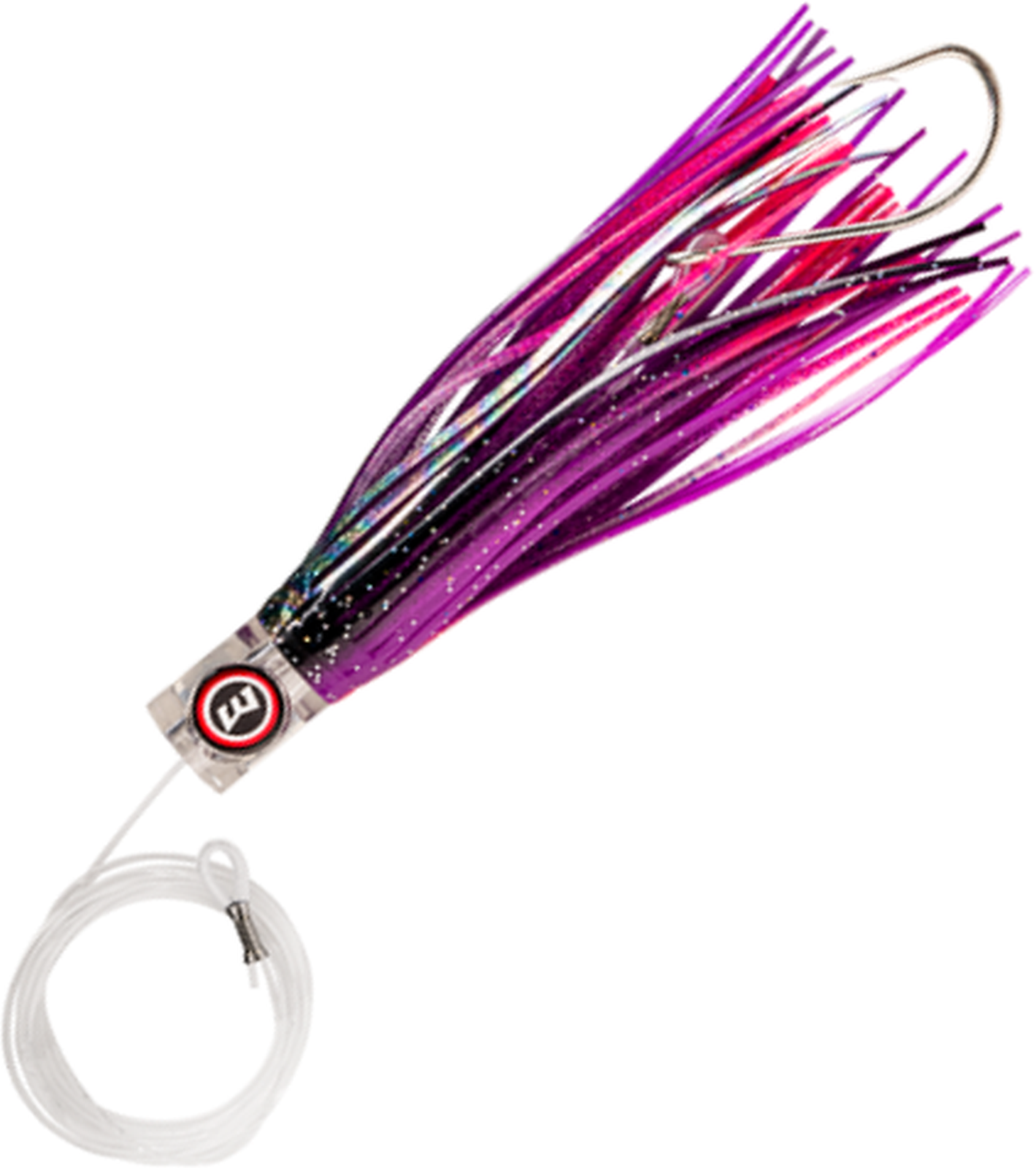

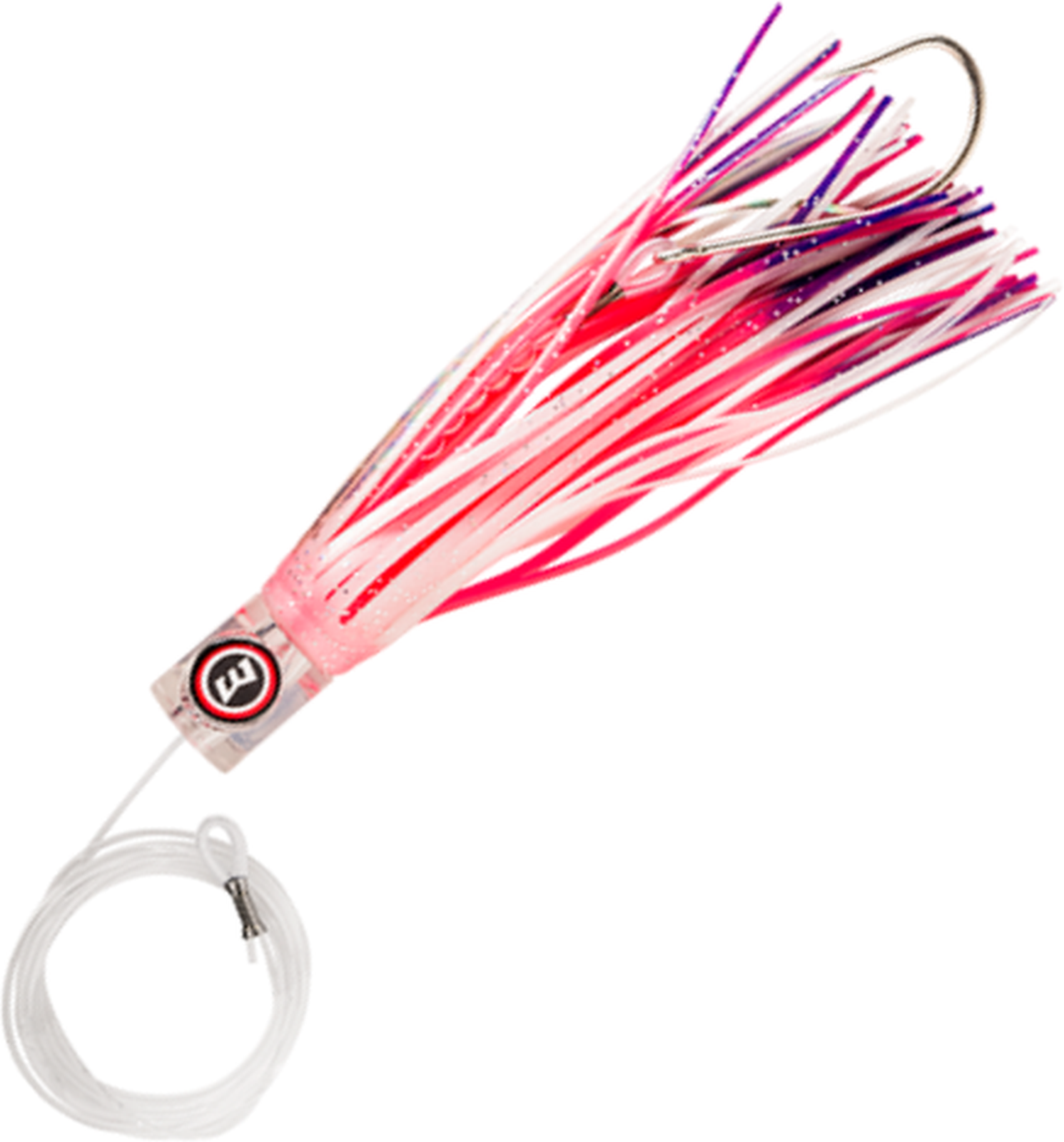

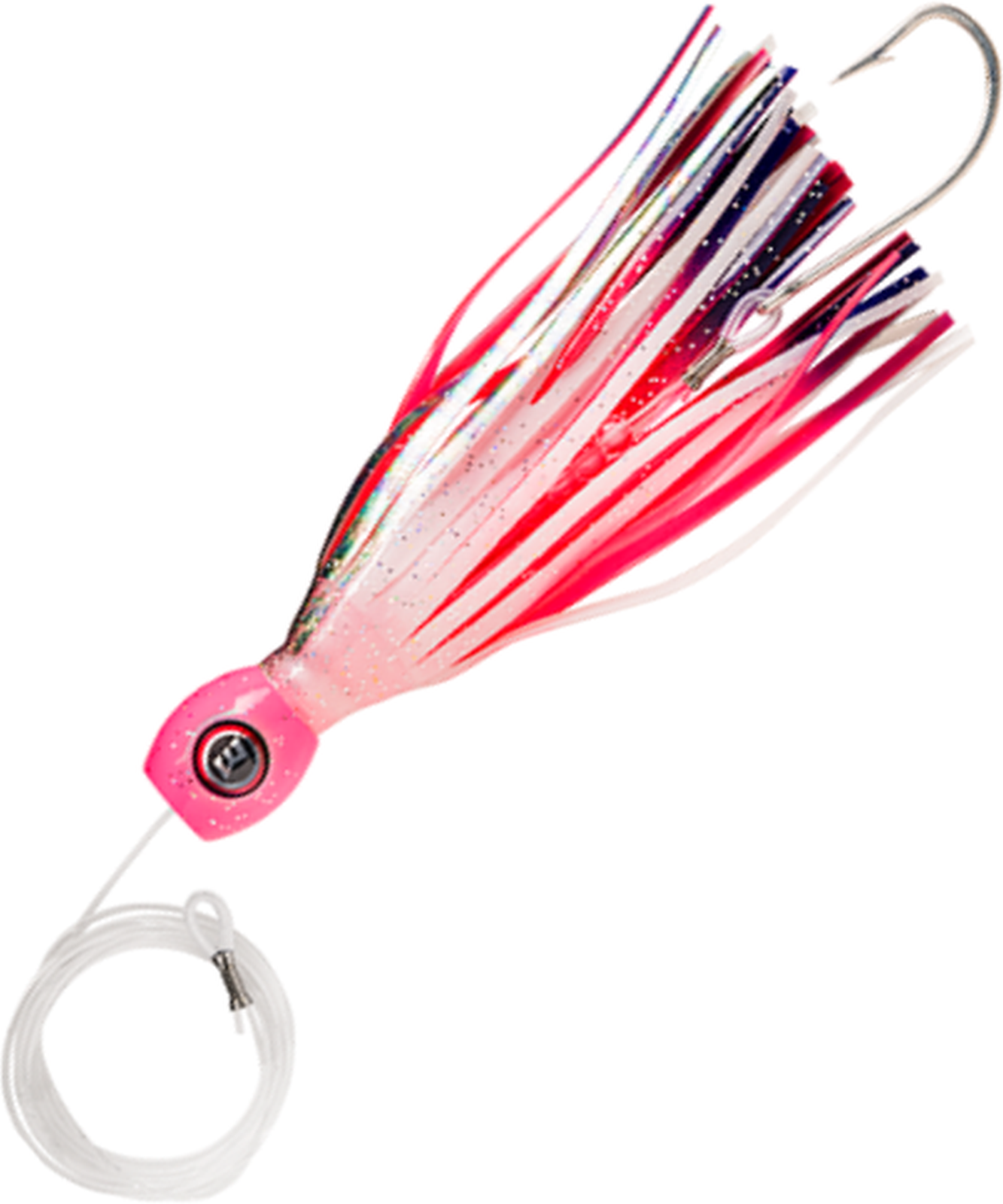

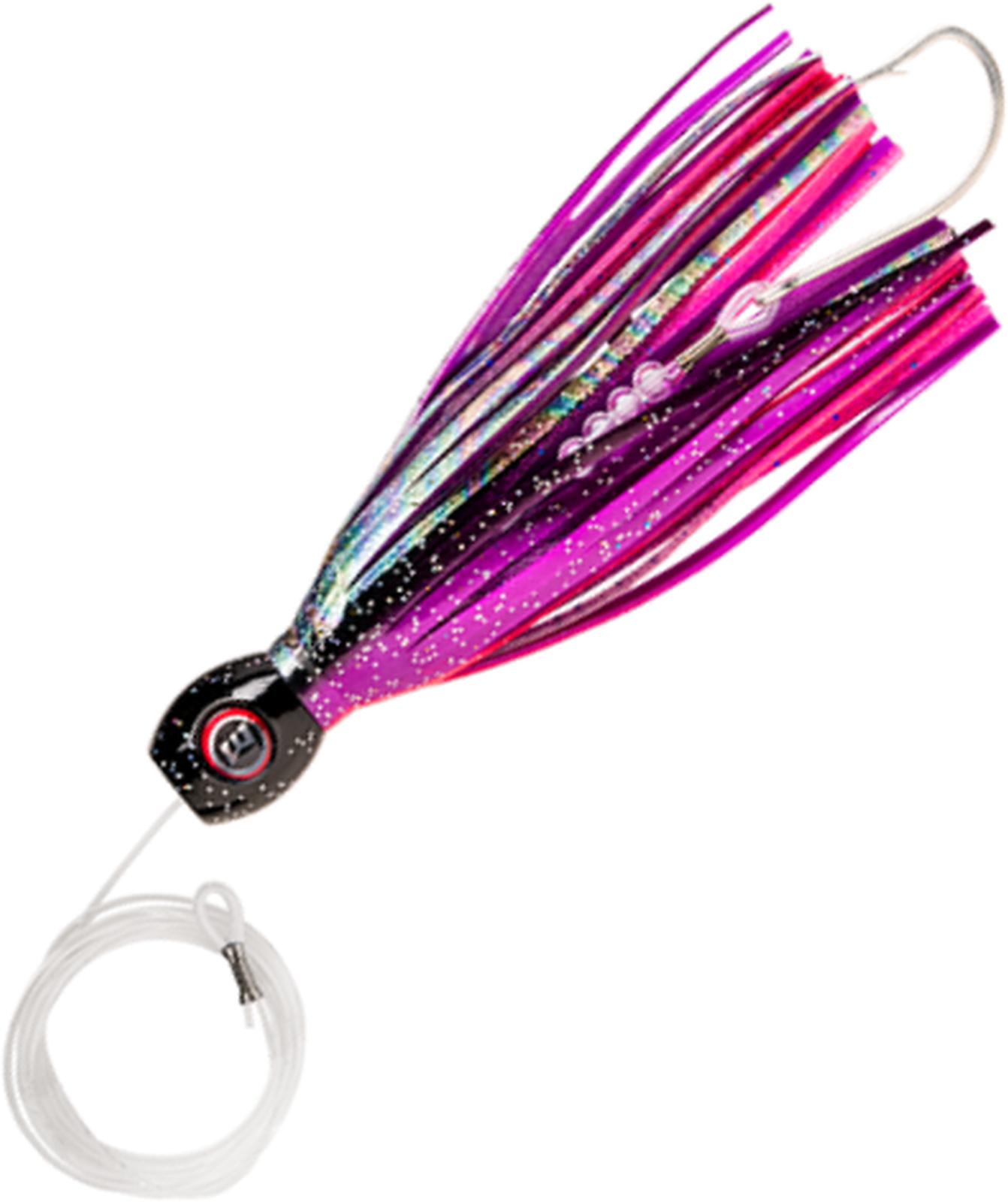

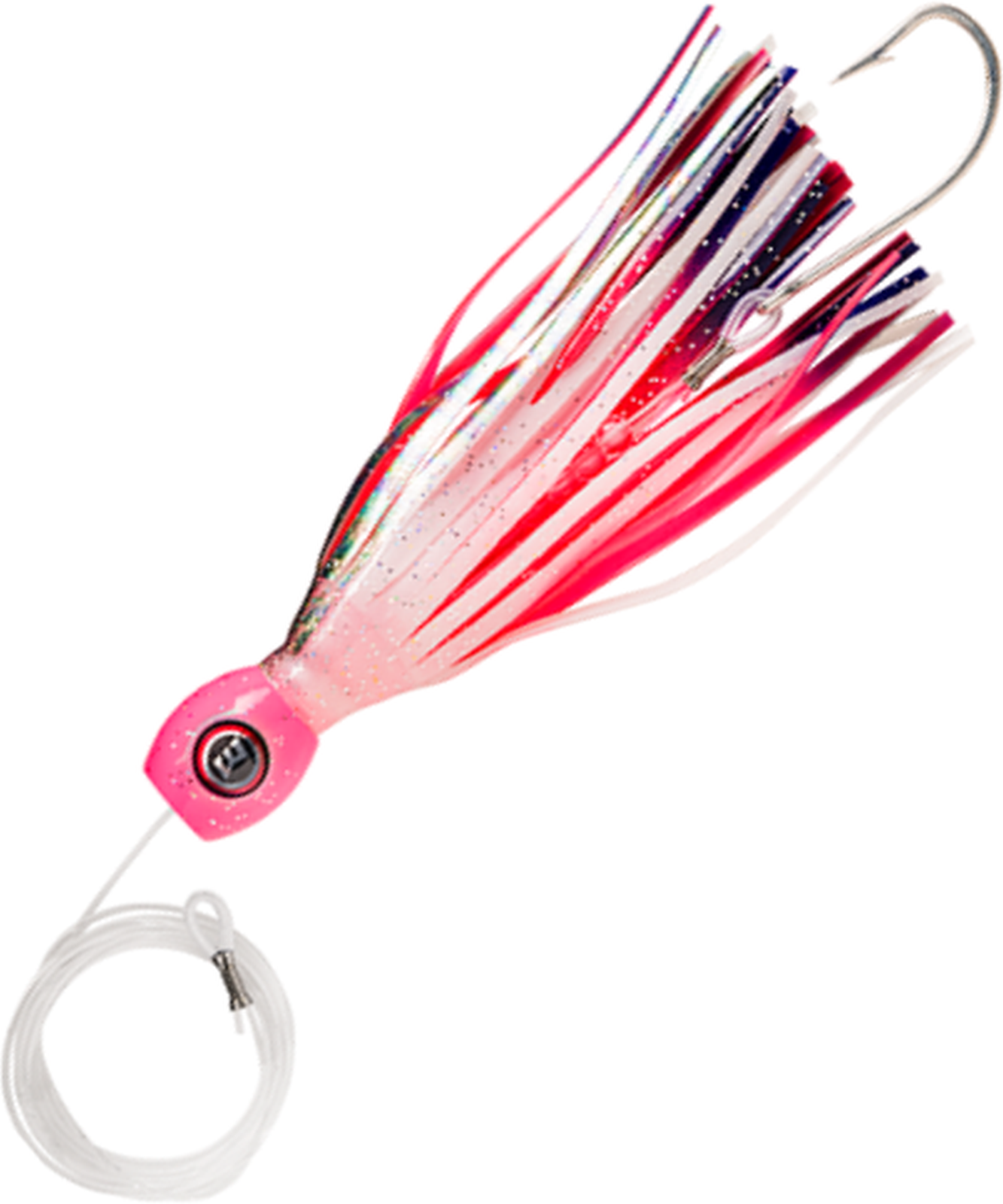

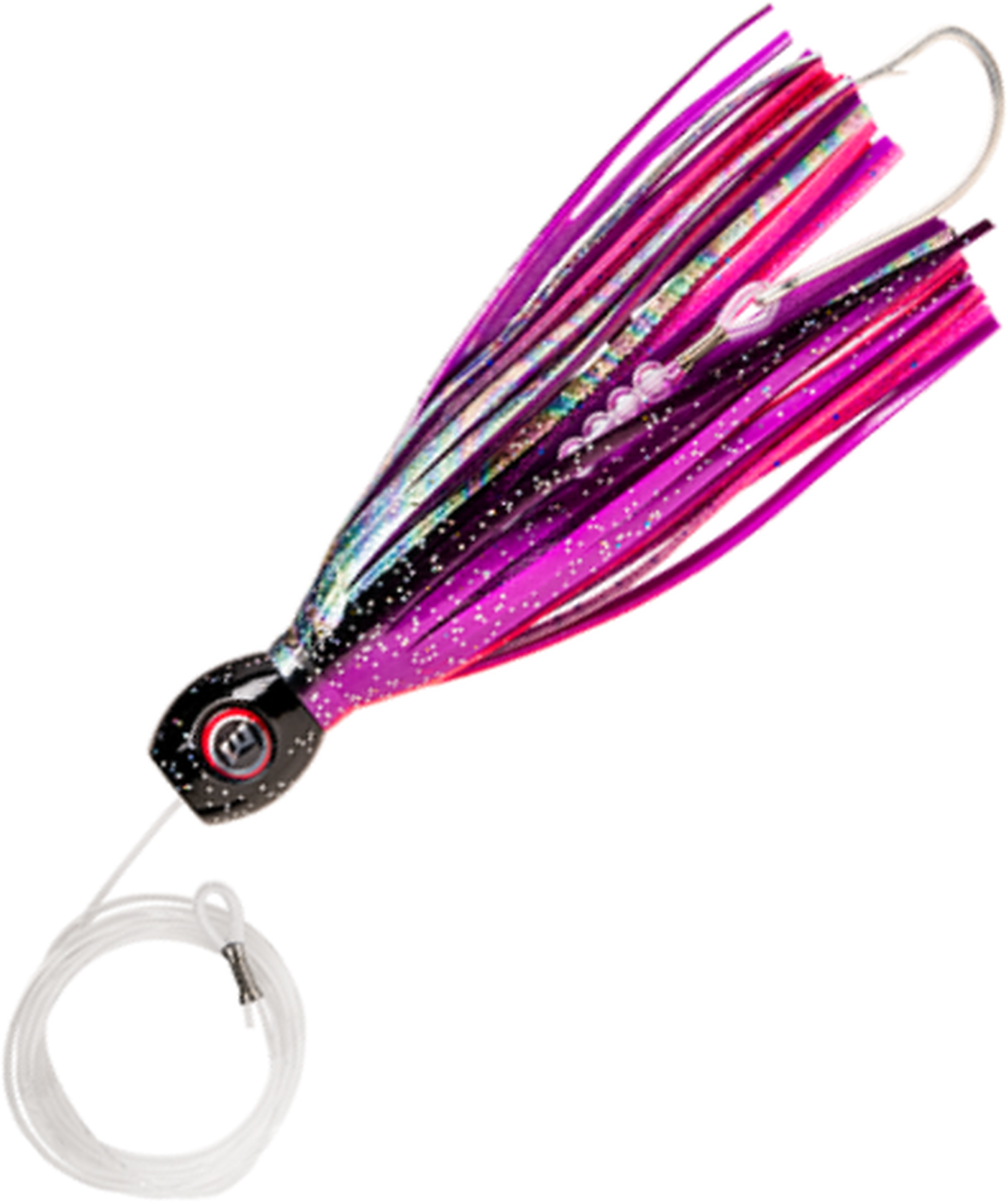

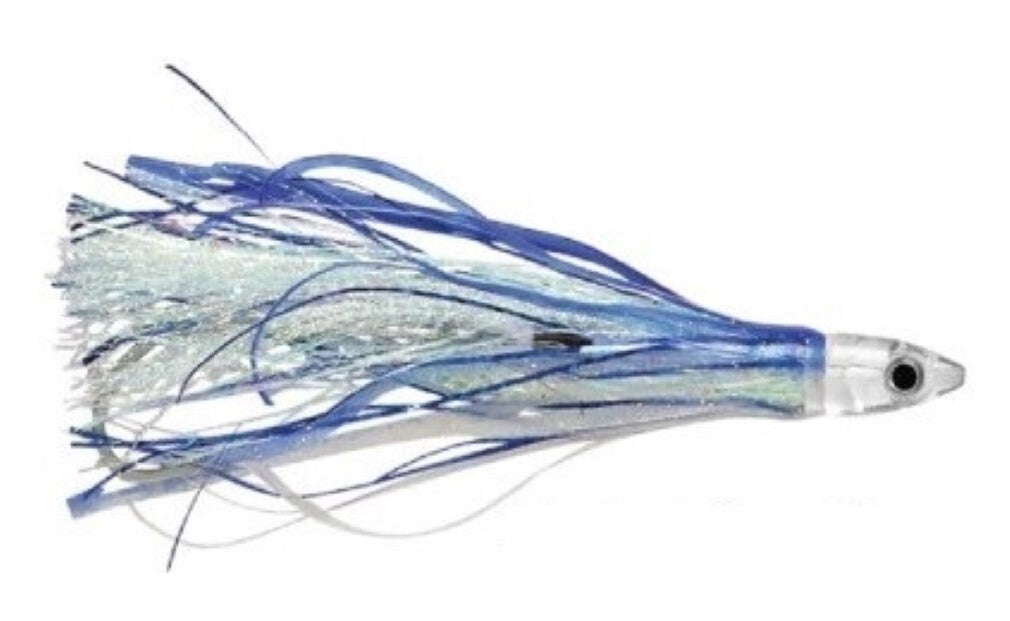
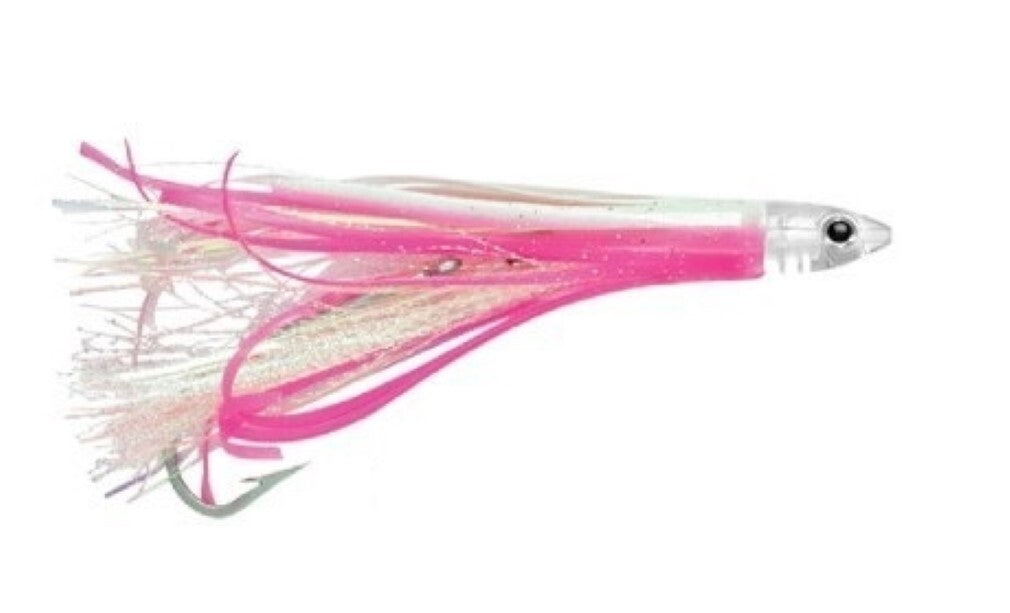
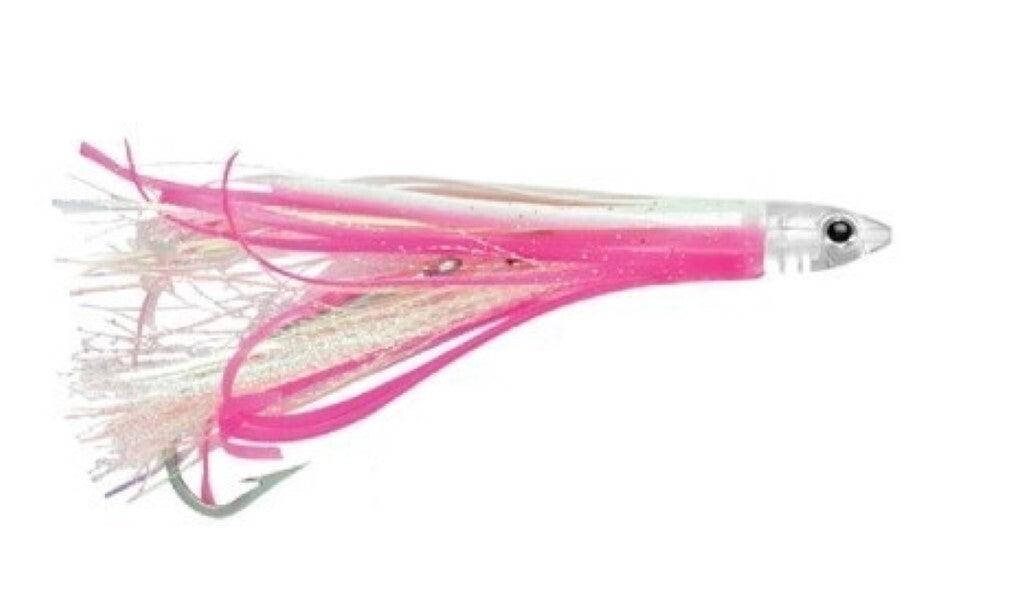
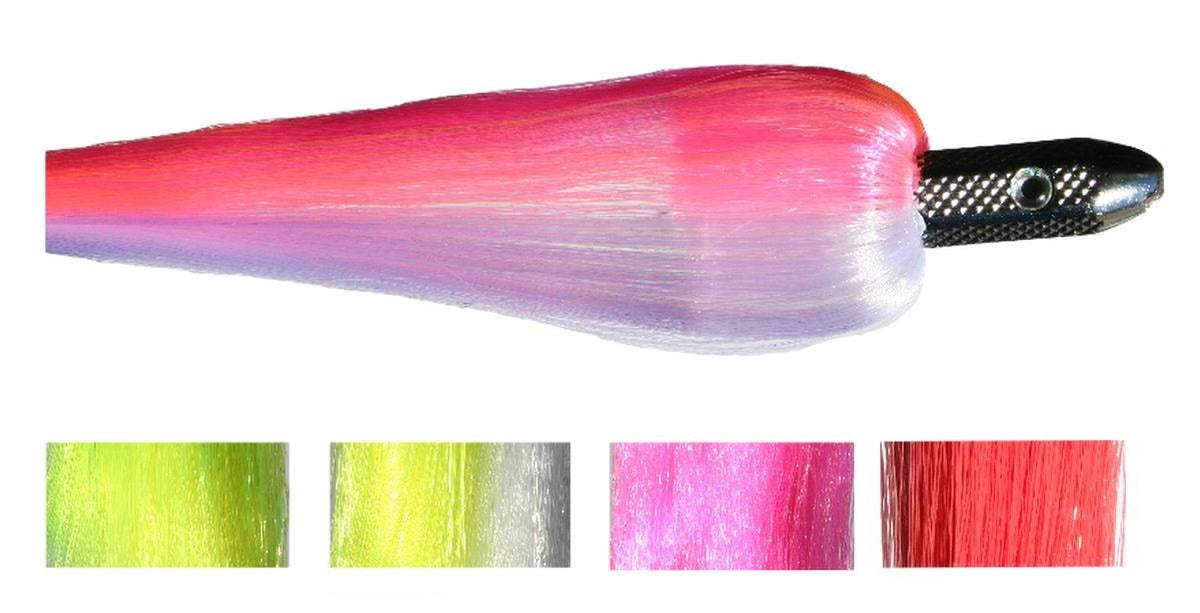
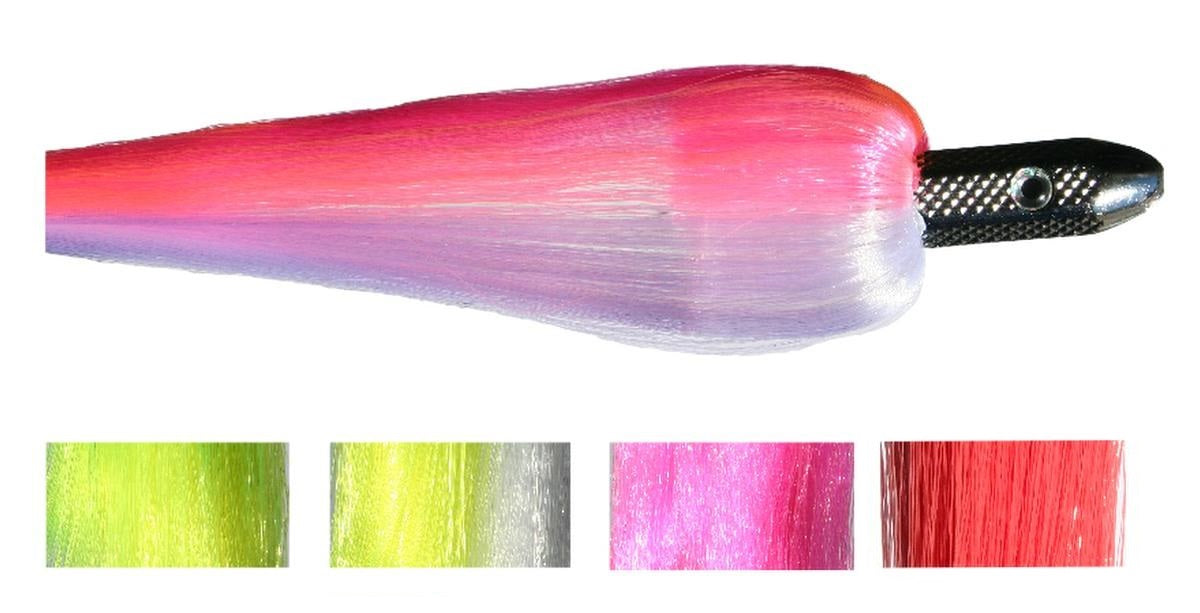

Skirted lures are the trolling lures of offshore game fishing — a moulded head with a vinyl or rubber skirt trailing behind it, rigged on heavy leader and pulled at speed. The head shape makes the action; the skirt provides the profile and the colour.
Head shapes and positions
A pusher or flat-faced head shoulders water and leaves a steady bubble trail, which is the reliable all-rounder. A slant or angled face makes the lure dive and dart, so it swims with more movement. A chugger cups the water and makes noise, which suits rougher conditions.
Where a lure sits in the spread matters as much as which lure it is. Short corner positions get run in the prop wash where the white water hides the leader, while long riggers sit in clean water further back. Most crews build a spread with different head types so the lures are not all doing the same thing.
Skirts are consumable — they get shredded and faded and are meant to be replaced. Many anglers re-skirt heads rather than buying whole new lures. The rest of the lure box is in fishing lures, and rigging accessories covers the components for rigging your own.
Frequently asked questions
What is the difference between a pusher and a slant head?
A pusher has a flat face that shoulders water and leaves a smoke trail while swimming fairly straight. A slant head is cut on an angle, so it dives and darts with a more erratic action.
How fast do you troll skirted lures?
Faster than bait trolling. Most skirted lures are designed for a brisk trolling speed, and the right speed is the one where the lure swims and breathes rather than skipping clear of the water.
Do skirted lures need a hook rig?
Yes. They are sold as lure heads and skirts, and are rigged onto heavy mono or cable with single or double hooks to suit what you are chasing.
Can I replace just the skirt?
Yes, and most regular game fishers do. Heads last for years while skirts get chewed and faded, so re-skirting is normal maintenance rather than a repair.